Sunday Sonnet – 18 October 2015

king-james-I

Like so many of Shakespeare’s sonnets written to his beloved Young Man, number 107 asserts the poem will outlast both Poet and Young Man. But this verse is different. Beyond the beauty of its language, this Sonnets seems to give us clues as to when it might’ve been written. For despite the celestial and timeless nature of its language, we’re able to connect it with history.

107

Not mine own fears, nor the prophetic soul
Of the wide world dreaming on things to come,
Can yet the lease of my true love control,
Supposed as forfeit to a confined doom.
The mortal moon hath her eclipse endured
And the sad augurs mock their own presage;
Incertainties now crown themselves assured
And peace proclaims olives of endless age.
Now with the drops of this most balmy time
My love looks fresh, and death to me subscribes,
Since, spite of him, I’ll live in this poor rhyme,
While he insults o’er dull and speechless tribes:
And thou in this shalt find thy monument,
When tyrants’ crests and tombs of brass are spent.

Some lines in this sonnet likely reference great events in Shakespeare’s time:

The mortal moon hath her eclipse endured:

  • Lunar eclipses in 1595 and 1605
  • Elizabeth I survives a serious illness in 1599
  • Elizabeth I dies in 1603

Incertainties now crown themselves assured

And peace proclaims olives of endless age:

  • After Elizabeth’s 45 year reign, a new monarch, James I, ascends the English throne in 1603
  • That new King signs a peace treaty with Spain in 1604 (whom Elizabeth had warred with for decades)

Shakespeare was notoriously cagey when referencing contemporary events; it’s how he escaped censorship in Elizabethan England, which was for all intents and purposes a police state. Here he seems to intentionally show his hand a bit, eloquently incorporating great events of the day into his paean of Romantic love for the Young Man, another thing he most certainly had to be circumspect about.

Shakespeare must’ve truly believed in the power of poetry, for once again he asserts that this verse to his Young Man would outlast all ‘tyrants’ crests and tombs.’

The image is of King James I, Elizabeth’s successor. James was generally not considered a tyrant, but this verse outlasted him too.   

Sunday Sonnet – 04 October 2015

jewelry box

Loss of material possessions is something we deal with today as much as people did in Shakespeare’s time. It turns out Shakespeare–beyond writing some of the greatest masterpieces of Western Literature–was also a very accomplished businessman who successfully accumulated and protected his worldly possessions. Yet he was wise enough to see that life’s most precious possessions are not worldly, and not so easily guarded against theft. That most precious possession here is the love of the Young Man:

48

How careful was I, when I took my way,
Each trifle under truest bars to thrust,
That to my use it might unused stay
From hands of falsehood, in sure wards of trust!
But thou, to whom my jewels trifles are,
Most worthy of comfort, now my greatest grief,
Thou, best of dearest and mine only care,
Art left the prey of every vulgar thief.
Thee have I not lock’d up in any chest,
Save where thou art not, though I feel thou art,
Within the gentle closure of my breast,
From whence at pleasure thou mayst come and part;
And even thence thou wilt be stol’n, I fear,
For truth proves thievish for a prize so dear

The Poet is careful to lock up all his possessions: ‘Each trifle under truest bars.’ But the Young Man is more precious than any of that: ‘But thou, to whom my jewels trifles are.’ And that Young Man is vulnerable to theft: ‘Art left the prey of every vulgar thief.’ This is because the chest the Poet keeps the Young Man in is the gentle closure of his heart, and from that the Young Man may come and go as he pleases:

Within the gentle closure of my breast,
From whence at pleasure thou mayst come and part;

Such a prize is susceptible to theft, for even an honest man would steal the Young Man if he could: ‘For truth proves thievish.’  

One of the many ingenious aspects of this sonnet are its parallels in language and image: ‘Truest bars’, ‘hands of falsehood’ and ‘truth proves thievish.’ ‘Lock’d up in any chest’ and ‘closure of my breast.’

Also, the placement of this sonnet in the sequence of 154 verses foreshadows Sonnets 49, 50 and 51, where the Young Man and the Poet part ways. Shakespeare’s sequence of Sonnets are so often difficult, because so much is happening all a once: in theme, in language, in metaphor and image, and even in the placement of the sonnets as they relate to one another.

The image is of an Elizabethan jewelry box.

Sunday Sonnet – 20 September 2015

sonnet 94

One of my all time favorite couplets caps Shakespeare’s Sonnet 94. It’s the epitome of a great couplet: iambic pentameter and rhymed, closing the argument of the sonnet, but doing so with a stunning reversal. At the same time, this couplet is beautiful to read, contains a great metaphor speaking a great truth, reads aloud easily and deliciously, so much so that it contains the power of an ageless aphorism.

94

They that have power to hurt and will do none,
That do not do the thing they most do show,
Who, moving others, are themselves as stone,
Unmoved, cold, and to temptation slow,
They rightly do inherit heaven’s graces
And husband nature’s riches from expense;
They are the lords and owners of their faces,
Others but stewards of their excellence.
The summer’s flower is to the summer sweet,
Though to itself it only live and die,
But if that flower with base infection meet,
The basest weed outbraves his dignity:
For sweetest things turn sourest by their deeds;
Lilies that fester smell far worse than weeds.

This sonnet is a condemnation of the Young Man, whom the Poet loves. But the poem seems to be speaking about two disparate things–until its stunning conclusion.

In the first 8 lines the Poet talks about how people who seem not do the stuff they most apparently are made to do: ‘That do not do the thing they most do show’. These people are so beautifully made that they can move the emotions (and lusts) of others, yet somehow manage to restrain themselves: ‘They are the lords and owners of their faces, Others but stewards of their excellence.’  

Then, in the next four lines the subjects changes to summer flowers. Huh? The sweetest summer flower, if it succumbs to thickets of weeds, becomes worse than the weeds that infect it.   And there’s the connection. The final couplet warns the Young Man: regardless of how beautiful you are, your deeds will sour all of that:

For sweetest things turn sourest by their deeds;
Lilies that fester smell far worse than weeds.

As is typical with most of Shakespeare’s sonnets, there’s much more going on here–and a knowledge of how aristocratic patronage worked in Elizabethan England might reveal a little bit more about what the Poet’s talking about.   But for now, just enjoy the lovely brilliance of that last couplet.

The image comes from a painting of flowers by Ambrosius Bosschaert (the Elder), a Dutch painter who was a contemporary of Shakespeare’s.

Sunday Sonnet – 13 Sep 2015

Sonnet 88 - 1

The rationalizations humans indulge in when a relationship has begun to break up can be convoluted and confusing. This hasn’t changed since Elizabethan times. In Sonnet 88, even though the Rival Poet is gone, too much damage has been done, and the Poet appears to be reconciling himself with the imminent loss of his Young Man:

88

When thou shalt be disposed to set me light,
And place my merit in the eye of scorn,
Upon thy side against myself I’ll fight,
And prove thee virtuous, though thou art forsworn.
With mine own weakness being best acquainted,
Upon thy part I can set down a story
Of faults conceal’d, wherein I am attainted,
That thou in losing me shalt win much glory:
And I by this will be a gainer too;
For bending all my loving thoughts on thee,
The injuries that to myself I do,
Doing thee vantage, double-vantage me.
Such is my love, to thee I so belong,
That for thy right myself will bear all wrong.

The Poet seems to be trying to argue that even though he’ll continue to praise the Young Man and take the blame for everything, it will be a win-win, or what Shakespeare calls “double-vantage”:

For bending all my loving thoughts on thee,
The injuries that to myself I do,
Doing thee vantage, double-vantage me.

This sonnet, in all its confused logic, seems to be describing a kind of abusive relationship: You, Young Man, think little of me and trash me in public, but I’ll take your side and agree with you, because I love you so much that I consider your gain my gain, even if I take the wrongs upon myself.   Good grief.

Even this interpretation only scratches the surface of this poem: some readers see a tennis metaphor (yes, they had tennis in Shakespeare’s time): A ‘set’ was bet or a stake in a tennis game: the word ‘set’ is used twice. ‘Vantage’ is a tennis shorthand for a player’s ‘advantage’ in a set: ‘vantage’ is used twice. And ‘Double-vantage’ was most especially a tennis term. There are other references.   Why, even numerologists have gotten into the game, claiming there are sports-based significance in the number 88.

As with so many of Shakespeare’s sonnets, there is always much more going than what appears on the surface, and this emotionally messed up one is no exception.

The image is an Elizabethan wood carving of two tennis players.

Sunday Sonnet – 06 Sep 2015

George_Chapman

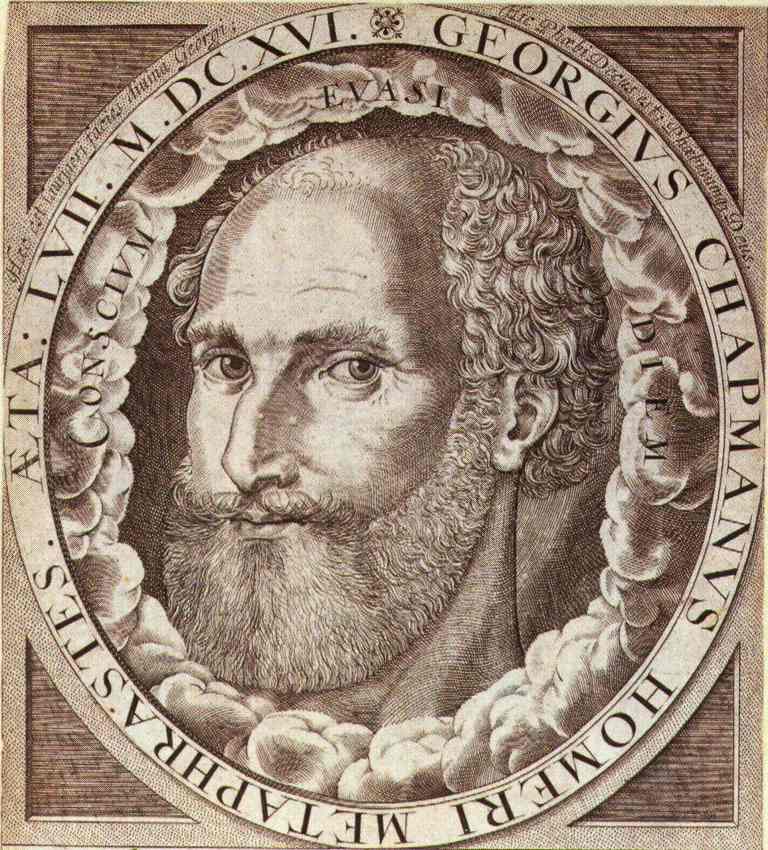
Shakespeare’s 154 Sonnets create a narrative with a number of characters: the Poet himself, the Young Man and the Dark Lady. Well, there’s another character, in a sequence of eight sonnets–the ‘Rival Poet’–another writer vying for the favor of the Young Man. This contest for the attentions of the Young Man (possibly the Earl of Southampton), begins with Sonnet 79:

79

Whilst I alone did call upon thy aid,
My verse alone had all thy gentle grace,
But now my gracious numbers are decay’d
And my sick Muse doth give another place.
I grant, sweet love, thy lovely argument
Deserves the travail of a worthier pen,
Yet what of thee thy poet doth invent
He robs thee of and pays it thee again.
He lends thee virtue and he stole that word
From thy behavior; beauty doth he give
And found it in thy cheek; he can afford
No praise to thee but what in thee doth live.
Then thank him not for that which he doth say,
Since what he owes thee thou thyself dost pay.

For this first ‘Rival Poet’ sonnet, the only thing Shakespeare’s really arguing are words, that is verse, and through the tangled layers of this sonnet Shakespeare claims that for a long time only his verse received the benefit of the Young Man’s ‘gentle grace.’ Yet Shakespeare admits that maybe his verse is not as good as it used to be: ‘my gracious numbers are decay’d / And my sick Muse…’ And so Shakespeare admits the Young Man deserves a better poet. That said, Shakespeare then goes on to claim that this new rival only steals from the Young Man; his verses might lend the Young Man virtue, but the rival only learned virtue from the Young Man himself: ‘No praise to thee but what in thee doth live.’ The same with beauty. In other words, don’t thank this rival poet for his flattery, because he’s stolen it all from you.

I’ve said this in my blog before, and I’ll say it again: these characters, the layered progressions of the relationships, the risqué nature of the love affairs (risqué for Elizabethan times), that is, the homosexual love affair, the love triangles, the interracial couplings: all these fly in the face what Elizabethans considered Romantic Love should be in poetry. So this somewhat subversive set of verse all speaks to the possibility of autobiography. And finally, though Shakespeare himself published other major works of verse to great acclaim, he never published his Sonnets. Why not?

Who was the Rival Poet? Possibly the poet George Chapman, or possibly even Christopher Marlowe.   Possibly others. We’ll never know, assuming these sonnets were even inspired by a real human beings.

The image is of George Chapman, an Elizabethan dramatist, writer and poet. He, like Shakespeare, knew the Earl of Southampton. Chapman translated a lot of Ovid’s works; Ovid’s Metamorphoses was one of Shakespeare’s favorite sources for his plays. Chapman, unlike Shakespeare, never could find patrons or great success, and died in poverty.

Sunday Sonnet – 16 August 2015

Scotney Castle

One of Shakespeare’s most powerful sonnets boldly asserts that its lines shall conquer death and time, outlasting not only the Young Man and the Poet himself, but even marble monuments, wars, or the besmearing of time.

55

Not marble, nor the gilded monuments
Of princes, shall outlive this powerful rhyme;
But you shall shine more bright in these contents
Than unswept stone besmear’d with sluttish time.
When wasteful war shall statues overturn,
And broils root out the work of masonry,
Nor Mars his sword nor war’s quick fire shall burn
The living record of your memory.
‘Gainst death and all-oblivious enmity
Shall you pace forth; your praise shall still find room
Even in the eyes of all posterity
That wear this world out to the ending doom.
So, till the judgment that yourself arise,
You live in this, and dwell in lover’s eyes.

Ostensibly this poem was written to the Young Man, but it’s really about the enduring power of the written word, the most indelible form of Art–resistant to the ravages of war and the slow degradation of ‘sluttish’ time (the Elizabethan use of the word sluttish meaning messy or untidy).

So many great details and contrasts in this sonnet: how wars broil out the work of masonry, and how that power is godlike in its ferocity and speed (Mars’ sword); how gilded monuments and princes can’t outlive rhymes. It’s all kind of crazy, but, as it turns out, utterly true.: Did this verse conquer death and time? For four hundred years it has.  

Of course, there are untold amounts of literature, written history and poetry that have been lost to the ages.   Despite that, the Poet makes this bold prediction about his own verse. Could Shakespeare somehow had an inkling at how great his rhymes were? Did he imagine that succeeding generations would labor to reproduce these lines many countless of times, thereby insuring them against loss?   I think he believed the possibility existed. And thus he worked very hard to make his sonnets gorgeous, multifaceted and full of great truths.

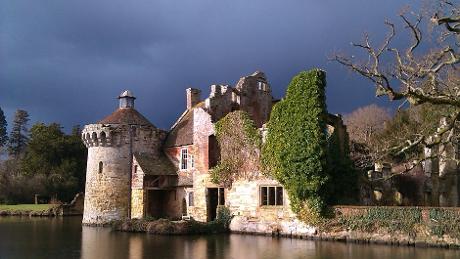
The image is of Scotney Castle, much of it Elizabethan, part of it in ruins.   It’s now run by the National Trust.     

Sunday Sonnet – 09 August 2015

tudor rose

One of the many mysteries of Shakespeare’s personal life is how did he acquire all the vast areas of expertise needed to write about so many characters and so many avocations? For example, his knowledge of horticulture, herbalism and botany are evident in many of his plays (think of A Midsummer Night’s Dream). We really don’t know for sure where Shakespeare learned all this–though there a bunch of ‘missing years’ from his youth.

In Sonnet 54, Shakespeare utilizes this knowledge of botany to create a complicated metaphor, where he likens the beauty in his Young Man to a rose’s beauty, which is both outer and inner. Elizabethans extracted perfume from roses. However, canker-blooms were also visually beautiful, but unlike roses, contained no lovely scent. And so here comes a life lesson: When looking for beauty in others, don’t just look for the outer beauty:

54

O, how much more doth beauty beauteous seem
By that sweet ornament which truth doth give!
The rose looks fair, but fairer we it deem
For that sweet odour which doth in it live.
The canker-blooms have full as deep a dye
As the perfumed tincture of the roses,
Hang on such thorns and play as wantonly
When summer’s breath their masked buds discloses:
But, for their virtue only is their show,
They live unwoo’d and unrespected fade,
Die to themselves. Sweet roses do not so;
Of their sweet deaths are sweetest odours made:
And so of you, beauteous and lovely youth,
When that shall fade, my verse distills your truth.

As complicated and delicate as this construction is, Shakespeare’s rose metaphor extends beyond a mere characterization of his Young Man’s beauty: Shakespeare means to liken his rose to the Art of poetry too. The inner-sweetness of the rose can only be enjoyed because perfumers distill it; likewise does the Poet distill his Young Man’s beauty into the lines of this sonnet. Already, it’s lasted for over four hundred years.

The image is of the Tudor Rose, one of Queen Elizabeth’s royal symbols, for she was of the House of Tudor.

Sunday Sonnet – 02 August 2015

300px-Adonis_Mazarin_Louvre_MR239

Shakespeare was no stranger to hyperbole, and in sonnet 106 he goes all the way, to the point of being ridiculous. But the language is so beautiful, and the imagery is so straight forward and accessible. that for a moment the reader might find her or himself swept up by the main argument: that the Young Man’s beauty is so great, even Art cannot capture his beauty:

106

When in the chronicle of wasted time
I see descriptions of the fairest wights,
And beauty making beautiful old rhyme
In praise of ladies dead and lovely knights,
Then, in the blazon of sweet beauty’s best,
Of hand, of foot, of lip, of eye, of brow,
I see their antique pen would have express’d
Even such a beauty as you master now.
So all their praises are but prophecies
Of this our time, all you prefiguring;
And, for they look’d but with divining eyes,
They had not skill enough your worth to sing:
For we, which now behold these present days,
Had eyes to wonder, but lack tongues to praise.

Could this Elizabethan Young Man have been so beautiful that even the ancients couldn’t capture him? Hardly likely. Yet Sonnet 106 declares ‘They had not skill enough your worth to sing.’   Crazy. And then Shakespeare–who in other sonnets has suggested this his verses will live on forever–admits that even present day poets cannot capture the Young Man’s beauty:

For we, which now behold these present days,
Had eyes to wonder, but lack tongues to praise.

There’s a coy lie in all this, for the Poet has made plainly obvious in many other sonnets that it’s only in Art, and in the lines of immortal verses that real beauty can be preserved. But you see, the 154 Sonnets taken as a whole form a narrative; and that story is the map of the human heart, which is ever fickle, ever changing.

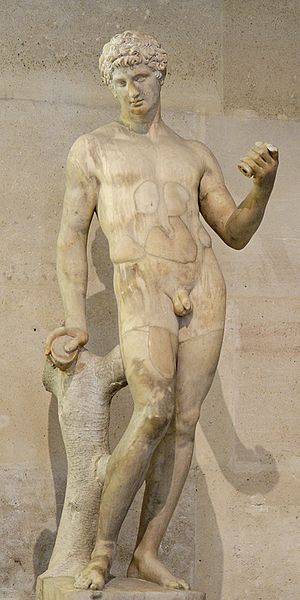
The image is of how the Greeks attempted to capture the image of male beauty: an ancient statue of Adonis, the Greek god of Love, currently in the Louvre. Who better captures youthful beauty–the ancient Greek sculptors or Mr. Shakespeare, our Elizabethan poet?

Sunday Sonnet – 26 July 2015

Syphilis

Shakespeare ends the most magnificent collection of sonnets ever written in the English language with a warning about venereal disease. How romantic.

154

The little Love-god lying once asleep
Laid by his side his heart-inflaming brand,
Whilst many nymphs that vow’d chaste life to keep
Came tripping by; but in her maiden hand
The fairest votary took up that fire
Which many legions of true hearts had warm’d;
And so the general of hot desire
Was sleeping by a virgin hand disarm’d.
This brand she quenched in a cool well by,
Which from Love’s fire took heat perpetual,
Growing a bath and healthful remedy
For men diseased; but I, my mistress’ thrall,
Came there for cure, and this by that I prove,
Love’s fire heats water, water cools not love.

Cupid’s love torch (phallic symbol) burns just a bit too hot. Diana’s nymphs (she was the virgin goddess of the hunt) try to cool its heat in a nearby spring (fertility symbol). It heats up the pool so much, that now those waters can cure diseased men! The is for men diseased with the maladies of love, namely syphilis. And so the Poet, having caught that venereal disease from his mistress, goes into the hot waters to be cured. What does the Poet learn? The cure hasn’t cured his ardor for the woman who put him there.

This closing sonnet is a companion piece to the previous sonnet, #153, which also talks about syphilis and the Elizabethan cure for the disease–a rather dangerous and painful process involving inhaling mercury vapors in searing baths.

There has been a lot of scholarly argument regarding these two Cupid/hot bath/VD sonnets, and their connections to the two previous narratives–the Young Man Sonnets, and the Dark Lady Sonnets. I think they’re connected to both, and serve as an ironical denouement to this love triangle. Pervious verses show that the Young Man and the Dark Lady do intersect, and they both betray the Poet. So how better to end this winding narrative–so elusive, so full of unanswered questions, so contrary to the accepted poetic notions of Romantic Love–than to have the Poet come down with VD?

Rumors abound in scholarly circles that Shakespeare himself might have had syphilis. It’s impossible to ever know. Regardless, he certainly knew of it.

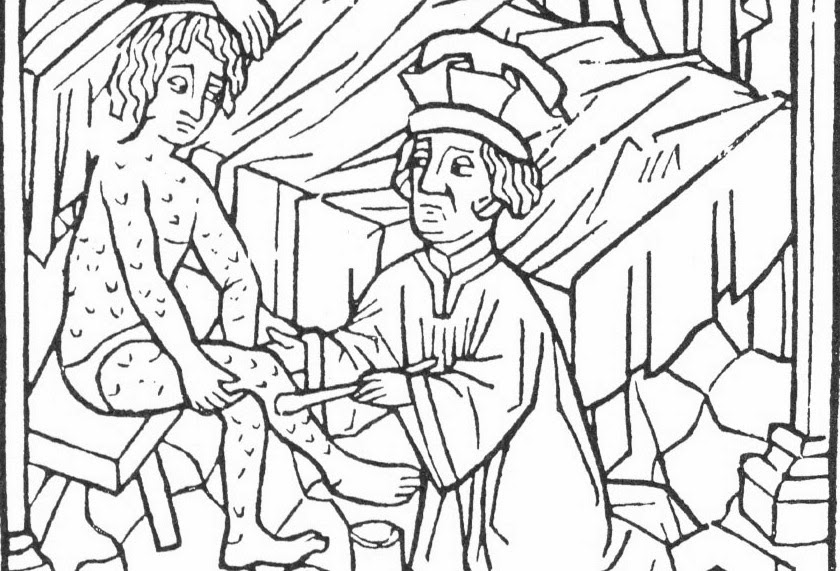
The image is from an anonymous woodcut, circa 1500, of a physician treating syphilis.

Sunday Sonnet – 12 July 2015

William_Cecil

Today we return to Shakespeare’s early numbered sonnets, almost to the beginning, when the Poet is urging his Young Man to beget a child so that his beauty might be preserved. The poet, in comparing the Young Man to the very ascendancy and brilliance of the Sun itself, could be accused of hyperbole. But when the language is so lovely, perhaps we can forgive the Poet for reaching so high:

7

Lo! in the orient when the gracious light

Lifts up his burning head, each under eye

Doth homage to his new-appearing sight,

Serving with looks his sacred majesty;

And having climbed the steep-up heavenly hill,

Resembling strong youth in his middle age,

Yet mortal looks adore his beauty still,

Attending on his golden pilgrimage:

But when from highmost pitch, with weary car,

Like feeble age, he reeleth from the day,

The eyes, ‘fore duteous, now converted are

From his low tract, and look another way:

   So thou, thyself outgoing in thy noon

   Unlooked on diest unless thou get a son

If you read through to the end, it’s evident the Sun’s track through the heavens is a metaphor for all people–the passage of human life. And the play on ‘sun’ and ‘son’ is unmistakable.

There’s circumstantial evidence that Shakespeare might’ve been commissioned to write these early sonnets to the young Earl of Southampton, imploring the Young Man to procreate. Who would’ve paid Shakespeare to write these poems for such an unusual reason? It might’ve been none other than Queen Elizabeth’s own chief advisor and Secretary of State, William Cecil, Lord Burghley. Southampton didn’t have a lot of interest in marrying a woman, but it seems he and Shakespeare might’ve had an interest in each other. Later on, the sequence of the Poet’s sonnets to the Young Man move way beyond Burghley’s original (alleged) commission, into the realm of out-and-out romantic love poetry.

All of the prattle about possible historical connections to Sonnet 7 is just one example of Shakespeare’s 154 Sonnets’ historical connections: Beyond the majesty of their poetics and the sheer breadth and depth of being able to compose 154 connected verses, the historical and biographical questions these sonnets raise provide an unending quest for poets, readers, scholars and historians: Why did Shakespeare write 154 of them that when read together weave their own narrative, and why did Shakespeare himself never seek to publicly publish them?

The image is of William Cecil, Lord Burghley, whose connection to Shakespeare we’ll never really know. The painter is anonymous, but the original hangs in Britain’s National Portrait Gallery.