Sunday Sonnet – 03 January 2016

Elizabeth-I-039-s-Navy-Was-Years-Ahead-of-Its-Time-2

Trysts, betrayals, heterosexual and bisexual romancing, profound expressions of undying love summarily cast aside and–love triangles! Shakespeare’s sonnets have it all. Sonnets 79 through 86 tell of a rival Poet vying for the love of the Young Man.

80

O, how I faint when I of you do write,
Knowing a better spirit doth use your name,
And in the praise thereof spends all his might,
To make me tongue-tied, speaking of your fame!
But since your worth, wide as the ocean is,
The humble as the proudest sail doth bear,
My saucy bark inferior far to his
On your broad main doth wilfully appear.
Your shallowest help will hold me up afloat,
Whilst he upon your soundless deep doth ride;
Or being wreck’d, I am a worthless boat,
He of tall building and of goodly pride:
Then if he thrive and I be cast away,
The worst was this; my love was my decay.

When the Poet realizes that a rival has entered the scene, he right away admits the rival is a better poet, but in so admitting that, displays his own formidable skill at poetry and creating metaphor. In this, it’s nautical:  

  • ‘since your worth, wide as the ocean is’ – your worth is wide as the ocean
  • ‘the humble as the proudest sail doth bear’ – you bear both humble and proud suitors
  • ‘my saucy bark inferior to his’ – my brazen love is less than the rival poet’s (a ‘bark’ is a boat)
  • ‘your broad main’ – your circle
  • ‘your shallowest help will hold me up afloat’ – your slightest attention to me keeps me hoping
  • ‘upon your soundless deep doth ride’ – the rival poet enjoys your deep affection
  • ‘or being wreck’d, I am a worthless boat’ – if I lose your favor, it’s because I’m worthless
  • ‘I be cast away’ – I’ll be marooned

This rivalry goes on for eight whole sonnets, where the Poet protests too much at how the rival’s poetry leaves the Poet ‘tongue-tied’. Yet, though inferior he supposedly may be, the Poet continues showing off, writing circles around anything that would be written for the next 400 years. It’s all a kind of game, I think. Perhaps there were actual events that led to this rival poet sequence–an actual competitor for the Young Man’s affection that Will Shakespeare himself was involved with. If so, then Shakespeare’s response was to write his way out of it.    

But isn’t that how Shakespeare solved everything? He wrote his way out of it. He wrote his way to success, in his plays and other verse. Wrote his way contemporary literary acclaim, wrote his way into Queen Elizabeth’ Court, to wealth and, finally, immortality.

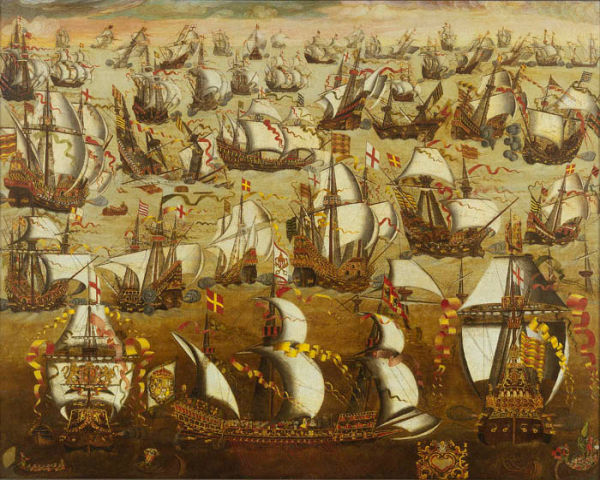
The painting, circa 1700, by an unknown artist, is of the Spanish Armada being defeated by Elizabeth’s superior navy–you know, the Spanish Armada of goodly pride inferior to the saucy barks the British built.
Sunday Sonnet – 27 December 2015

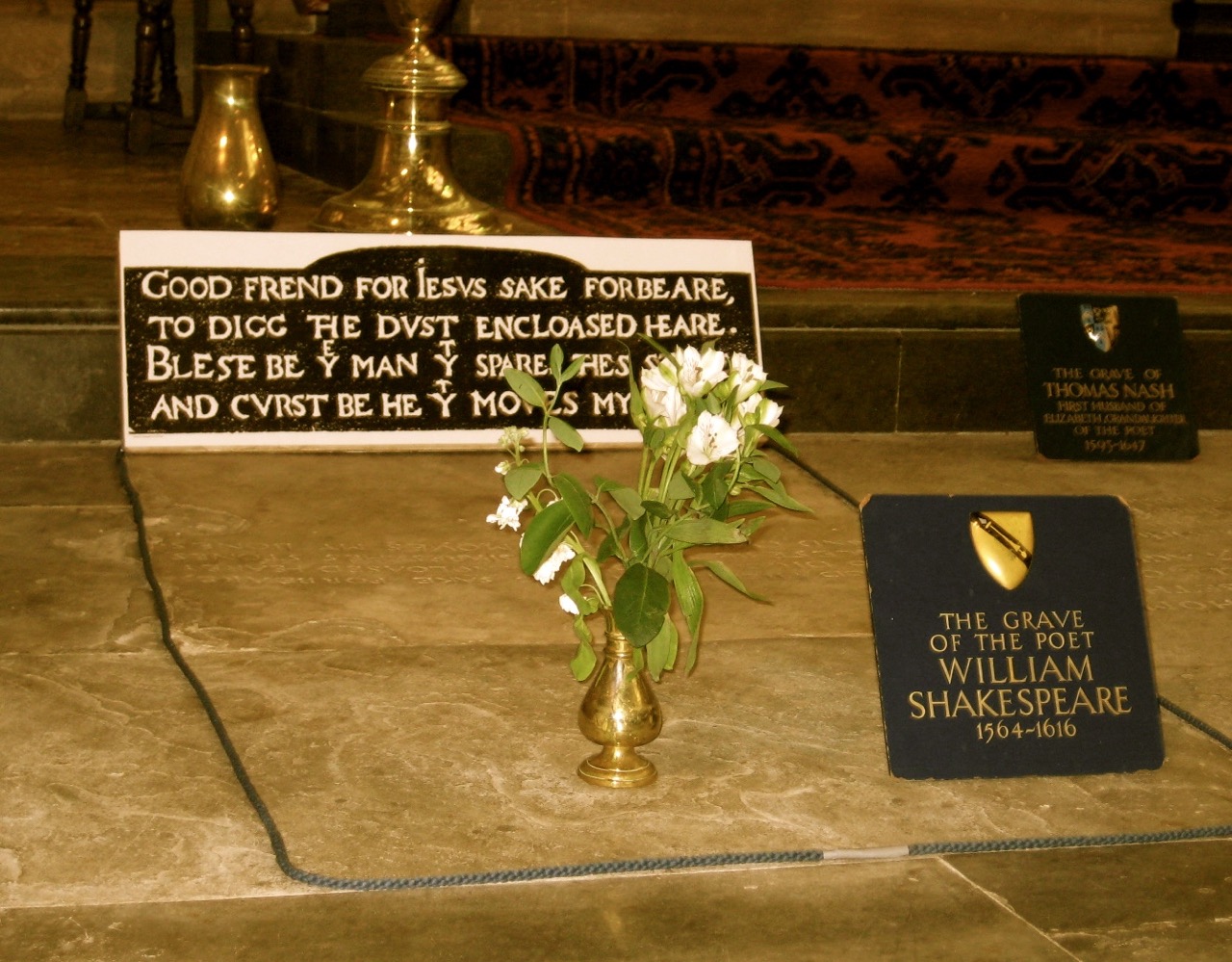
Shakespeare's grave

The central conceit of Sonnet 31 is strange, almost supernatural, and creepy.   By this point in the sonnet sequence, the Poet has fallen in love with the Young Man and now sees in this fair youth the loving essence of every old lover the Poet has ever had–to the point of likening the Young Man to a grave:

31

Thy bosom is endeared with all hearts,
Which I by lacking have supposed dead,
And there reigns love and all love’s loving parts,
And all those friends which I thought buried.
How many a holy and obsequious tear
Hath dear religious love stol’n from mine eye
As interest of the dead, which now appear
But things removed that hidden in thee lie!
Thou art the grave where buried love doth live,
Hung with the trophies of my lovers gone,
Who all their parts of me to thee did give;
That due of many now is thine alone:
Their images I loved I view in thee,
And thou, all they, hast all the all of me.

‘Thou art the grave where buried love doth live’ – you’re a grave where dead loves return to life

‘many a holy and obsequious tear / Hath dear religious love stol’n from mine eye / As interest of the dead, which now appear’ – I’ve shed tears at funerals for old loves I believed dead, only to find them in you

It’s pretty crazy. But when you consider the Elizabethan world and its life expectancy–plague, disease, bad nutrition, horrific medicine–and the middle-age of the Poet in love with a younger man, perhaps this grave and resurrection analogy isn’t so out of place.

And in the final couplet, the Poet says something beautiful and eloquent: That the Young Man embodies all of the loves the Poet’s ever known, and in that the Young Man has all of the Poet:

Their images I loved I view in thee,
And thou, all they, hast all the all of me.

Shakespeare was a genius at bringing together opposites: tragedy and comedy residing check to check in his plays; seemingly disparate themes and notions not colliding, but coalescing into one. The despair of the grave becoming the joy and solace of great love.

The image is of Shakespeare’s own grave at Holy Trinity Church in Stratford-upon-Avon.  Photo taken by Yours Truly.  

Sunday Sonnet – 20 December 2015

Sonnet 149

One of the many amazing things about Shakespeare’s sequence of 154 sonnets is that taken together and in the order numbered (a numbering Shakespeare never publically contested after they were published without his permission) is the sense of narrative. These sonnets tell a tale. Near the end, things come to a head. In the 149th sonnet, the Poet complains with a kind of emotional madness against the Dark Lady:

149

Canst thou, O cruel! say I love thee not,
When I against myself with thee partake?
Do I not think on thee, when I forgot
Am of myself, all tyrant, for thy sake?
Who hateth thee that I do call my friend?
On whom frown’st thou that I do fawn upon?
Nay, if thou lour’st on me, do I not spend
Revenge upon myself with present moan?
What merit do I in myself respect,
That is so proud thy service to despise,
When all my best doth worship thy defect,
Commanded by the motion of thine eyes?
But, love, hate on, for now I know thy mind;
Those that can see thou lovest, and I am blind.

This sonnet is basically a take-down of everything that’s wrong with the Poet and Dark Lady’s relationship; it’s so dysfunctional it could be a popular movie today:

  • You are so cruel – ‘O cruel!’
  • You claim I don’t love you even though I take sides against myself – ‘When I against myself with thee partake?’
  • I think of you and never of myself – ‘Do I not think on thee, when I forgot / Am of myself’
  • Anyone who hates you is no friend of mine – ‘Who hateth thee that I do call my friend?’
  • If you scowl at me, I punish myself – ‘if thou lour’st on me, do I not spend / Revenge upon myself with present moan?’
  • The best in me worships the worst in you – ‘all my best doth worship thy defect’
  • Go ahead and keep hating me, because you love people who can see, and I’m blind:

But, love, hate on, for now I know thy mind;
Those that can see thou lovest, and I am blind.

There’s no grand metaphor here, and this is actually one of the more conventional sonnets of Shakespeare’s radical collection. What makes this one so different from the typical Petrarchan romantic sonnet is there’s no final ‘turn’ to reconciliation at the end, merely a confirmation of how ugly and deplorable this whole mess has become.  

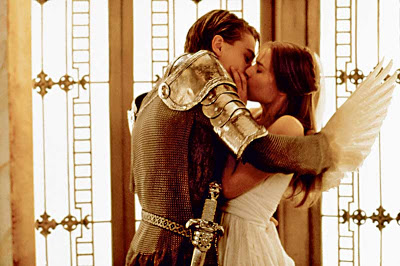
The image is of Romeo and Juliet kissing is from the 1996 film. Romantic, right? Judging from Shakespeare’s Sonnets, including the one above, and what he did to the happies couples in (a clue: they were farcical, doomed or evil), Shakespeare doesn’t seem to much believe in the idea of Romantic love.

Sunday Sonnet – 13 December 2015

Globe - 1

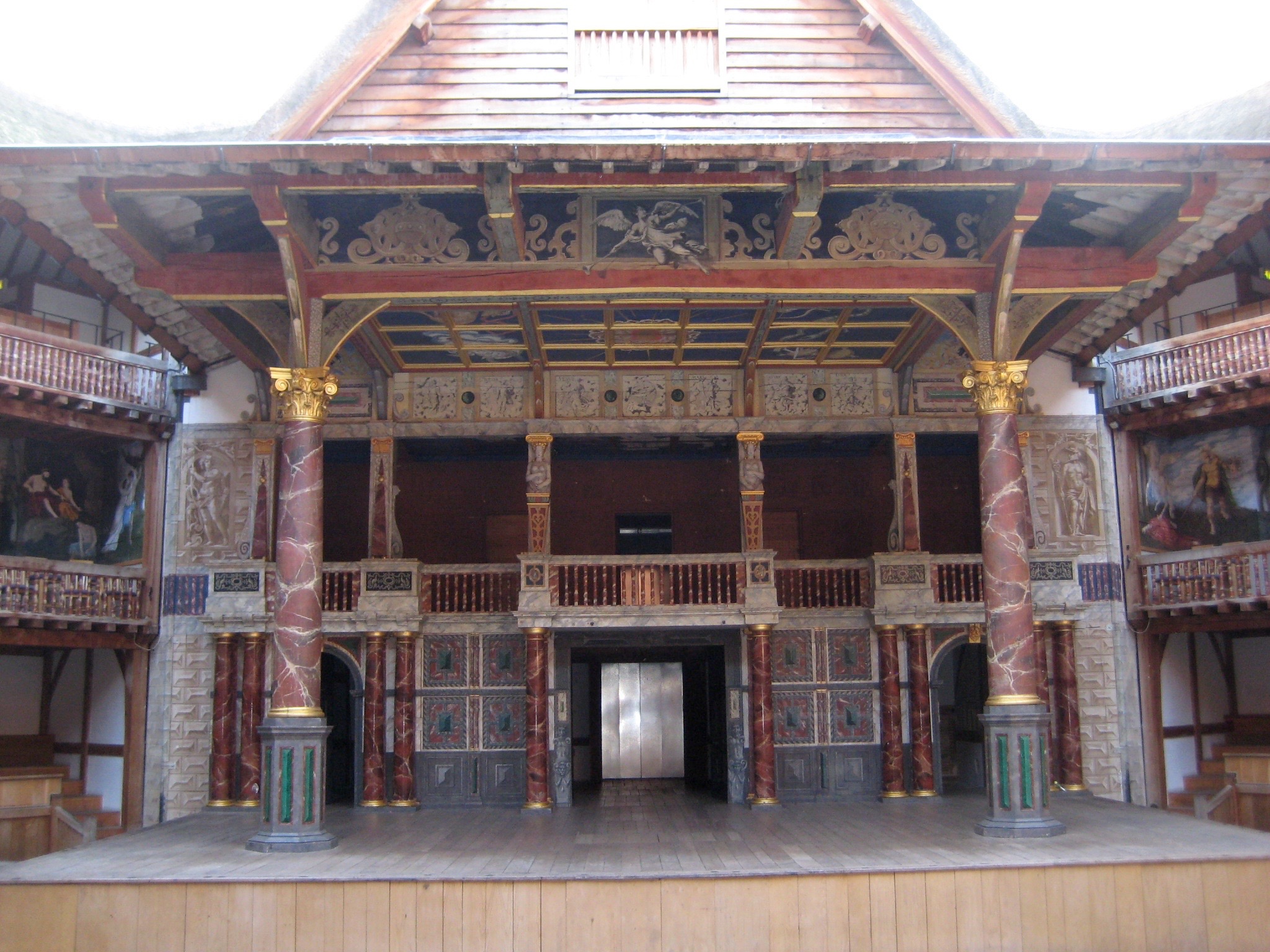
Shakespeare’s metaphor for Sonnet 23 encompasses two of The Bard’s prime avocations: Acting and poetry.  

23

As an unperfect actor on the stage
Who with his fear is put besides his part,
Or some fierce thing replete with too much rage,
Whose strength’s abundance weakens his own heart.
So I, for fear of trust, forget to say
The perfect ceremony of love’s rite,
And in mine own love’s strength seem to decay,
O’ercharged with burden of mine own love’s might.
O, let my books be then the eloquence
And dumb presagers of my speaking breast,
Who plead for love and look for recompense
More than that tongue that more hath more express’d.
O, learn to read what silent love hath writ:
To hear with eyes belongs to love’s fine wit.

The Poet tells his young love (the Young Man) that like an unpracticed actor on the stage who doesn’t yet know his lines, he doesn’t know what to say:

As an unperfect actor on the stage

to…

So I, for fear of trust, forget to say

The perfect ceremony of love’s rite.

Shakespeare also throws in a comparison to an animal that’s so fierce it can’t articulate its own heart. But by the end of the sonnet, the Poet gets back to the point. Instead of taking me for what I say (like the unpracticed actor), take me for what I write:

O, let my books be then the eloquence

I find this Sonnet really interesting from our modern perspective. Because now all we can really know about Shakespeare are what he’s left us in his writing. It’s almost as if the Poet is talking both to the Young Man, and to future generations: What really matters is what’s written down. Related to this, we don’t really know how Elizabethan actors sounded on stage. Yes, there have been some recent breakthroughs on Elizabethan pronunciation, clued by some of Shakespeare’s own puns. The Globe Theatre in London now offers some performances in what they believe is close to the original dialect. But in the end, it’s a bit of guesswork. Not with what’s written.  

So ultimately, the lesson the Poet gives the Young Man is this: anything not so eloquent I might say is evanescent; but what I’ve written down in the words of this sonnet–and in any of my books–are what’s true and everlasting.

The image is of the actual stage of the reconstructed Globe Theatre, which I was lucky enough to visit in 2010. We believe this is very much what it looked like when Shakespeare stood upon it.

Sunday Sonnet – 06 December 2015

sonnet 14

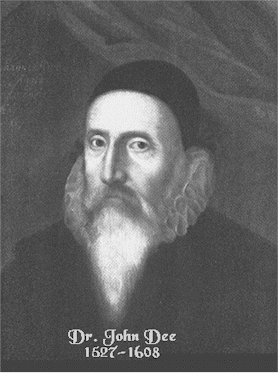
Astrologers enjoyed good business in Elizabethan times. We can never know if Shakespeare ever employed one or even believed in their powers of divination, but he certainly knew of them and knew something of the prognosticator’s art.

14

Not from the stars do I my judgment pluck;
And yet methinks I have astronomy,
But not to tell of good or evil luck,
Of plagues, of dearths, or seasons’ quality;
Nor can I fortune to brief minutes tell,
Pointing to each his thunder, rain and wind,
Or say with princes if it shall go well,
By oft predict that I in heaven find:
But from thine eyes my knowledge I derive,
And, constant stars, in them I read such art
As truth and beauty shall together thrive,
If from thyself to store thou wouldst convert;
Or else of thee this I prognosticate:
Thy end is truth’s and beauty’s doom and date.

In this sonnet the Poet compares the Young Man’s eyes to stars, and claims, like an astrologer, to be able to read in them the future: ‘But from thine eyes my knowledge I derive’. This sonnet comes so close to being a more traditional Elizabethan sonnet: a vivid metaphor, evocative of all of creation–thunder, wind and rain, the fates of princes, the constancy of stars–all kinds of romantic mush. It’s all here. But rather then simply comparing the Young Man to the beauty of heaven, or to the mysterious arts of astrology, the sonnet has a specific agenda: to urge the Young Man to procreate, lest his beauty be lost: ‘If from thyself to store thou wouldst convert’….to…’Thy end is truth’s and beauty’s doom and date.’

In these early sonnets, the Poet was still trying to convince the Young Man to marry and sire children. There’s circumstantial evidence that Lord Burghley, guardian to the Earl of Southampton and Elizabeth’s Secretary of State, commissioned Shakespeare to write sonnets to the Earl, urging him to marry. If that’s true, Burghley’s best intentions eventually changed The Poet and the Young Man into something more romantic and more provocative.  This vivid and romantic sonnets certainly shows signs of that growing change.

The image is of John Dee, Queen Elizabeth’s astrologer.

Sunday Sonnet – 29 November 2015

Will_Kemp_Elizabethan_Clown_JigOne of the amazing things about Shakespeare–and one of the things that has led to the conspiracy theories that a glove-maker’s son from the country couldn’t have possibly written such a vast and wide ranging body of work–is the vast sweep of the Poet’s knowledge: law, language (English, French, Latin), geography, horticulture, the royal court, the lives of commoners, the military, all manner of avocations and professions. And, as shown in Sonnet 8, musicianship:

8

Music to hear, why hear’st thou music sadly?

Sweets with sweets war not, joy delights in joy:

Why lov’st thou that which thou receiv’st not gladly,

Or else receiv’st with pleasure thine annoy?

If the true concord of well-tuned sounds,

By unions married, do offend thine ear,

They do but sweetly chide thee, who confounds

In singleness the parts that thou shouldst bear.

Mark how one string, sweet husband to another,

Strikes each in each by mutual ordering;

Resembling sire and child and happy mother,

Who, all in one, one pleasing note do sing:

   Whose speechless song being many, seeming one,

   Sings this to thee: ‘Thou single wilt prove none.’

Number 8 comes from early in the Young Man sonnets, when Shakespeare was possibly being paid by Lord Burghley to try and convince the young Earl of Southampton to marry–by writing Southampton sonnets! Southampton, by all accounts, adored verse, and back then trading verse was like trading iPod tracks today.

Here Shakespeare contrasts harmony and chords–‘the true concord of well-tuned sounds / by unions married’–against the sounds of single notes or parts, ‘who confounds / In singleness the parts that thou shouldst bear.’ A single man is like a single note. But a family is like the delight of musical chords.

Resembling sire and child and happy mother,

Who, all in one, one pleasing note do sing

Another sonnet which illustrates that Shakespeare must’ve loved music is one of the later sonnets, Number 128, where the Poet finds the Dark Lady playing on the virginal (harpsichord).

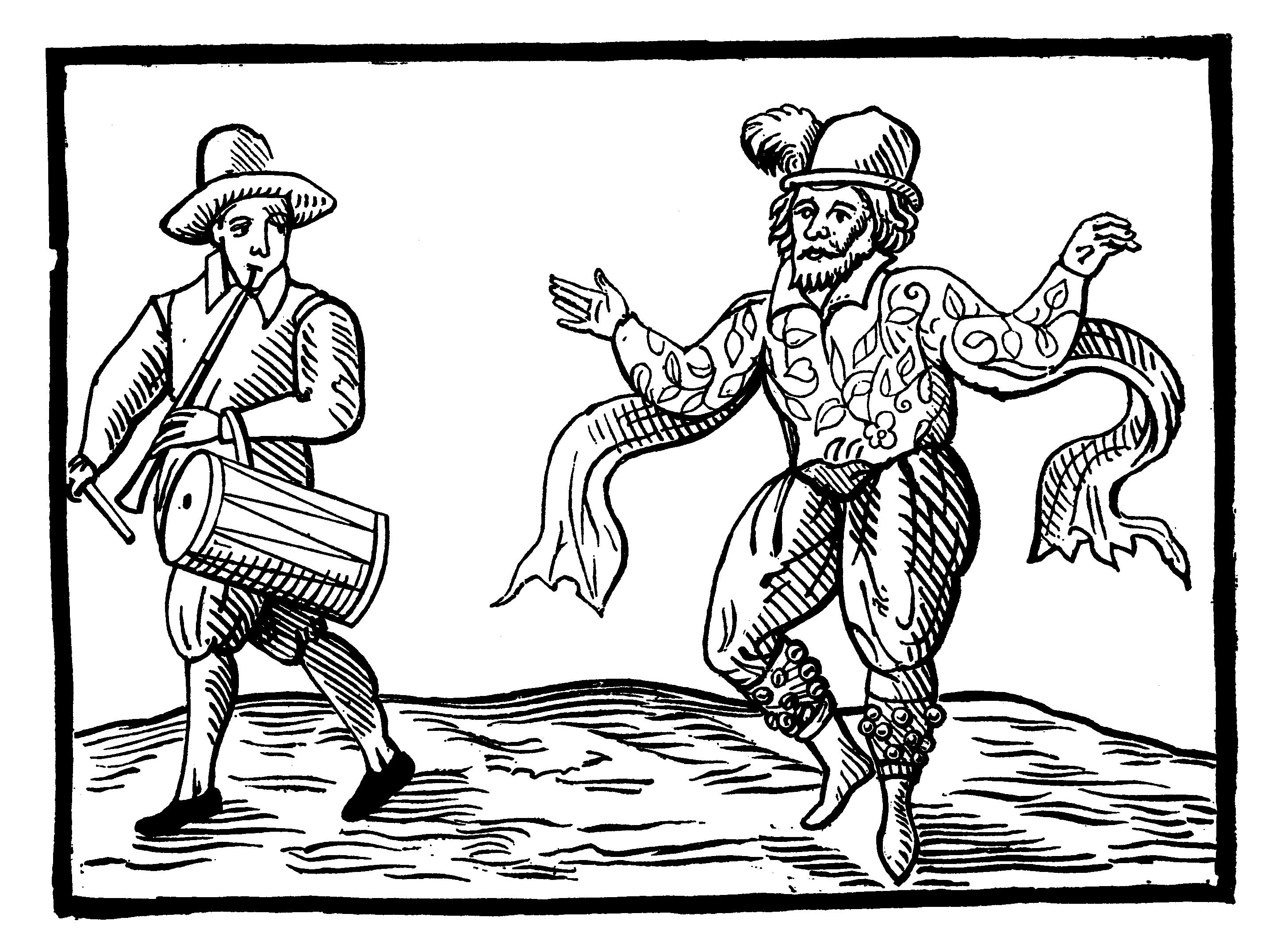
Music played an important part in Elizabethan Theatre. During the early years of Shakespeare’s career (till about 1600), many of his plays’ performances ended with impromptu musical numbers. Shakespeare’s fellow player, Will Kempe, was an accomplished dancer and singer, and many of Shakespeare’s comedies contain songs (which we no longer have the music for, just the lyrics).  

The image is an Elizabethan woodcut of Will Kempe. Kempe was one of Shakespeare’s fellow Lord Chamberlain’s Men.


Sunday Sonnet – 15 November 2015

Romeo_and_juliet_brown

If a cheater or adulterer should ever have the chutzpah to beg for forgiveness, he or she might do well to quote Sonnet 110.   Here we find a very eloquent argument laying out admittance of infidelities, acknowledgement of bad character, and a fervent assurance that the recipient of this Sonnet–the Young Man–is the best love the Poet’s ever known. Please take me back!

110

Alas, ’tis true I have gone here and there
And made myself a motley to the view,
Gored mine own thoughts, sold cheap what is most dear,
Made old offences of affections new;
Most true it is that I have look’d on truth
Askance and strangely: but, by all above,
These blenches gave my heart another youth,
And worse essays proved thee my best of love.
Now all is done, have what shall have no end:
Mine appetite I never more will grind
On newer proof, to try an older friend,
A god in love, to whom I am confined.
Then give me welcome, next my heaven the best,
Even to thy pure and most most loving breast.

If the 154 sonnets can be taken as any kind of narrative, and if their numbering is indeed anything close to what Shakespeare intended (their original publication occurred without Shakespeare’s permission), then this plea for forgiveness works for a while: the Young Man does seem to take the Poet back, and things sort of progress to the one of the most stunning of all the sonnets, number 116.   But it is late in the Young Man sequence of sonnets, and soon the verses will veer off toward the Dark Lady. The long and short of it this: the plea for forgiveness is more about the Poet than the Young Man.

Truth and proving one’s true intentions are the big question here. The Poet was untruthful, and the idea of truth is raised multiple times as well as a plea to let the Poet prove it:

“Alas, ‘tis true…”

“Most true it is that I have look’d on truth”

“And worse essay proved thee my best of love.”

“I never more will grind / On newer proof…”

My modern advice to all lovers is to stay true to your “most most loving breast.”   Leave the agony of fidelity to the Poets. Of course, people don’t, which is another reason why these very old verses still speak to us today.  

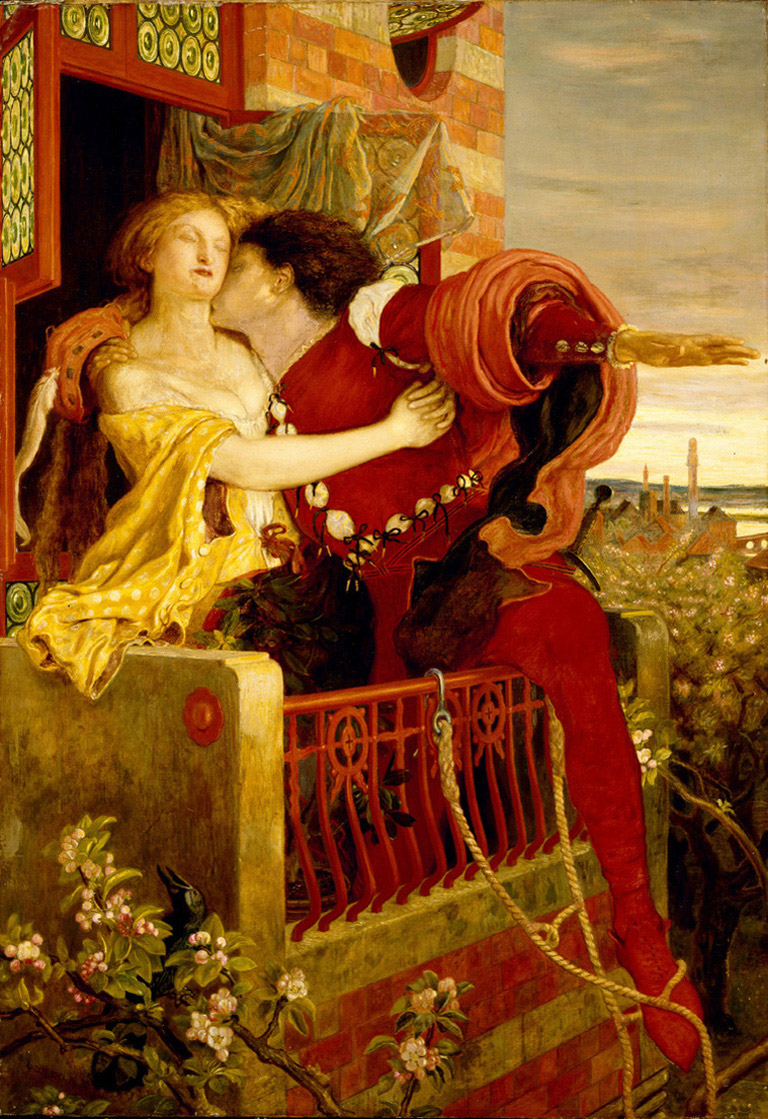
The image is the Pre-Raphaelite painter Ford Madox Brown’s depiction of ‘Romeo and Juliet, c. 1870.   It appears that with Shakespeare, whenever love was free of any infidelity, the lover themselves were doomed.

Sunday Sonnet – 08 November 2015

sonnet 65

Only Poetry can defeat the ravages of Time. Shakespeare fervently asserts this in Sonnet 65, as he does so often in so much of his work.   Do you doubt him? You shouldn’t. The remains of the Elizabethan era, over four centuries gone, has left us only vestiges of its glory: London burned, obliterating most of its physical relics; every breathing soul dust in the Earth; its spoken language elusive–we’ll never know for certain how Elizabethan English really sounded; and we can only guess at what the stink of daily must’ve been. But the Poet’s love for his Young Man? Why, this sonnet is as brilliant and perfectly preserved as the day Shakespeare fixed its last iamb:

65

Since brass, nor stone, nor earth, nor boundless sea,
But sad mortality o’er-sways their power,
How with this rage shall beauty hold a plea,
Whose action is no stronger than a flower?
O, how shall summer’s honey breath hold out
Against the wreckful siege of battering days,
When rocks impregnable are not so stout,
Nor gates of steel so strong, but Time decays?
O fearful meditation! where, alack,
Shall Time’s best jewel from Time’s chest lie hid?
Or what strong hand can hold his swift foot back?
Or who his spoil of beauty can forbid?
O, none, unless this miracle have might,
That in black ink my love may still shine bright.

The intensity of the Poet’s emotions come through–through four hundred years. Simple black ink is able to capture and hold the despair Shakespeare felt against destroyer Time–how it ravages both love and life.

I wonder what Shakespeare might think if he knew that folks, four centuries later, were still reading his works. Would he be surprised?

The image comes from a photo of Kenilworth Castle, in ruins of course. This castle was owned by Robert Dudley, the great love of Queen Elizabeth, whom she was never able to marry.

Sunday Sonnet – 01 November 2015

Globe_Theatre_Buehne

In composing his 154 Sonnets, Shakespeare upended the whole Renaissance ideal of Romantic Poetry. Yes, Shakespeare wrote about unrequited love, a love marked with rhetorical hyperbole, lovers addicted to love, love as pain (which popular music still hasn’t given up on), and the object of love being an idealized lady.

However, with Shakespeare, that love is tainted with betrayal, the idealized lady is a ‘dark’ lady, and the passion felt is not always heterosexual. In Sonnet 21, the Poet is writing to his beloved Young Man, warning him of a rival poets, rivals who employ inflated rhetoric and outrageous conceits. Shakespeare claims to simply write the bare truth:

21

So is it not with me as with that Muse
Stirr’d by a painted beauty to his verse,
Who heaven itself for ornament doth use
And every fair with his fair doth rehearse
Making a couplement of proud compare,
With sun and moon, with earth and sea’s rich gems,
With April’s first-born flowers, and all things rare
That heaven’s air in this huge rondure hems.
O’ let me, true in love, but truly write,
And then believe me, my love is as fair
As any mother’s child, though not so bright
As those gold candles fix’d in heaven’s air:
Let them say more than like of hearsay well;
I will not praise that purpose not to sell.

If you can home in a few key phrases, the sonnet because pretty clear:

  • ‘Painted beauty’–women wearing too much makeup.
  • ‘Making a couplement of proud compare’–outrageous conceits
  • ‘That heaven’s air in this huge rondure hems’–outrageous hyperbole (rondure means ‘sphere’)
  • ‘With sun and moon, with earth and sea’s rich gems’–idolizing your beauty
  • ‘O let me, true in love, but truly write’–my verse speaks only truth
  • ‘I will not praise that purpose not to sell’–I’m not selling you anything

The idea of the ‘rival poet’ makes its return later on Shakespeare’s sonnets. As usual, the theme of any particular sonnet is not insular; these 154 verses all interconnect.   And despite Shakespeare’s insistence that he doesn’t indulge in hyperbolic metaphors, he certainly does it elsewhere! But at least when the Bard does it, he crafts metaphor, simile and imagery more beautifully and eloquently than other rival Elizabethan poet.

The image of the reconstructed Globe Theatre in London, whom Shakespeare himself had a hand in designing. The ceiling of the main stage’s roof shows off the Renaissance idea of Heaven, something Poets apparently employed a little bit too often.

Sunday Sonnet – 25 October 2015

Sonnet 56

If someone wants (or is forced by a teacher) to study Shakespeare’s challenging Sonnets, perhaps Number 56 is a good place to start. It’s sturdy and straightforward, and talks about something most of us have experienced: a separation from a true love.  

56

Sweet love, renew thy force; be it not said
Thy edge should blunter be than appetite,
Which but to-day by feeding is allay’d,
To-morrow sharpen’d in his former might:
So, love, be thou; although to-day thou fill
Thy hungry eyes even till they wink with fullness,
To-morrow see again, and do not kill
The spirit of love with a perpetual dullness.
Let this sad interim like the ocean be
Which parts the shore, where two contracted new
Come daily to the banks, that, when they see
Return of love, more blest may be the view;
Else call it winter, which being full of care
Makes summer’s welcome thrice more wish’d, more rare.

The mention of appetite in the second line is probably talking about lust, and we know lust is like appetite: feed it to satiate it, only to feel it again on the morrow. The love the Poet feels for his Young Man (yes, Number 56 is in the middle of the Young Man sonnets) lingers on through the ‘sad interim’ of their separation, and the big image for this poem is two lovers on two shores with an ocean separating them.

Let this sad interim like the ocean be
Which parts the shore, where two contracted new
Come daily to the banks,

However, if each lover looks hard enough across the ocean, when they do reunite, their coming together will be all the sweeter. Shakespeare then adds another metaphor for the final couplet, comparing the suffering of a long arduous Winter that better prepares us to appreciate Spring. Shakespeare always uses as many metaphors, images and similes as he wants to, whereas we mortals are cautioned to never pile them on. It’s too bad; Elizabethan English was thick with poetic language and Shakespeare was its greatest practitioner.  

The image (the visual one, not any from the sonnet) comes from an Elizabethan map of the world, circa 1587, by the cartographer Gerard Mercator.   His view of the oceans and the globe was not as clear sighted as Shakespeare’s view of love.