Sunday Sonnet – 16 October 2016

sonnet-23

Sonnet 23 is rarely counted among Shakespeare’s greatest, but I’m terribly fond of it for a couple reasons.

Its opening lines allude to Shakespeare’s own profession as an actor, which is tantalizing since we know so little about Shakespeare’s life. I also like this sonnet because it speaks to the power of the written word, and how that is more enduring than the power of the spoken word. If you think about it, that pretty much summarizes Shakespeare’s two artistic worlds: his theatre craft, the art of the spoken word, and his published verse, the power of the written word. Of course both of these get muddled: After Shakespeare’s death, his friends published his plays, preserving the Bard’s legacy in writing. And poetry? Many believe all verse is meant to be read aloud.

For the purposes of this sonnet, the Poet argues that the Young Man can find the truest expression of the Poet’s love in his written verse, and not in speech. Isn’t that true for many of us even today, in our modern world? Written words to a lover carry so much more weight. It’s one thing to throw off a clever quip, too often spat out with too much emotion; so much more clear and enduring it you can commit that emotion to pen and paper.

23

As an unperfect actor on the stage
Who with his fear is put besides his part,
Or some fierce thing replete with too much rage,
Whose strength’s abundance weakens his own heart.
So I, for fear of trust, forget to say
The perfect ceremony of love’s rite,
And in mine own love’s strength seem to decay,
O’ercharged with burden of mine own love’s might.
O, let my books be then the eloquence
And dumb presagers of my speaking breast,
Who plead for love and look for recompense
More than that tongue that more hath more express’d.
O, learn to read what silent love hath writ:
To hear with eyes belongs to love’s fine wit.
Sunday Sonnet – 13 December 2015

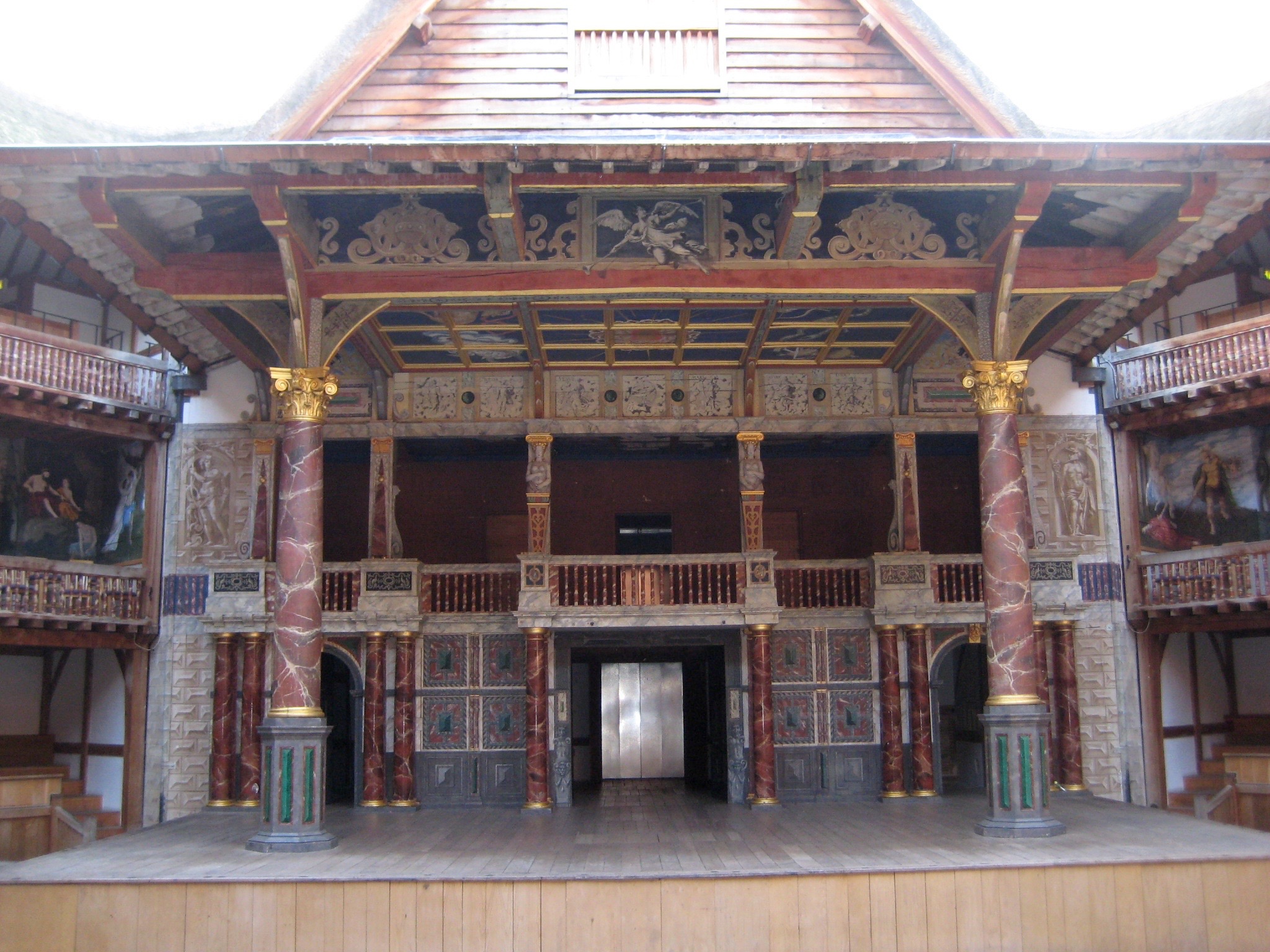
Globe - 1

Shakespeare’s metaphor for Sonnet 23 encompasses two of The Bard’s prime avocations: Acting and poetry.  

23

As an unperfect actor on the stage
Who with his fear is put besides his part,
Or some fierce thing replete with too much rage,
Whose strength’s abundance weakens his own heart.
So I, for fear of trust, forget to say
The perfect ceremony of love’s rite,
And in mine own love’s strength seem to decay,
O’ercharged with burden of mine own love’s might.
O, let my books be then the eloquence
And dumb presagers of my speaking breast,
Who plead for love and look for recompense
More than that tongue that more hath more express’d.
O, learn to read what silent love hath writ:
To hear with eyes belongs to love’s fine wit.

The Poet tells his young love (the Young Man) that like an unpracticed actor on the stage who doesn’t yet know his lines, he doesn’t know what to say:

As an unperfect actor on the stage

to…

So I, for fear of trust, forget to say

The perfect ceremony of love’s rite.

Shakespeare also throws in a comparison to an animal that’s so fierce it can’t articulate its own heart. But by the end of the sonnet, the Poet gets back to the point. Instead of taking me for what I say (like the unpracticed actor), take me for what I write:

O, let my books be then the eloquence

I find this Sonnet really interesting from our modern perspective. Because now all we can really know about Shakespeare are what he’s left us in his writing. It’s almost as if the Poet is talking both to the Young Man, and to future generations: What really matters is what’s written down. Related to this, we don’t really know how Elizabethan actors sounded on stage. Yes, there have been some recent breakthroughs on Elizabethan pronunciation, clued by some of Shakespeare’s own puns. The Globe Theatre in London now offers some performances in what they believe is close to the original dialect. But in the end, it’s a bit of guesswork. Not with what’s written.  

So ultimately, the lesson the Poet gives the Young Man is this: anything not so eloquent I might say is evanescent; but what I’ve written down in the words of this sonnet–and in any of my books–are what’s true and everlasting.

The image is of the actual stage of the reconstructed Globe Theatre, which I was lucky enough to visit in 2010. We believe this is very much what it looked like when Shakespeare stood upon it.