Sunday Sonnet – 06 March 2016

sonnet 151

A case can be made that Queen Elizabeth I ushered England into the Renaissance. That said, despite the Elizabethan explosion of Art, Science and Thought, it was an incredibly repressive society. And it was sexually repressive–to the point where it was dangerous to be too risqué. Shakespeare, though, knew just how far he could push it.

151

Love is too young to know what conscience is;
Yet who knows not conscience is born of love?
Then, gentle cheater, urge not my amiss,
Lest guilty of my faults thy sweet self prove:
For, thou betraying me, I do betray
My nobler part to my gross body’s treason;
My soul doth tell my body that he may
Triumph in love; flesh stays no father reason;
But, rising at thy name, doth point out thee
As his triumphant prize. Proud of this pride,
He is contented thy poor drudge to be,
To stand in thy affairs, fall by thy side.
No want of conscience hold it that I call
Her ‘love’ for whose dear love I rise and fall.

This verse is all about how the Poet’s spiritual inclinations succumb to his bodily lust for the Dark Lady. Where it gets risqué–especially for Elizabethan society–is in its second half, where the Poet is reduced to nothing but a phallus, rising and lowering to the Dark Lady’s bidding. You see, it wasn’t permissible in the Elizabethan world of poetry to express sexual desire. But here Shakespeare takes it on. Re-read the start of the second half, it’s really quite explicit:

But, rising at thy name, doth point out thee
As his triumphant prize. Proud of this pride,
He is contented thy poor drudge to be,
To stand in thy affairs…

With Sonnet 151, is Shakespeare perhaps also addressing the conventions of the day? In the opening lines Shakespeare seems to be referring to Cupid, who’s too naïve to really understand the way of the world. I think this Sonnet might be taking aim at the Petrarchan ideal of Romantic Love as idolized in most love poetry of the day: grow up, kids, the way of the world is a lot different than what you’re writing about. This is what it’s like: Soul and lust and pleasure and guilt, all mixed up together.

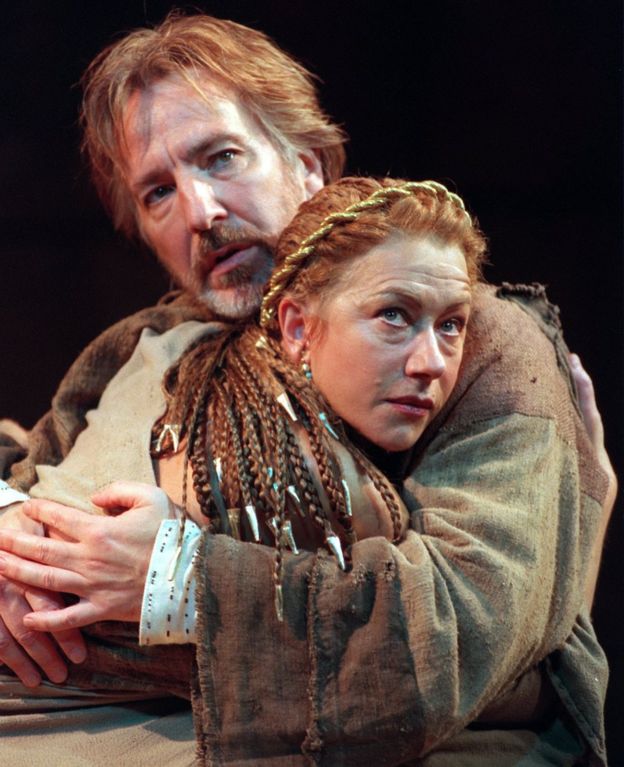
Shakespeare’s plays were full of lovers, usually unhappy and always complicated. Today’s images is of the great Allan Rickman and Helen Mirren as Antony and Cleopatra from a live performance: certainly sexual, most definitely troubled.


Sunday Sonnet – 28 February 2016

Sonnet 146

If ever there were a Shakespearean sonnet appropriate for a Sunday, it’s probably this one.

146

Poor soul, the centre of my sinful earth,
[…] these rebel powers that thee array;
Why dost thou pine within and suffer dearth,
Painting thy outward walls so costly gay?
Why so large cost, having so short a lease,
Dost thou upon thy fading mansion spend?
Shall worms, inheritors of this excess,
Eat up thy charge? is this thy body’s end?
Then soul, live thou upon thy servant’s loss,
And let that pine to aggravate thy store;
Buy terms divine in selling hours of dross;
Within be fed, without be rich no more:
So shalt thou feed on Death, that feeds on men,
And Death once dead, there’s no more dying then.

Shakespeare to a large degree avoided Christian references in his plays and poetry, which was probably wise in Elizabethan England: The war between the Protestant and Catholic faiths had seesawed back and for since Henry VIII, and plenty of people had ended up dead, usually in very unpleasant ways. And so this Dark Lady Sonnet (there’s no explicit mention of her here, but the sins here are carnal ones) is a bit unusual in that the Poet is starting to worry about the eternal disposition of his soul.

This argument between one’s eternal soul and the aging of the temporal body, in this poem imaged as a fading mansion, concludes that it’s time to stop trying to prop up that failing body:

Painting thy outward walls so costly gay?
Why so large cost, having so short a lease,
Dost thou upon thy fading mansion spend?

The whole thrust of this poem is pretty straightforward: Neglect your worldly body so that you might enrich your soul. Which leads you to one of Shakespeare’s most lovely couplets:

So shalt thou feed on Death, that feeds on men,
And Death once dead, there’s no more dying then.

But what makes this sonnet famous (at least in literary circles) isn’t Shakespeare’s rare dalliance into matters piously religious, but those missing words in the second line: In the original Folio, that blank space is filled with ‘My sinful earth.’ Yes–that’s right, the phrase ‘My sinful earth’ is repeated, at the end of line 1 and at the start of line 2.

This is, if you know anything about meter and about Shakespeare’s unerring genius for economy and beauty of language, IS IMPOSSIBLE. The Bard wouldn’t have a) messed up his meter in line 2 with those three words and b) wouldn’t have repeated himself so stupidly. The pervading argument goes that some idiot printer made an error.

So what are those lost words? That’s where all the fun begins. Critics, scholars, poets and gadflies have been arguing for centuries what the Bard must’ve intended. Short of a séance or traveling back in time, we’ll never know. But here are some suggestions, none of which really work beautifully if you take into account meter, cadence, imagery and theme:

Trapp’d these rebel powers that thee array;

or….

Ring’d

Fenced

Foil’d

Pressed

Hemm’d

Fool’d

Which do you like? All this sound and fury, caused by an idiot, which in the end probably signifies nothing.

The image of an old woodcut is of an Elizabethan era printing press. They had movable type, but it was still laborious and prone to error.

Friday’s Poe Poem – 26 February 2016

valley of unrest

In today’s world, trying to read a poem scribed in rhymed couplets (or triplets) can sound cloying. But give this little verse from Edgar A. Poe a try; don’t pause on the rhymed words, follow the punctuation. If you can do that, a mournful lyricism comes to life.

The Valley of Unrest

Once it smiled a silent dell

Where the people did not dwell;

They had gone unto the wars,

Trusting to the mild-eyed stars,

Nightly, from their azure towers,

To keep watch above the flowers,

In the midst of which all day

The red sun-light lazily lay.

Now each visitor shall confess

The sad valley’s restlessness.

Nothing there is motionless—

Nothing save the airs that brood

Over the magic solitude.

Ah, by no wind are stirred those trees

That palpitate like the chill seas

Around the misty Hebrides!

Ah, by no wind those clouds are driven

That rustle through the unquiet Heaven

Uneasily, from morn till even,

Over the violets there that lie

In myriad types of the human eye—

Over the lilies there that wave

And weep above a nameless grave!

They wave:—from out their fragrant tops

External dews come down in drops.

They weep:—from off their delicate stems

Perennial tears descend in gems.

      –Edgar A. Poe (1831, revised 1845)

This poem may not be overtly profound, but like the best examples of Dark Romanticism, a subgenre which Poe helped perpetuate, this verse stirs up the favorite indulgences of Dark Romantics: I’m a social outcast, my torments are both external and internal, and the very nature of man certainly dooms me. Oh–and these curses might just be supernatural…

The poem was originally longer and published under a different name, ‘The Valley Nis’. It’s a verse Poe obviously thought of through the years, until he published its revision in 1845, just four years before his death. We don’t think of it often today, but I believe it opens a window into Poe’s melancholic heart.  

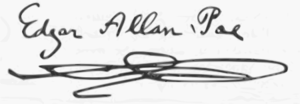
The image is one of many surviving examples of Poe’s signature.

Sunday Sonnet – 21 February 2016

Sonnet 140

Sometimes it’s delicious to watch a love affair blow apart with jealously, infidelity and threats, especially if you’re not one of the lovers.   I give you Shakespeare’s Dark Lady Sonnet Number 140:

140

Be wise as thou art cruel; do not press
My tongue-tied patience with too much disdain;
Lest sorrow lend me words and words express
The manner of my pity-wanting pain.
If I might teach thee wit, better it were,
Though not to love, yet, love, to tell me so;
As testy sick men, when their deaths be near,
No news but health from their physicians know;
For if I should despair, I should grow mad,
And in my madness might speak ill of thee:
Now this ill-wresting world is grown so bad,
Mad slanderers by mad ears believed be,
That I may not be so, nor thou belied,
Bear thine eyes straight, though thy proud heart go wide.

So what’s going on here? The Poet accuses the Dark Lady of cruelty, but warns hers that she’d better wise up and at least pretend to love him, or he’s going to tell everyone what a philanderer she is.

I’ll speak ill of you: ‘Lest sorrow lend me words and words express’ and ‘And in my madness might speak ill of thee’

Dote on me, even though I know you’re cheating with others : ‘Bear thine eyes straight, though thy proud heart go wide’

And what would a Shakespeare sonnet be without a metaphor? Here the Poet talks about how a dying man begs his doctor to lie to him about how bad it is:  

‘As testy sick men, when their deaths be near,
No news but health from their physicians know;’

Yes, this relationship is in deplorable shape. Despite that–despite the fact that the Dark Lady really doesn’t love him, and is cheating on him–the Poet threatens to spread the truth around if she doesn’t at least pretend.  

Don’t miss some of the beautiful language: ‘My tongue-tied patience with too much disdain;’ or ‘The manner of my pity-wanting pain’. Then there’s the little pun on ‘testy sick men’, hinting at the real reason why the Poet is so desperate to stay with his Dark Lady: lust. Though this sonnet–like so many of Shakespeare’s–throws the idea of Romantic Love on its head, it does embody one facet of that idea: that being in the throes of love is like a sickness. Here the sickness is nothing so lofty and unrequited love for a pristine and angelic mistress–it’s just lust, jealousy and payback.

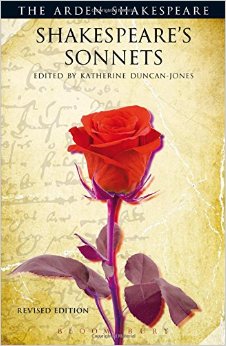
The image is from a cover of an old Arden edition of Shakespeare’s sonnets, which I’ve always found ironic. We associate the gift of a red rose with traditional Romantic love. The sonnets, however–both the Young Man and the Dark Lady ones–turned that notion on its head. At least roses have thorns.


Sunday Sonnet – Valentine’s Day 2016

valentine

Happy Valentine’s Day from William Shakespeare! This love sonnet is one of his greatest, not only eloquent and beautiful, but it speaks so wisely to the quality and temperament of true love.

116

Let me not to the marriage of true minds
Admit impediments. Love is not love
Which alters when it alteration finds,
Or bends with the remover to remove:
O no! it is an ever-fixed mark
That looks on tempests and is never shaken;
It is the star to every wandering bark,
Whose worth’s unknown, although his height be taken.
Love’s not Time’s fool, though rosy lips and cheeks
Within his bending sickle’s compass come:
Love alters not with his brief hours and weeks,
But bears it out even to the edge of doom.
If this be error and upon me proved,
I never writ, nor no man ever loved.

What is love? A marriage of true minds. It never alters. The vagaries of life–tempests–will not shake it. It guides us, like a star guiding a vessel (a ‘bark’ is a boat). It’s timeless, not subject to hours and weeks. True love stays with us until the ends of our lives–the edge of doom. And the Poet attests that all this is true, or ‘I never writ’ and no man ever loved.

The image is of one of Shakespeare’s most successful romantic pairings–and certainly a pairing of true minds: Beatrice and Benedict from Much Ado About Nothing. Amy Acker and Alexis Denisof from Joss Whedon’s 2012 film version.

Midweek Shakespearean Post – 10 February 2016

Station Eleven

The pair of novels I’m writing spawned this website: literary fiction mashed up with a bit of science fiction and a bit of mystery: Edgar A. Poe and William Shakespeare. So when a new novel comes along that mashes up genres and starts getting attention, it gets my attention. I just read Station Eleven by Emily St. John Mandel, and if my novels can be only half as good as Ms. Mandel’s, I can die happy.

Shakespeare, post-apocalyptic science fiction, a graphic novel, troubled but inspiring female protagonists, religious fanaticism, an intricate web of interconnecting characters, twists of time and even a Star Trek meme, populate this adventure. That makes it seem like a jumble: it’s not. Station Eleven is an elegiac and carefully constructed rumination on the meaning of Art.

Unlike the too-often utilized post-apocalyptic subgenre, this is book confounds your expectations. It doesn’t hustle along like a Hollywood blockbuster, it takes its time. Page one opens on stage with a production of King Lear. From that point the novel takes you through time and space, before and after a swine-flu mutation obliterates humanity, and all around the globe, into the hearts, hopes and fears of a tableau of characters.

Not to give anything away, but the novel ends where it begins. On the way, if you’re patient with the careful unraveling of events, Mandel rewards you with a series of illuminating connections. Now that I’ve turned the last page, some of these connections seem almost too fantastic to believe: but when you’re in the weave of her fictional dream, these couplings seem amazing, enlightening and uplifting.

Uplifting. A post-apocalyptic novel that’s uplifting! That’s one of the main miracles of this book. And as it’s happening, you completely believe it and buy it.

Take a chance and read this novel. What a wonderful mash up of genres, what a wonderful and poetic journey.


Friday Poe Poem – 05 February 2016

dream

Today’s poem by Edgar A. Poe is an achingly beautiful verse about love lost, and the interminable forces of the world that inevitably wash away everything we hold dear.

‘A Dream Within a Dream’

Take this kiss upon the brow!

And, in parting from you now,

Thus much let me avow —

You are not wrong, who deem

That my days have been a dream;

Yet if hope has flown away

In a night, or in a day,

In a vision, or in none,

Is it therefore the less gone

All that we see or seem

Is but a dream within a dream.


I stand amid the roar

Of a surf-tormented shore,

And I hold within my hand

Grains of the golden sand —

How few! yet how they creep

Through my fingers to the deep,

While I weep — while I weep!

O God! Can I not grasp

Them with a tighter clasp?

O God! can I not save

One from the pitiless wave?

Is all that we see or seem

But a dream within a dream?

The metaphor is lovely: the pitiless reality of how everything sifts away, so that you can’t even hold on to a grain of sand.

Through the course of his short life, Poe lost everything he loved: His mother, his siblings to either alcohol or madness, his young wife to consumption, and–from his perspective–his chance at literary greatness. The last was the greatest of all, and on that count he was wrong. Alas, that recognition came only after his death.

This was published in 1849, the year of Poe’s death. The poem almost seems an epitaph.

Sunday Sonnet – 31 January 2016

Sonnet_144_Two_Loves

Early hints of the Dark Lady! This sonnet falls into the latter section of verses written to the Poet’s beloved Young Man. The poem’s full of chaos and a raft of competing images. But in the mix, if you look for it, you can find hints of a Dark Lady….

119

What potions have I drunk of Siren tears,
Distill’d from limbecks foul as hell within,
Applying fears to hopes and hopes to fears,
Still losing when I saw myself to win!
What wretched errors hath my heart committed,
Whilst it hath thought itself so blessed never!
How have mine eyes out of their spheres been fitted
In the distraction of this madding fever!
O benefit of ill! now I find true
That better is by evil still made better;
And ruin’d love, when it is built anew,
Grows fairer than at first, more strong, far greater.
So I return rebuked to my content
And gain by ill thrice more than I have spent.

This sonnet more or less continues an argument started in the previous sonnet: that is, the Poet has philandered with a woman, and now he’s sorry and begs forgiveness from the Young Man. With whom did he philander? There are hints it’s the Dark Lady:

‘Siren tears, distill’d from limbecks foul as hell within.’ Sirens are female (and this is rare instance in the Young Man sonnets where Shakespeare makes an explicit reference to gender) and a limbeck is a vessel used in distillation. An argument can be made that the Poet is likening the limbeck’s shape to the vessel of a vagina. Looking forward to the Dark Lady sonnets, there are references to her being as dark as hell as well as her foulness (from which the Poet eventually contracts venereal disease).

Specifically, Sonnet 144 of the Dark Lady poems brings together two lovers: an unnamed Angel and the Dark Lady (see bottom of this post). The images withing these two sonnets connect them, as well as the juxtaposition of ‘so blessed’ and ‘better angel’ against ‘siren tears…as foul as hell’ and ‘to hell my female evil.’

It’s misogynistic, ugly, yet compelling, confusing, exciting, provocative. I can forgive Shakespeare, he was Elizabethan, a product of his age. Yet, as an Elizabethan, he was quite daring for even writing these. There are very plausible reasons why Shakespeare never sought publication of these sonnets: their suggestive if not outrageous narratives of homoerotic and multiracial love affairs were so outside Elizabethan norms, it would’ve been risky for the financially successful Mister Shakespeare to publish them. (Instead, someone else stole them and published them. They were a hit.)  

Here’s Sonnet 144 from the Dark Lady sequence. Read them both, and see what you think.

144

Two loves I have of comfort and despair,
Which like two spirits do suggest me still:
The better angel is a man right fair,
The worser spirit a woman colour’d ill.
To win me soon to hell, my female evil
Tempteth my better angel from my side,
And would corrupt my saint to be a devil,
Wooing his purity with her foul pride.
And whether that my angel be turn’d fiend
Suspect I may, but not directly tell;
But being both from me, both to each friend,
I guess one angel in another’s hell:
Yet this shall I ne’er know, but live in doubt,
Till my bad angel fire my good one out.

The image is of Isac Friedlander’s 1931 wood engraving entitled ‘Sonnet 144 Two Loves.’ Perhaps it can apply to both Sonnets 144 and 119.

Poe Quote – Saturday 30 January 2016

the_haunted_palace_poster

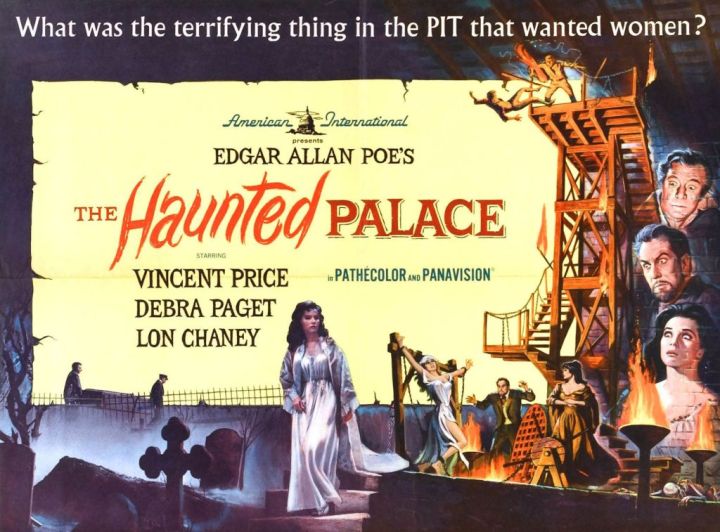
This atmospheric and dreary poem, ‘The Haunted Palace’ was originally published in 1839, but eventually made its way into Poe’s masterpiece ‘The Fall of the House of Usher,’ as a read-aloud verse attributed to the fictional character of Roderick Usher.

In the greenest of our valleys

   By good angels tenanted,

Once a fair and stately palace—

   Radiant palace—reared its head.

In the monarch Thought’s dominion,

   It stood there!

Never seraph spread a pinion

   Over fabric half so fair!


Banners yellow, glorious, golden,

   On its roof did float and flow

(This—all this—was in the olden

   Time long ago)

And every gentle air that dallied,

   In that sweet day,

Along the ramparts plumed and pallid,

   A wingèd odor went away.


Wanderers in that happy valley,

   Through two luminous windows, saw

Spirits moving musically

   To a lute’s well-tunèd law,

Round about a throne where, sitting,

   Porphyrogene!

In state his glory well befitting,

   The ruler of the realm was seen.


And all with pearl and ruby glowing

   Was the fair palace door,

Through which came flowing, flowing, flowing

   And sparkling evermore,

A troop of Echoes, whose sweet duty

   Was but to sing,

In voices of surpassing beauty,

   The wit and wisdom of their king.


But evil things, in robes of sorrow,

   Assailed the monarch’s high estate;

(Ah, let us mourn!—for never morrow

   Shall dawn upon him, desolate!)

And round about his home the glory

   That blushed and bloomed

Is but a dim-remembered story

   Of the old time entombed.


And travellers, now, within that valley,

   Through the red-litten windows see

Vast forms that move fantastically

   To a discordant melody;

While, like a ghastly rapid river,

   Through the pale door

A hideous throng rush out forever,

   And laugh—but smile no more.

The story here is simple and not unusual for Poe: The glorious past has decayed. All things beautiful eventually fade. Porphyrogene was a Latin emperor of Constantinople who eventually fell to ruin. As is so often the case with Poe, past tragedies warn of the future, and this poem is a warning that life will eventually steal everything from us: disease, circumstances, any number of evils, weaken us, subvert us, destroy us. However, in the meantime, enjoy the lyrical beauty of this verse.

‘The Haunted Palace’ has enjoyed a lot of success on its own through the years, whether it was Roger Corman stealing the title for a Lovecraftian film adaptation that had nothing to do with Poe, or a European rock band translating it into Bulgarian for lyrics.

The image comes from a poster for the 1963 film of that name which, as we said above, had very little to do with Poe. It did star Vincent Price, who made many other Poe adaptations that actually had something do with the poet.

Sunday Sonnet – 24 January 2016

kate fleetwood

Shakespeare wrote in an era where women were considered property. However, if one looks at the trajectory of his plays from his first in1589 to his later plays in the 1600’s, his female characters become more complex, more powerful and, indeed, more fully human. It’s in this deeply sexist society that Shakespeare began to break away from the Elizabethan norm. So too his Sonnets (published in 1603), specifically in the Poet’s love affair with the Dark Lady, where the Poet finds himself ensnared into a relationship with a woman who has become utterly and completely more powerful than him:

150

O, from what power hast thou this powerful might
With insufficiency my heart to sway?
To make me give the lie to my true sight,
And swear that brightness doth not grace the day?
Whence hast thou this becoming of things ill,
That in the very refuse of thy deeds
There is such strength and warrantize of skill
That, in my mind, thy worst all best exceeds?
Who taught thee how to make me love thee more
The more I hear and see just cause of hate?
O, though I love what others do abhor,
With others thou shouldst not abhor my state:
If thy unworthiness raised love in me,
More worthy I to be beloved of thee.

In this Sonnet, the Dark Lady excels in all things bad; her dominion over the Poet remains despite all her flaws. But he doesn’t hate her–he loves her! His sonnet argues that her unworthiness has made him love her, and because of that he’s the one who deserves her love in return. Her power over him is so strong, that he would even disbelieve it’s light during the day: ‘To make me give the lie to my true sight / And swear that brightness doth not grace the day?’ Moreover, she executes her evil actions so skillfully, he thinks them better than anyone else’s good acts:

That in the very refuse of thy deeds
There is such strength and warrantize of skill
That, in my mind, thy worst all best exceeds?

Personally, when I read this sonnet (and some of the other Dark Lady sonnets), I can’t help but think of Lady Macbeth (Macbeth, written in about 1606). One of Lady Macbeth’s most astonishing speeches is about a society where her femininity has no power. So she must calls upon the spirits to be to ‘unsex’ her:

Come, you spirits

That tend on mortal thoughts, unsex me here,

And fill me from the crown to the toe top-full

Of direst cruelty. Make thick my blood.

Stop up the access and passage to remorse,

That no compunctious visitings of nature

Shake my fell purpose, nor keep peace between

The effect and it! Come to my woman’s breasts,

And take my milk for gall, you murd’ring ministers,

Wherever in your sightless substances

You wait on nature’s mischief. Come, thick night,

And pall thee in the dunnest smoke of hell,

That my keen knife see not the wound it makes,

Nor heaven peep through the blanket of the dark

To cry “Hold, hold!”

Macbeth, Act I, Scene v

So magnificent, what an incredible speech.

And what an amazing writer. Shakespeare was somehow able to see beyond the patriarchal constrictions of the Elizabethan world, and dared to imagine what it must be like to be a woman; that is, powerless.

The image is of the amazing Kate Fleetwood as Lady Macbeth from the 2010 film.