Sunday Sonnet – 25 October 2015

Sonnet 56

If someone wants (or is forced by a teacher) to study Shakespeare’s challenging Sonnets, perhaps Number 56 is a good place to start. It’s sturdy and straightforward, and talks about something most of us have experienced: a separation from a true love.  

56

Sweet love, renew thy force; be it not said
Thy edge should blunter be than appetite,
Which but to-day by feeding is allay’d,
To-morrow sharpen’d in his former might:
So, love, be thou; although to-day thou fill
Thy hungry eyes even till they wink with fullness,
To-morrow see again, and do not kill
The spirit of love with a perpetual dullness.
Let this sad interim like the ocean be
Which parts the shore, where two contracted new
Come daily to the banks, that, when they see
Return of love, more blest may be the view;
Else call it winter, which being full of care
Makes summer’s welcome thrice more wish’d, more rare.

The mention of appetite in the second line is probably talking about lust, and we know lust is like appetite: feed it to satiate it, only to feel it again on the morrow. The love the Poet feels for his Young Man (yes, Number 56 is in the middle of the Young Man sonnets) lingers on through the ‘sad interim’ of their separation, and the big image for this poem is two lovers on two shores with an ocean separating them.

Let this sad interim like the ocean be
Which parts the shore, where two contracted new
Come daily to the banks,

However, if each lover looks hard enough across the ocean, when they do reunite, their coming together will be all the sweeter. Shakespeare then adds another metaphor for the final couplet, comparing the suffering of a long arduous Winter that better prepares us to appreciate Spring. Shakespeare always uses as many metaphors, images and similes as he wants to, whereas we mortals are cautioned to never pile them on. It’s too bad; Elizabethan English was thick with poetic language and Shakespeare was its greatest practitioner.  

The image (the visual one, not any from the sonnet) comes from an Elizabethan map of the world, circa 1587, by the cartographer Gerard Mercator.   His view of the oceans and the globe was not as clear sighted as Shakespeare’s view of love.
Friday’s Poe Quote – 23 October 2015

james-caan-republican-john-wayne

One of the last poems Poe ever wrote, published the year he died, 1849, is a lyrical rumination on humanity’s futile search for happiness. The knight in the poem fails to find happiness; and in his own life, Poe failed too.

‘Eldorado’

Gaily bedight,

A gallant knight,

In sunshine and in shadow,

Had journeyed long,

Singing a song,

In search of Eldorado.

But he grew old—

This knight so bold—

And o’er his heart a shadow

Fell as he found

No spot of ground

That looked like Eldorado.

And, as his strength

Failed him at length,

He met a pilgrim shadow—

“Shadow,” said he,

“Where can it be—

This land of Eldorado?”

“Over the Mountains

Of the Moon,

Down the Valley of the Shadow,

Ride, boldly ride,”

The shade replied—

“If you seek for Eldorado!”

So lovely how ‘shadow’ occurs in every sestet (a stanza with six lines), and how its meaning changes. The simplicity of this poem, its elegance and beauty bely its grim message.  

This poem has enjoyed enduring popularity: Classical composers have put it to music as well as pop (including one of my favorite pop artists of the 60’s, Donovan). Movies have found its lyrics irresistible, and you can find snippets of this verse being quoted by the likes of James Caan and Kiefer Sutherland.  

Read it aloud, it’s October, the perfect month for Poe; he died this month 166 years ago.

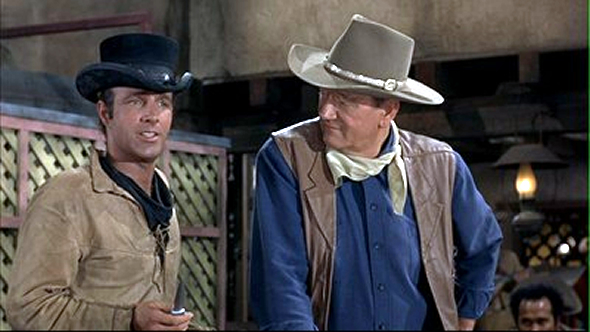
The image is from the 1966 film El Dorado, where John Wayne shoots people, and James Caan quotes Edgar A. Poe.

Sunday Sonnet – 18 October 2015

king-james-I

Like so many of Shakespeare’s sonnets written to his beloved Young Man, number 107 asserts the poem will outlast both Poet and Young Man. But this verse is different. Beyond the beauty of its language, this Sonnets seems to give us clues as to when it might’ve been written. For despite the celestial and timeless nature of its language, we’re able to connect it with history.

107

Not mine own fears, nor the prophetic soul
Of the wide world dreaming on things to come,
Can yet the lease of my true love control,
Supposed as forfeit to a confined doom.
The mortal moon hath her eclipse endured
And the sad augurs mock their own presage;
Incertainties now crown themselves assured
And peace proclaims olives of endless age.
Now with the drops of this most balmy time
My love looks fresh, and death to me subscribes,
Since, spite of him, I’ll live in this poor rhyme,
While he insults o’er dull and speechless tribes:
And thou in this shalt find thy monument,
When tyrants’ crests and tombs of brass are spent.

Some lines in this sonnet likely reference great events in Shakespeare’s time:

The mortal moon hath her eclipse endured:

  • Lunar eclipses in 1595 and 1605
  • Elizabeth I survives a serious illness in 1599
  • Elizabeth I dies in 1603

Incertainties now crown themselves assured

And peace proclaims olives of endless age:

  • After Elizabeth’s 45 year reign, a new monarch, James I, ascends the English throne in 1603
  • That new King signs a peace treaty with Spain in 1604 (whom Elizabeth had warred with for decades)

Shakespeare was notoriously cagey when referencing contemporary events; it’s how he escaped censorship in Elizabethan England, which was for all intents and purposes a police state. Here he seems to intentionally show his hand a bit, eloquently incorporating great events of the day into his paean of Romantic love for the Young Man, another thing he most certainly had to be circumspect about.

Shakespeare must’ve truly believed in the power of poetry, for once again he asserts that this verse to his Young Man would outlast all ‘tyrants’ crests and tombs.’

The image is of King James I, Elizabeth’s successor. James was generally not considered a tyrant, but this verse outlasted him too.   

Sunday Sonnet – 04 October 2015

jewelry box

Loss of material possessions is something we deal with today as much as people did in Shakespeare’s time. It turns out Shakespeare–beyond writing some of the greatest masterpieces of Western Literature–was also a very accomplished businessman who successfully accumulated and protected his worldly possessions. Yet he was wise enough to see that life’s most precious possessions are not worldly, and not so easily guarded against theft. That most precious possession here is the love of the Young Man:

48

How careful was I, when I took my way,
Each trifle under truest bars to thrust,
That to my use it might unused stay
From hands of falsehood, in sure wards of trust!
But thou, to whom my jewels trifles are,
Most worthy of comfort, now my greatest grief,
Thou, best of dearest and mine only care,
Art left the prey of every vulgar thief.
Thee have I not lock’d up in any chest,
Save where thou art not, though I feel thou art,
Within the gentle closure of my breast,
From whence at pleasure thou mayst come and part;
And even thence thou wilt be stol’n, I fear,
For truth proves thievish for a prize so dear

The Poet is careful to lock up all his possessions: ‘Each trifle under truest bars.’ But the Young Man is more precious than any of that: ‘But thou, to whom my jewels trifles are.’ And that Young Man is vulnerable to theft: ‘Art left the prey of every vulgar thief.’ This is because the chest the Poet keeps the Young Man in is the gentle closure of his heart, and from that the Young Man may come and go as he pleases:

Within the gentle closure of my breast,
From whence at pleasure thou mayst come and part;

Such a prize is susceptible to theft, for even an honest man would steal the Young Man if he could: ‘For truth proves thievish.’  

One of the many ingenious aspects of this sonnet are its parallels in language and image: ‘Truest bars’, ‘hands of falsehood’ and ‘truth proves thievish.’ ‘Lock’d up in any chest’ and ‘closure of my breast.’

Also, the placement of this sonnet in the sequence of 154 verses foreshadows Sonnets 49, 50 and 51, where the Young Man and the Poet part ways. Shakespeare’s sequence of Sonnets are so often difficult, because so much is happening all a once: in theme, in language, in metaphor and image, and even in the placement of the sonnets as they relate to one another.

The image is of an Elizabethan jewelry box.

Sunday Sonnet – 27 September 2015

clock

In celebration of the first week of Autumn, I’d like to share one of my favorite darker sonnets. If you read or hear even a little bit of Shakespeare, it doesn’t take long to realize this Elizabethan poet and playwright was obsessed with time: time’s passage and its inevitable destruction of everything living, of everything we poor mortals love.

64

When I have seen by Time’s fell hand defaced
The rich proud cost of outworn buried age;
When sometime lofty towers I see down-razed
And brass eternal slave to mortal rage;
When I have seen the hungry ocean gain
Advantage on the kingdom of the shore,
And the firm soil win of the watery main,
Increasing store with loss and loss with store;
When I have seen such interchange of state,
Or state itself confounded to decay;
Ruin hath taught me thus to ruminate,
That Time will come and take my love away.
This thought is as a death, which cannot choose
But weep to have that which it fears to lose.

This verse is part of the long cycle of Young Man sonnets, and in some ways this sonnet is very similar to others in that it bemoans the destructive nature of time’s passage. But whereas other sonnets find a way to uplift–usually by attesting that the power of Poetry will defeat time–this one gives up in despair.  

Such beauty in these dark rhymes: ‘Increasing store with loss and loss with store’, or ‘Ruin hath taught me thus to ruminate.’

Ironically, these verses do have the power to endure, for they speak to the universal truth of our humanity: we live and inevitably love. But we’re mortal, and so eventually all of those things we love so dearly pass from the Earth. Or we pass. It’s a tough thing to accept, something we try–for a while at least–to hide from our children.

Why hide it? For despite this sonnet’s despair, we do have Art, we do have Poetry. These simple etched lines shall outlive all of us, the closest any of us can ever come to defeating time.

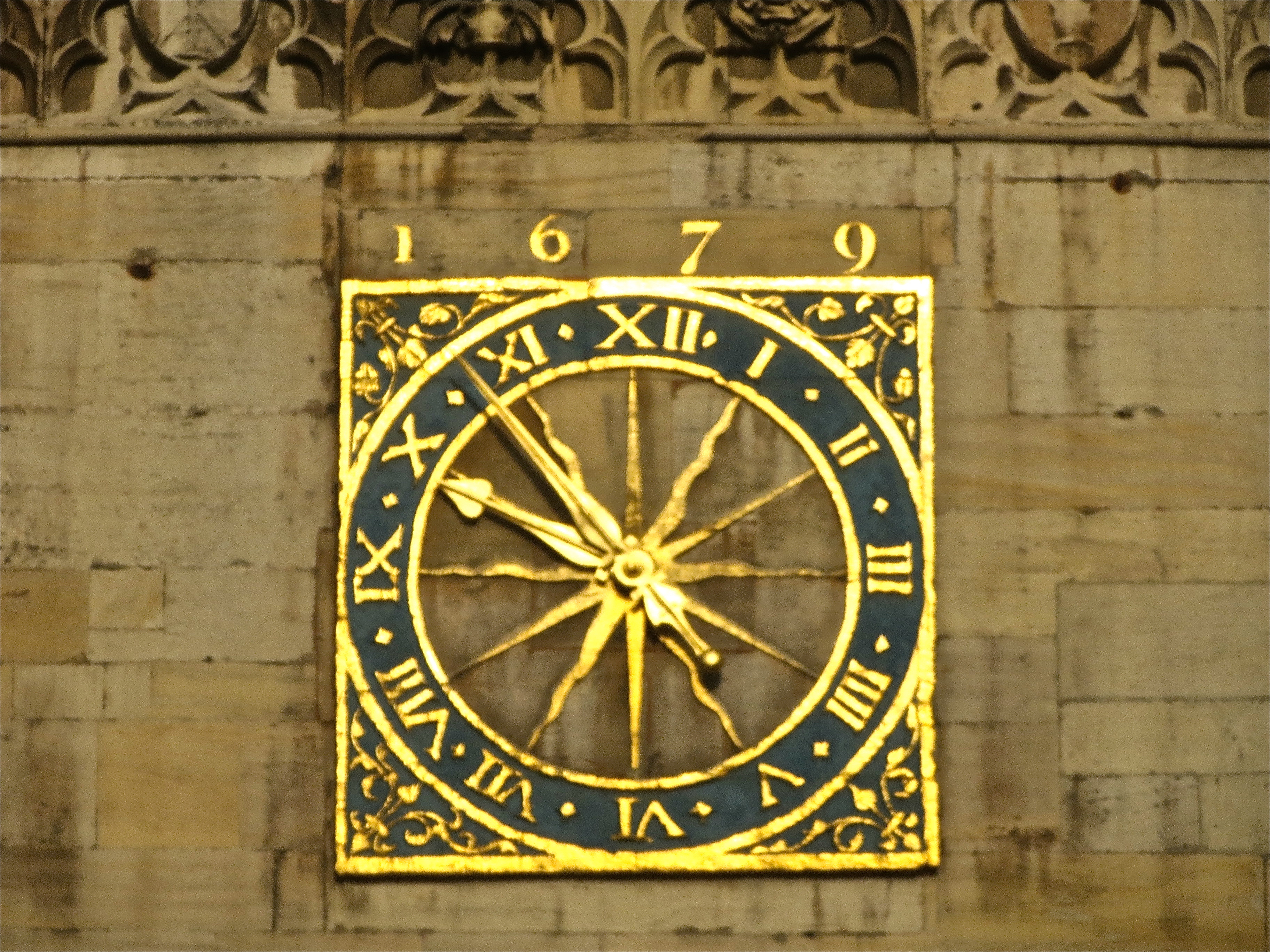
The image is of Great Saint Mary’s clock, an Elizabethan timepiece.  

Friday Poe Quote – 25 September 2015

the-conquerer-worm-poster-cult-movie-mania

Poe’s morbid gothic romanticism slithers from the page in his gloriously dark and depressing ‘Conqueror Worm.’ Published in 1843, it presages his ultimate gothic gem, ‘The Raven’ penned just a couple of years later.   ‘The Conqueror Worm’ uses theatrical and stage imagery to paint a grim picture of the universe; both of Poe’s parents acted, and both died young.

Lo! ’t is a gala night

   Within the lonesome latter years!   

An angel throng, bewinged, bedight

   In veils, and drowned in tears,   

Sit in a theatre, to see

   A play of hopes and fears,

While the orchestra breathes fitfully   

   The music of the spheres.

Mimes, in the form of God on high,   

   Mutter and mumble low,

And hither and thither fly—

   Mere puppets they, who come and go   

At bidding of vast formless things

   That shift the scenery to and fro,

Flapping from out their Condor wings

   Invisible Wo!

That motley drama—oh, be sure   

   It shall not be forgot!

With its Phantom chased for evermore   

   By a crowd that seize it not,

Through a circle that ever returneth in   

   To the self-same spot,

And much of Madness, and more of Sin,   

   And Horror the soul of the plot.

But see, amid the mimic rout,

   A crawling shape intrude!

A blood-red thing that writhes from out   

   The scenic solitude!

It writhes!—it writhes!—with mortal pangs   

The mimes become its food,

And seraphs sob at vermin fangs

   In human gore imbued.

Out—out are the lights—out all!   

   And, over each quivering form,

The curtain, a funeral pall,

   Comes down with the rush of a storm,   

While the angels, all pallid and wan,   

   Uprising, unveiling, affirm

That the play is the tragedy, “Man,”   

   And its hero, the Conqueror Worm.

So what do we have here? The world is a stage (perhaps borrowing from Shakespeare), where pathetic humans–the mimes–live out the folly of their useless lives, witnessed only by angels. Every mortal is eventually devoured by a blood-red thing with vermin fangs that writhes and writhes. Life is a tragedy, and the evil thing that devours us–the Conqueror Worm–is our hero. I love this poem.

This verse, along with ‘The Raven’ and a select number of Poe’s most grotesque short stories, have done the most to cement Poe’s undying reputation as the Father of Modern Horror.   Go ahead, light some candles and read this aloud. And then go listen to some Goth Rock.

The image comes from the 1968 Vincent Price movie, which has virtually nothing to do with the poem at all. But it sure makes a great movie title.

Sunday Sonnet – 20 September 2015

sonnet 94

One of my all time favorite couplets caps Shakespeare’s Sonnet 94. It’s the epitome of a great couplet: iambic pentameter and rhymed, closing the argument of the sonnet, but doing so with a stunning reversal. At the same time, this couplet is beautiful to read, contains a great metaphor speaking a great truth, reads aloud easily and deliciously, so much so that it contains the power of an ageless aphorism.

94

They that have power to hurt and will do none,
That do not do the thing they most do show,
Who, moving others, are themselves as stone,
Unmoved, cold, and to temptation slow,
They rightly do inherit heaven’s graces
And husband nature’s riches from expense;
They are the lords and owners of their faces,
Others but stewards of their excellence.
The summer’s flower is to the summer sweet,
Though to itself it only live and die,
But if that flower with base infection meet,
The basest weed outbraves his dignity:
For sweetest things turn sourest by their deeds;
Lilies that fester smell far worse than weeds.

This sonnet is a condemnation of the Young Man, whom the Poet loves. But the poem seems to be speaking about two disparate things–until its stunning conclusion.

In the first 8 lines the Poet talks about how people who seem not do the stuff they most apparently are made to do: ‘That do not do the thing they most do show’. These people are so beautifully made that they can move the emotions (and lusts) of others, yet somehow manage to restrain themselves: ‘They are the lords and owners of their faces, Others but stewards of their excellence.’  

Then, in the next four lines the subjects changes to summer flowers. Huh? The sweetest summer flower, if it succumbs to thickets of weeds, becomes worse than the weeds that infect it.   And there’s the connection. The final couplet warns the Young Man: regardless of how beautiful you are, your deeds will sour all of that:

For sweetest things turn sourest by their deeds;
Lilies that fester smell far worse than weeds.

As is typical with most of Shakespeare’s sonnets, there’s much more going on here–and a knowledge of how aristocratic patronage worked in Elizabethan England might reveal a little bit more about what the Poet’s talking about.   But for now, just enjoy the lovely brilliance of that last couplet.

The image comes from a painting of flowers by Ambrosius Bosschaert (the Elder), a Dutch painter who was a contemporary of Shakespeare’s.

Poe Quote – Saturday, 19 September 2015

To Helen

For the snobbish, Poe’s poetry seldom ever reached the caliber of the other Romantics. ‘The Raven’, of course, was unique and striking. But for my money, one of Poe’s most Romantic poems, where he managed to avoid his favorite trope of gothic gloom, is ‘To Helen’.

To Helen (1845 version)

Helen, thy beauty is to me

Like those Nicean barks of yore

That gently, o’er a perfumed sea,

The weary, way-worn wanderer bore

To his own native shore.

On desperate seas long wont to roam,

Thy hyacinth hair, thy classic face,

Thy Naiad airs have brought me home

To the glory that was Greece,

And the grandeur that was Rome.

Lo, in yon brilliant window-niche

How statue-like I see thee stand,

The agate lamp within thy hand,

Ah! Psyche, from the regions which

Are Holy Land!

Poe lore has it that when he was only about 14, a Mrs. Jane Stith Stanard encouraged Poe to pursue his love of poetry. Though the final version of this poem wasn’t completed until decades later, it’s believed she inspired this paean to Helen.

Despite its title, Poe doesn’t only compare Mrs. Stanard to Helen of Troy–a physical beauty–but at the final turn of the verse he compares her to Psyche, a more spiritual form of beauty. Finally, because she encouraged Poe at such a young age, this verse is also seems to be an homage to Poetry itself, in that it employs allusions to classical Art and mythology: Art is eternal, Art was Poe’s religion.

The image comes from the 2004 movie The Ladykillers, where Tom Hanks, playing a whacked-out kind of faux Poe, recites ‘To Helen.’

Midweek Shakespearean Quote – 16 September 2015

Bishops_Bible_Elizabeth_I_1569

Revenge is a dish best served cold.   No–I’m not going to claim this delicious little aphorism comes from Shakespeare. Historians and linguists can’t agree. However, the idea behind such a kind of revenge does come from Shakespeare, namely in Hamlet’s great soliloquy from Act III of the play.

Hamlet espies his murderous step father Claudius praying–Hamlet’s uncle King who murdered his father, stole his father’s crown and then bedded his sister-in-law, Hamlet’s mother. Hamlet is so, so tempted to murder the bastard right where he kneels and prays. But then Hamlet thinks better of it:

Now might I do it pat, now he is praying;

And now I’ll do’t. And so he goes to heaven;

And so am I revenged. That would be scann’d:

A villain kills my father; and for that,

I, his sole son, do this same villain send

To heaven.

O, this is hire and salary, not revenge.

He took my father grossly, full of bread;

With all his crimes broad blown, as flush as May;

And how his audit stands who knows save heaven?

But in our circumstance and course of thought,

‘Tis heavy with him. And am I then revenged,

To take him in the purging of his soul,

When he is fit and season’d for his passage?

No!

Up, sword; and know thou a more horrid hent:

When he is drunk asleep, or in his rage,

Or in the incestuous pleasure of his bed;

At game, a-swearing, or about some act

That has no relish of salvation in’t;

Then trip him, that his heels may kick at heaven,

And that his soul may be as damn’d and black

As hell, whereto it goes. My mother stays:

This physic but prolongs thy sickly days.

Hamlet, Act III, Scene iii

The logic that stays Hamlet’s sword here is unusual in the Shakespeare canon: it’s a direct reference to Christian ethics and beliefs, and typically any topics or reference of a religiously Christian nature Shakespeare wisely avoided. Queen Elizabeth’s Protestant reformation wasn’t that far removed from the days of Queen Bloody Mary, who executed thousands of Protestants. Which meant smart playwrights steered clear. But for this scene, Hamlet’s beliefs serve the plot so well Shakespeare used it.

Hamlet realizes that if he kills Claudius while Claudius is praying, it will send the murderous King to heaven, since he’ll die while asking forgiveness of his sins. Hamlet reasons that if he’s going to send this bastard to hell, he needs to kill him while he’s committing sins: ‘When he is drunk asleep, or in his rage, Or in the incestuous pleasure of his bed, At game, a-swearing…”

It’s a crazy kind of logic. But when it’s couched within the luscious and lyrical language of this soliloquy, and issues from Hamlet’s mad lips, the audience buys it. It appears the Bard was as good at selling Christian myths as the Elizabethan preachers of the day.

The image comes from the cover of a Holy Bible printed in 1569, dedicated to Queen Elizabeth.  

Sunday Sonnet – 13 Sep 2015

Sonnet 88 - 1

The rationalizations humans indulge in when a relationship has begun to break up can be convoluted and confusing. This hasn’t changed since Elizabethan times. In Sonnet 88, even though the Rival Poet is gone, too much damage has been done, and the Poet appears to be reconciling himself with the imminent loss of his Young Man:

88

When thou shalt be disposed to set me light,
And place my merit in the eye of scorn,
Upon thy side against myself I’ll fight,
And prove thee virtuous, though thou art forsworn.
With mine own weakness being best acquainted,
Upon thy part I can set down a story
Of faults conceal’d, wherein I am attainted,
That thou in losing me shalt win much glory:
And I by this will be a gainer too;
For bending all my loving thoughts on thee,
The injuries that to myself I do,
Doing thee vantage, double-vantage me.
Such is my love, to thee I so belong,
That for thy right myself will bear all wrong.

The Poet seems to be trying to argue that even though he’ll continue to praise the Young Man and take the blame for everything, it will be a win-win, or what Shakespeare calls “double-vantage”:

For bending all my loving thoughts on thee,
The injuries that to myself I do,
Doing thee vantage, double-vantage me.

This sonnet, in all its confused logic, seems to be describing a kind of abusive relationship: You, Young Man, think little of me and trash me in public, but I’ll take your side and agree with you, because I love you so much that I consider your gain my gain, even if I take the wrongs upon myself.   Good grief.

Even this interpretation only scratches the surface of this poem: some readers see a tennis metaphor (yes, they had tennis in Shakespeare’s time): A ‘set’ was bet or a stake in a tennis game: the word ‘set’ is used twice. ‘Vantage’ is a tennis shorthand for a player’s ‘advantage’ in a set: ‘vantage’ is used twice. And ‘Double-vantage’ was most especially a tennis term. There are other references.   Why, even numerologists have gotten into the game, claiming there are sports-based significance in the number 88.

As with so many of Shakespeare’s sonnets, there is always much more going than what appears on the surface, and this emotionally messed up one is no exception.

The image is an Elizabethan wood carving of two tennis players.