Sunday Sonnet – 04 October 2015

jewelry box

Loss of material possessions is something we deal with today as much as people did in Shakespeare’s time. It turns out Shakespeare–beyond writing some of the greatest masterpieces of Western Literature–was also a very accomplished businessman who successfully accumulated and protected his worldly possessions. Yet he was wise enough to see that life’s most precious possessions are not worldly, and not so easily guarded against theft. That most precious possession here is the love of the Young Man:

48

How careful was I, when I took my way,
Each trifle under truest bars to thrust,
That to my use it might unused stay
From hands of falsehood, in sure wards of trust!
But thou, to whom my jewels trifles are,
Most worthy of comfort, now my greatest grief,
Thou, best of dearest and mine only care,
Art left the prey of every vulgar thief.
Thee have I not lock’d up in any chest,
Save where thou art not, though I feel thou art,
Within the gentle closure of my breast,
From whence at pleasure thou mayst come and part;
And even thence thou wilt be stol’n, I fear,
For truth proves thievish for a prize so dear

The Poet is careful to lock up all his possessions: ‘Each trifle under truest bars.’ But the Young Man is more precious than any of that: ‘But thou, to whom my jewels trifles are.’ And that Young Man is vulnerable to theft: ‘Art left the prey of every vulgar thief.’ This is because the chest the Poet keeps the Young Man in is the gentle closure of his heart, and from that the Young Man may come and go as he pleases:

Within the gentle closure of my breast,
From whence at pleasure thou mayst come and part;

Such a prize is susceptible to theft, for even an honest man would steal the Young Man if he could: ‘For truth proves thievish.’  

One of the many ingenious aspects of this sonnet are its parallels in language and image: ‘Truest bars’, ‘hands of falsehood’ and ‘truth proves thievish.’ ‘Lock’d up in any chest’ and ‘closure of my breast.’

Also, the placement of this sonnet in the sequence of 154 verses foreshadows Sonnets 49, 50 and 51, where the Young Man and the Poet part ways. Shakespeare’s sequence of Sonnets are so often difficult, because so much is happening all a once: in theme, in language, in metaphor and image, and even in the placement of the sonnets as they relate to one another.

The image is of an Elizabethan jewelry box.
Sunday Sonnet – 27 September 2015

clock

In celebration of the first week of Autumn, I’d like to share one of my favorite darker sonnets. If you read or hear even a little bit of Shakespeare, it doesn’t take long to realize this Elizabethan poet and playwright was obsessed with time: time’s passage and its inevitable destruction of everything living, of everything we poor mortals love.

64

When I have seen by Time’s fell hand defaced
The rich proud cost of outworn buried age;
When sometime lofty towers I see down-razed
And brass eternal slave to mortal rage;
When I have seen the hungry ocean gain
Advantage on the kingdom of the shore,
And the firm soil win of the watery main,
Increasing store with loss and loss with store;
When I have seen such interchange of state,
Or state itself confounded to decay;
Ruin hath taught me thus to ruminate,
That Time will come and take my love away.
This thought is as a death, which cannot choose
But weep to have that which it fears to lose.

This verse is part of the long cycle of Young Man sonnets, and in some ways this sonnet is very similar to others in that it bemoans the destructive nature of time’s passage. But whereas other sonnets find a way to uplift–usually by attesting that the power of Poetry will defeat time–this one gives up in despair.  

Such beauty in these dark rhymes: ‘Increasing store with loss and loss with store’, or ‘Ruin hath taught me thus to ruminate.’

Ironically, these verses do have the power to endure, for they speak to the universal truth of our humanity: we live and inevitably love. But we’re mortal, and so eventually all of those things we love so dearly pass from the Earth. Or we pass. It’s a tough thing to accept, something we try–for a while at least–to hide from our children.

Why hide it? For despite this sonnet’s despair, we do have Art, we do have Poetry. These simple etched lines shall outlive all of us, the closest any of us can ever come to defeating time.

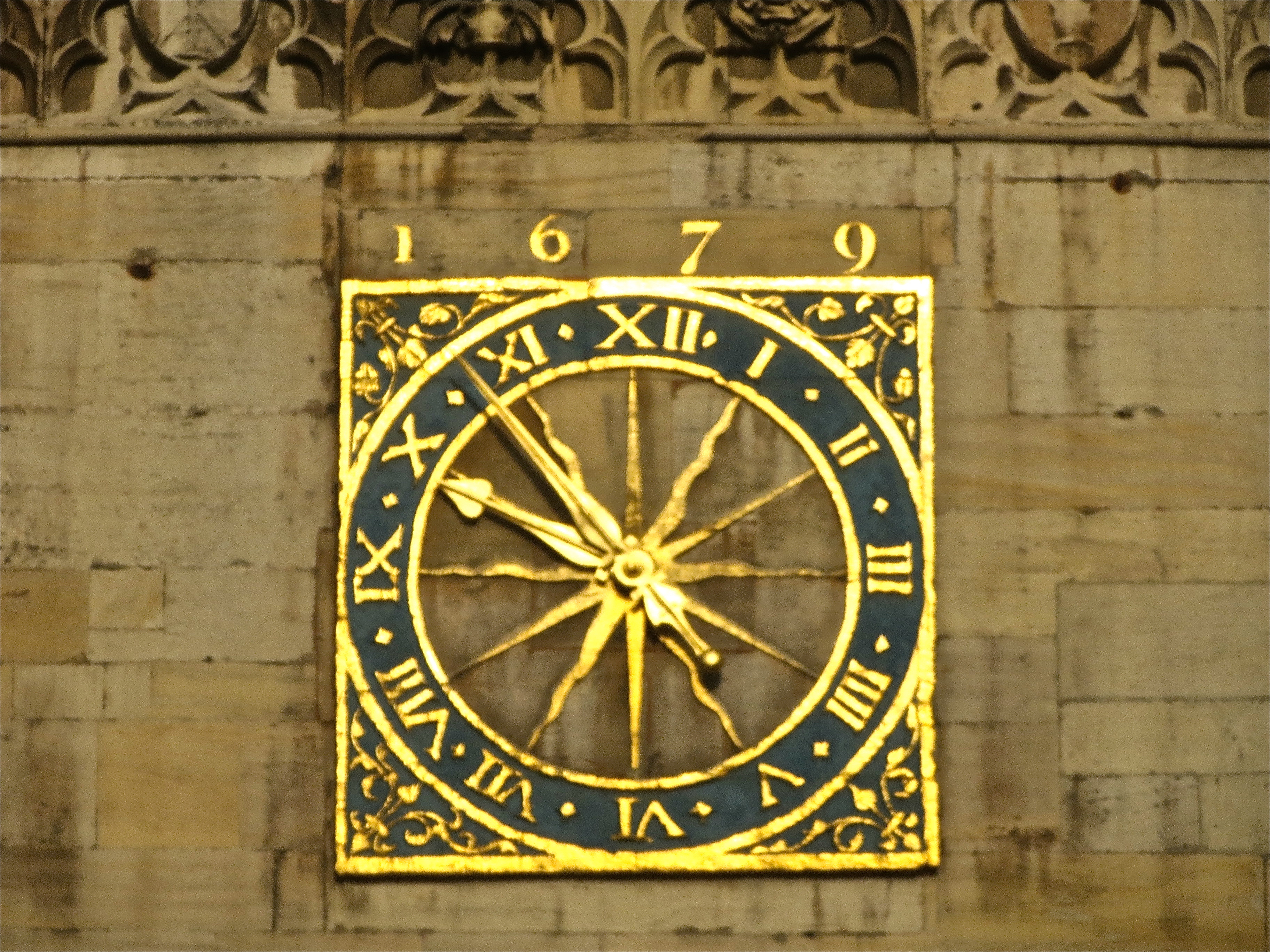
The image is of Great Saint Mary’s clock, an Elizabethan timepiece.  

Sunday Sonnet – 20 September 2015

sonnet 94

One of my all time favorite couplets caps Shakespeare’s Sonnet 94. It’s the epitome of a great couplet: iambic pentameter and rhymed, closing the argument of the sonnet, but doing so with a stunning reversal. At the same time, this couplet is beautiful to read, contains a great metaphor speaking a great truth, reads aloud easily and deliciously, so much so that it contains the power of an ageless aphorism.

94

They that have power to hurt and will do none,
That do not do the thing they most do show,
Who, moving others, are themselves as stone,
Unmoved, cold, and to temptation slow,
They rightly do inherit heaven’s graces
And husband nature’s riches from expense;
They are the lords and owners of their faces,
Others but stewards of their excellence.
The summer’s flower is to the summer sweet,
Though to itself it only live and die,
But if that flower with base infection meet,
The basest weed outbraves his dignity:
For sweetest things turn sourest by their deeds;
Lilies that fester smell far worse than weeds.

This sonnet is a condemnation of the Young Man, whom the Poet loves. But the poem seems to be speaking about two disparate things–until its stunning conclusion.

In the first 8 lines the Poet talks about how people who seem not do the stuff they most apparently are made to do: ‘That do not do the thing they most do show’. These people are so beautifully made that they can move the emotions (and lusts) of others, yet somehow manage to restrain themselves: ‘They are the lords and owners of their faces, Others but stewards of their excellence.’  

Then, in the next four lines the subjects changes to summer flowers. Huh? The sweetest summer flower, if it succumbs to thickets of weeds, becomes worse than the weeds that infect it.   And there’s the connection. The final couplet warns the Young Man: regardless of how beautiful you are, your deeds will sour all of that:

For sweetest things turn sourest by their deeds;
Lilies that fester smell far worse than weeds.

As is typical with most of Shakespeare’s sonnets, there’s much more going on here–and a knowledge of how aristocratic patronage worked in Elizabethan England might reveal a little bit more about what the Poet’s talking about.   But for now, just enjoy the lovely brilliance of that last couplet.

The image comes from a painting of flowers by Ambrosius Bosschaert (the Elder), a Dutch painter who was a contemporary of Shakespeare’s.

Midweek Shakespearean Quote – 16 September 2015

Bishops_Bible_Elizabeth_I_1569

Revenge is a dish best served cold.   No–I’m not going to claim this delicious little aphorism comes from Shakespeare. Historians and linguists can’t agree. However, the idea behind such a kind of revenge does come from Shakespeare, namely in Hamlet’s great soliloquy from Act III of the play.

Hamlet espies his murderous step father Claudius praying–Hamlet’s uncle King who murdered his father, stole his father’s crown and then bedded his sister-in-law, Hamlet’s mother. Hamlet is so, so tempted to murder the bastard right where he kneels and prays. But then Hamlet thinks better of it:

Now might I do it pat, now he is praying;

And now I’ll do’t. And so he goes to heaven;

And so am I revenged. That would be scann’d:

A villain kills my father; and for that,

I, his sole son, do this same villain send

To heaven.

O, this is hire and salary, not revenge.

He took my father grossly, full of bread;

With all his crimes broad blown, as flush as May;

And how his audit stands who knows save heaven?

But in our circumstance and course of thought,

‘Tis heavy with him. And am I then revenged,

To take him in the purging of his soul,

When he is fit and season’d for his passage?

No!

Up, sword; and know thou a more horrid hent:

When he is drunk asleep, or in his rage,

Or in the incestuous pleasure of his bed;

At game, a-swearing, or about some act

That has no relish of salvation in’t;

Then trip him, that his heels may kick at heaven,

And that his soul may be as damn’d and black

As hell, whereto it goes. My mother stays:

This physic but prolongs thy sickly days.

Hamlet, Act III, Scene iii

The logic that stays Hamlet’s sword here is unusual in the Shakespeare canon: it’s a direct reference to Christian ethics and beliefs, and typically any topics or reference of a religiously Christian nature Shakespeare wisely avoided. Queen Elizabeth’s Protestant reformation wasn’t that far removed from the days of Queen Bloody Mary, who executed thousands of Protestants. Which meant smart playwrights steered clear. But for this scene, Hamlet’s beliefs serve the plot so well Shakespeare used it.

Hamlet realizes that if he kills Claudius while Claudius is praying, it will send the murderous King to heaven, since he’ll die while asking forgiveness of his sins. Hamlet reasons that if he’s going to send this bastard to hell, he needs to kill him while he’s committing sins: ‘When he is drunk asleep, or in his rage, Or in the incestuous pleasure of his bed, At game, a-swearing…”

It’s a crazy kind of logic. But when it’s couched within the luscious and lyrical language of this soliloquy, and issues from Hamlet’s mad lips, the audience buys it. It appears the Bard was as good at selling Christian myths as the Elizabethan preachers of the day.

The image comes from the cover of a Holy Bible printed in 1569, dedicated to Queen Elizabeth.  

Sunday Sonnet – 13 Sep 2015

Sonnet 88 - 1

The rationalizations humans indulge in when a relationship has begun to break up can be convoluted and confusing. This hasn’t changed since Elizabethan times. In Sonnet 88, even though the Rival Poet is gone, too much damage has been done, and the Poet appears to be reconciling himself with the imminent loss of his Young Man:

88

When thou shalt be disposed to set me light,
And place my merit in the eye of scorn,
Upon thy side against myself I’ll fight,
And prove thee virtuous, though thou art forsworn.
With mine own weakness being best acquainted,
Upon thy part I can set down a story
Of faults conceal’d, wherein I am attainted,
That thou in losing me shalt win much glory:
And I by this will be a gainer too;
For bending all my loving thoughts on thee,
The injuries that to myself I do,
Doing thee vantage, double-vantage me.
Such is my love, to thee I so belong,
That for thy right myself will bear all wrong.

The Poet seems to be trying to argue that even though he’ll continue to praise the Young Man and take the blame for everything, it will be a win-win, or what Shakespeare calls “double-vantage”:

For bending all my loving thoughts on thee,
The injuries that to myself I do,
Doing thee vantage, double-vantage me.

This sonnet, in all its confused logic, seems to be describing a kind of abusive relationship: You, Young Man, think little of me and trash me in public, but I’ll take your side and agree with you, because I love you so much that I consider your gain my gain, even if I take the wrongs upon myself.   Good grief.

Even this interpretation only scratches the surface of this poem: some readers see a tennis metaphor (yes, they had tennis in Shakespeare’s time): A ‘set’ was bet or a stake in a tennis game: the word ‘set’ is used twice. ‘Vantage’ is a tennis shorthand for a player’s ‘advantage’ in a set: ‘vantage’ is used twice. And ‘Double-vantage’ was most especially a tennis term. There are other references.   Why, even numerologists have gotten into the game, claiming there are sports-based significance in the number 88.

As with so many of Shakespeare’s sonnets, there is always much more going than what appears on the surface, and this emotionally messed up one is no exception.

The image is an Elizabethan wood carving of two tennis players.

Sunday Sonnet – 06 Sep 2015

George_Chapman

Shakespeare’s 154 Sonnets create a narrative with a number of characters: the Poet himself, the Young Man and the Dark Lady. Well, there’s another character, in a sequence of eight sonnets–the ‘Rival Poet’–another writer vying for the favor of the Young Man. This contest for the attentions of the Young Man (possibly the Earl of Southampton), begins with Sonnet 79:

79

Whilst I alone did call upon thy aid,
My verse alone had all thy gentle grace,
But now my gracious numbers are decay’d
And my sick Muse doth give another place.
I grant, sweet love, thy lovely argument
Deserves the travail of a worthier pen,
Yet what of thee thy poet doth invent
He robs thee of and pays it thee again.
He lends thee virtue and he stole that word
From thy behavior; beauty doth he give
And found it in thy cheek; he can afford
No praise to thee but what in thee doth live.
Then thank him not for that which he doth say,
Since what he owes thee thou thyself dost pay.

For this first ‘Rival Poet’ sonnet, the only thing Shakespeare’s really arguing are words, that is verse, and through the tangled layers of this sonnet Shakespeare claims that for a long time only his verse received the benefit of the Young Man’s ‘gentle grace.’ Yet Shakespeare admits that maybe his verse is not as good as it used to be: ‘my gracious numbers are decay’d / And my sick Muse…’ And so Shakespeare admits the Young Man deserves a better poet. That said, Shakespeare then goes on to claim that this new rival only steals from the Young Man; his verses might lend the Young Man virtue, but the rival only learned virtue from the Young Man himself: ‘No praise to thee but what in thee doth live.’ The same with beauty. In other words, don’t thank this rival poet for his flattery, because he’s stolen it all from you.

I’ve said this in my blog before, and I’ll say it again: these characters, the layered progressions of the relationships, the risqué nature of the love affairs (risqué for Elizabethan times), that is, the homosexual love affair, the love triangles, the interracial couplings: all these fly in the face what Elizabethans considered Romantic Love should be in poetry. So this somewhat subversive set of verse all speaks to the possibility of autobiography. And finally, though Shakespeare himself published other major works of verse to great acclaim, he never published his Sonnets. Why not?

Who was the Rival Poet? Possibly the poet George Chapman, or possibly even Christopher Marlowe.   Possibly others. We’ll never know, assuming these sonnets were even inspired by a real human beings.

The image is of George Chapman, an Elizabethan dramatist, writer and poet. He, like Shakespeare, knew the Earl of Southampton. Chapman translated a lot of Ovid’s works; Ovid’s Metamorphoses was one of Shakespeare’s favorite sources for his plays. Chapman, unlike Shakespeare, never could find patrons or great success, and died in poverty.

Hump Day Shakespearean Quote – 02 Sep 2015

othello

This coming weekend I’ll be fortunate enough to visit one of the Midwest’s premiere Shakespeare venues, American Players Theatre, in the deep woods of Southern Wisconsin. They’ll be performing the classic tragedy, Othello.

OTHELLO:

Soft you; a word or two before you go.

I have done the state some service, and they know’t.

No more of that. I pray you, in your letters,

When you shall these unlucky deeds relate,

Speak of me as I am; nothing extenuate,

Nor set down aught in malice: then must you speak

Of one that loved not wisely but too well;

Of one not easily jealous, but being wrought

Perplex’d in the extreme; of one whose hand,

Like the base Indian, threw a pearl away

Richer than all his tribe; of one whose subdued eyes,

Albeit unused to the melting mood,

Drop tears as fast as the Arabian trees

Their medicinal gum. Set you down this;

And say besides, that in Aleppo once,

Where a malignant and a turban’d Turk

Beat a Venetian and traduced the state,

I took by the throat the circumcised dog,

And smote him, thus.

[Stabs himself]

Othello, Act V, Scene ii

Here Othello writes his own epitaph. At this point in the play, all has been revealed: Iago’s murderous plot of revenge, tricking Othello into murdering his innocent wife, Desdemona. In his last speech, Othello eloquently confesses that he loved well, but was unwise; was not prone to jealousy, but when driven to it, pursued it to its last degree; and that he held the most precious thing in the world only to foolishly cast it away.

His final couplet, after stabbing himself, is to kiss the dead Desdemona with these words:

I kissed thee ere I killed thee. No way but this,

Killing myself, do die upon a kiss.

Othello was written in about 1604, just a few years after the triumphant tragedy of Hamlet, and began Shakespeare’s run of shockingly brilliant tragedies, including King Lear, Macbeth and Antony and Cleopatra. Iago the villain of Othello, is considered to be the epitome of evil in western literature, and even in its day, Othello was powerfully provocative. Elizabethans were frightfully racist, and yet Shakespeare dared to make a ‘blackamoor’ the tragic protagonist of his play.

The image comes from the currently running production of Othello at American Players Theatre, with Chike Johnson as Othello and James Ridge as Iago.

Sunday Sonnet – 16 August 2015

Scotney Castle

One of Shakespeare’s most powerful sonnets boldly asserts that its lines shall conquer death and time, outlasting not only the Young Man and the Poet himself, but even marble monuments, wars, or the besmearing of time.

55

Not marble, nor the gilded monuments
Of princes, shall outlive this powerful rhyme;
But you shall shine more bright in these contents
Than unswept stone besmear’d with sluttish time.
When wasteful war shall statues overturn,
And broils root out the work of masonry,
Nor Mars his sword nor war’s quick fire shall burn
The living record of your memory.
‘Gainst death and all-oblivious enmity
Shall you pace forth; your praise shall still find room
Even in the eyes of all posterity
That wear this world out to the ending doom.
So, till the judgment that yourself arise,
You live in this, and dwell in lover’s eyes.

Ostensibly this poem was written to the Young Man, but it’s really about the enduring power of the written word, the most indelible form of Art–resistant to the ravages of war and the slow degradation of ‘sluttish’ time (the Elizabethan use of the word sluttish meaning messy or untidy).

So many great details and contrasts in this sonnet: how wars broil out the work of masonry, and how that power is godlike in its ferocity and speed (Mars’ sword); how gilded monuments and princes can’t outlive rhymes. It’s all kind of crazy, but, as it turns out, utterly true.: Did this verse conquer death and time? For four hundred years it has.  

Of course, there are untold amounts of literature, written history and poetry that have been lost to the ages.   Despite that, the Poet makes this bold prediction about his own verse. Could Shakespeare somehow had an inkling at how great his rhymes were? Did he imagine that succeeding generations would labor to reproduce these lines many countless of times, thereby insuring them against loss?   I think he believed the possibility existed. And thus he worked very hard to make his sonnets gorgeous, multifaceted and full of great truths.

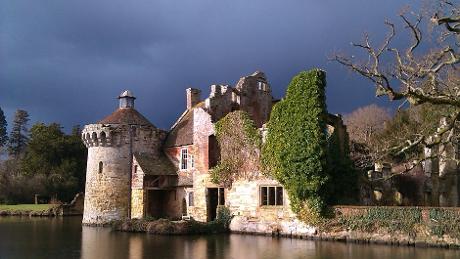
The image is of Scotney Castle, much of it Elizabethan, part of it in ruins.   It’s now run by the National Trust.     

Midweek Shakespearean Quote – 12 August 2015

Kenneth Albers and Susan Shunk, The Tempest, 2011.

It’s been a beautiful summer here in Southern Wisconsin. Such delightful, gentle days bring to mind a snippet of verse from The Tempest, where the forces of Nature, including Prospero’s magical island, almost act as one of the characters. Caliban and Ariel, both preternatural creatures, are manifestations of that island, and in the opening of the final act, Ariel sings a song:

Where the bee sucks, there suck I:

In a cowslip’s bell I lie;

There I couch when owls do cry.

On the bat’s back I do fly

After summer merrily.  

Merrily, merrily shall I live now

Under the blossom that hangs on the bough.

–The Tempest, Act V, Scene i

And why shouldn’t Ariel sing? For it’s in this scene that Prospero promises Ariel her freedom after decades of servitude the Prospero the Sorcerer.  

The image comes from Southern Wisconsin’s very own American Players Theatre, with Susan Shunk as Ariel and Kenneth Albers as Propsero from the troupe’s 2011 production of The Tempest.

Sunday Sonnet – 09 August 2015

tudor rose

One of the many mysteries of Shakespeare’s personal life is how did he acquire all the vast areas of expertise needed to write about so many characters and so many avocations? For example, his knowledge of horticulture, herbalism and botany are evident in many of his plays (think of A Midsummer Night’s Dream). We really don’t know for sure where Shakespeare learned all this–though there a bunch of ‘missing years’ from his youth.

In Sonnet 54, Shakespeare utilizes this knowledge of botany to create a complicated metaphor, where he likens the beauty in his Young Man to a rose’s beauty, which is both outer and inner. Elizabethans extracted perfume from roses. However, canker-blooms were also visually beautiful, but unlike roses, contained no lovely scent. And so here comes a life lesson: When looking for beauty in others, don’t just look for the outer beauty:

54

O, how much more doth beauty beauteous seem
By that sweet ornament which truth doth give!
The rose looks fair, but fairer we it deem
For that sweet odour which doth in it live.
The canker-blooms have full as deep a dye
As the perfumed tincture of the roses,
Hang on such thorns and play as wantonly
When summer’s breath their masked buds discloses:
But, for their virtue only is their show,
They live unwoo’d and unrespected fade,
Die to themselves. Sweet roses do not so;
Of their sweet deaths are sweetest odours made:
And so of you, beauteous and lovely youth,
When that shall fade, my verse distills your truth.

As complicated and delicate as this construction is, Shakespeare’s rose metaphor extends beyond a mere characterization of his Young Man’s beauty: Shakespeare means to liken his rose to the Art of poetry too. The inner-sweetness of the rose can only be enjoyed because perfumers distill it; likewise does the Poet distill his Young Man’s beauty into the lines of this sonnet. Already, it’s lasted for over four hundred years.

The image is of the Tudor Rose, one of Queen Elizabeth’s royal symbols, for she was of the House of Tudor.