Sunday Sonnet – 15 March 2015

116 original

I attended the wedding yesterday of a young friend. The ceremony she and her newly minted husband wrote themselves, full of style, panache and sweetness. There’s wasn’t much old or traditional in their ceremony or reception–or was there? Of course there was: The love of true minds–a kind of love they promised one another which is never perfect but the most beautiful thing in the world. It’s complicated, and never in the course of human Art has that kind of love been better expressed than in Will Shakespeare’s Sonnet 116: 

Let me not to the marriage of true minds
Admit impediments. Love is not love
Which alters when it alteration finds,
Or bends with the remover to remove:
O no; it is an ever-fixed mark, 
That looks on tempests, and is never shaken;
It is the star to every wandering bark,
Whose worth’s unknown, although his height be taken.
Love’s not Time’s fool, though rosy lips and cheeks 
Within his bending sickle’s compass come; 
Love alters not with his brief hours and weeks, 
But bears it out even to the edge of doom.
   If this be error and upon me proved,
   I never writ, nor no man ever loved. 

There is such a timeliness beauty, eloquence and truth to this sonnet–so perfect in its realization of the Elizabethan sonnet form, so infinitely depthless in its meanings and cross-meanings, so breathtaking in its imagery–that it’s never been matched by another poet. And yet–if one knows nothing of poetry, if one finds Shakespeare intimidating–even a cursory read or listen to these lines can raise your spirits and thrill your heart with its lyrical beauty. 

Read it aloud today with someone you love.

And to my young friends, congratulations. 

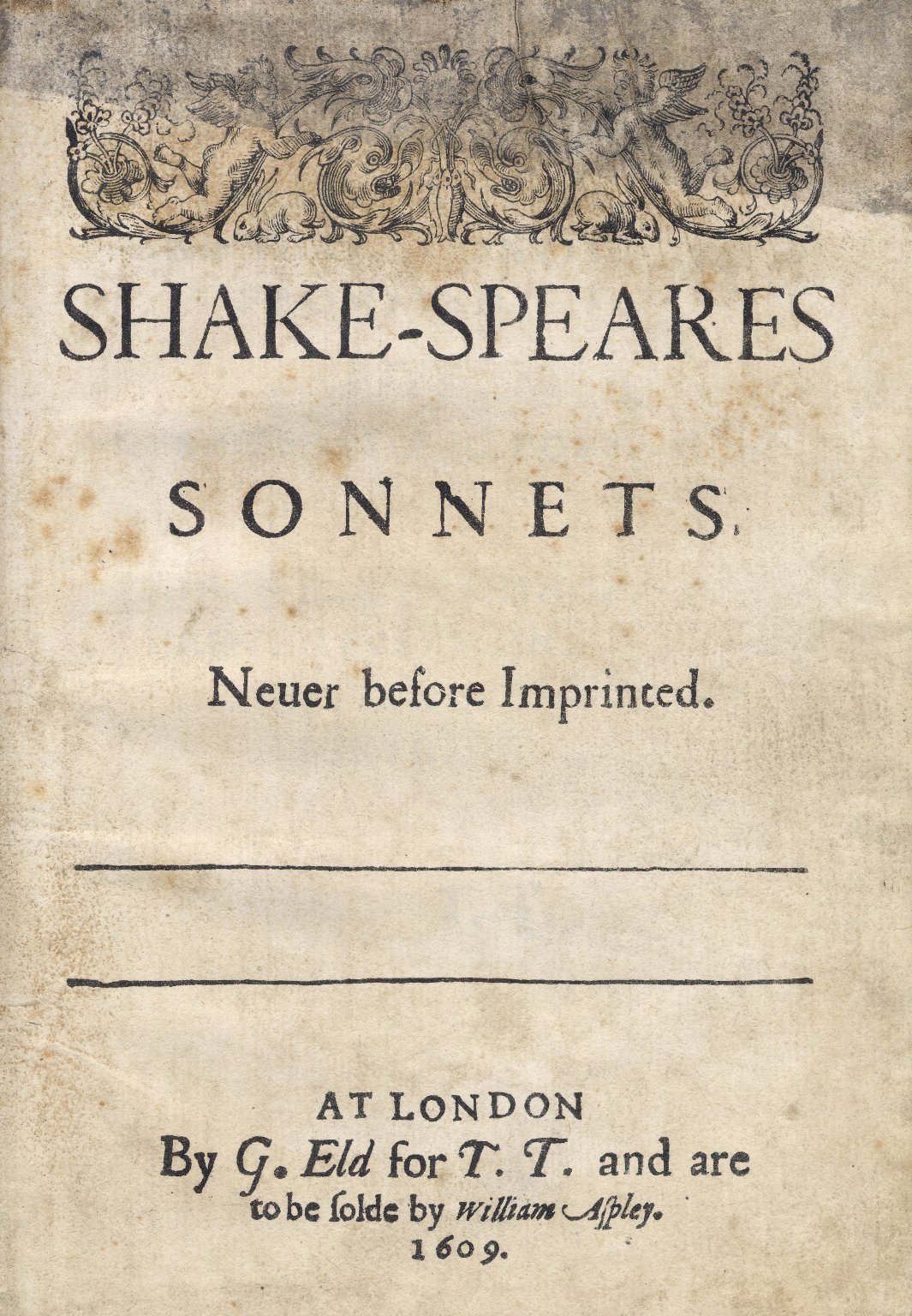
The image is the Elizabethan text of Sonnet 116, printed with the font and characters common to that era.
Hump Day Shakespearean Quote – 11 March 2015

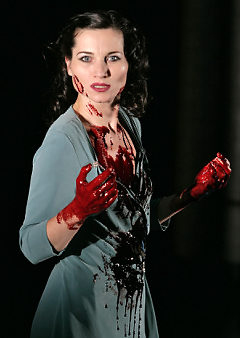
kate-fleetwood-02

In Shakespeare, one of the most delicious curses ever uttered comes from the lips of a woman, not a man. Lady Macbeth readies to welcome King Duncan to Macbeth’s castle and to his death. She summons all the powers of heaven and hell to ‘unsex her’–that is, turn her into a man in order to make her cruel, and order to compensate for the lack of masculine strength and courage in her husband. 

LADY MACBETH: 

The raven himself is hoarse

That croaks the fatal entrance of Duncan

Under my battlements. Come, you spirits

That tend on mortal thoughts, unsex me here,

And fill me from the crown to the toe top-full

Of direst cruelty! make thick my blood;

Stop up the access and passage to remorse,

That no compunctious visitings of nature

Shake my fell purpose, nor keep peace between

The effect and it! Come to my woman’s breasts,

And take my milk for gall, you murdering ministers,

Wherever in your sightless substances

You wait on nature’s mischief! Come, thick night,

And pall thee in the dunnest smoke of hell,

That my keen knife see not the wound it makes,

Nor heaven peep through the blanket of the dark,

To cry ‘Hold, hold!’ 

Macbeth, Act I Scene v 

In Shakespeare’s time, women were considered property, and not even allowed to act on stage. So when Macbeth premiered, this powerful and dangerous speech would be spoken by a boy actor. Considering the Elizabethan attitude toward women as weaker vessels, this is an extraordinary speech: beyond the searing poetic eloquence of its language, there are levels upon levels of subtext: what did Shakespeare think of women, and what did his audience think when they heard Lady Macbeth hurl such words, demanding the darkest spirits of the underworld to ‘unsex’ her–and dry up her mother’s milk into poison? 

The image is of Kate Fleetwood, my favorite film Lady Macbeth, from the fantastic 2010 movie.

Sunday Sonnet – 08 March 2015

SonnetsQuarto001356

This sonnet is especially evocative for me because it appears that an actual event or circumstance inspired it: the Poet gives the Young Man a blank book. For someone like me, who’s writing a novel about Shakespeare, the notion that the sonnets might reflect actual events in the Bard’s life becomes irresistible:

77

Thy glass will show thee how thy beauties wear,
Thy dial how thy precious minutes waste;
The vacant leaves thy mind’s imprint will bear,
And of this book this learning mayst thou taste.
The wrinkles which thy glass will truly show
Of mouthed graves will give thee memory;
Thou by thy dial’s shady stealth mayst know
Time’s thievish progress to eternity.
Look, what thy memory can not contain
Commit to these waste blanks, and thou shalt find
Those children nursed, deliver’d from thy brain,
To take a new acquaintance of thy mind.
These offices, so oft as thou wilt look,
Shall profit thee and much enrich thy book.

Shakespearean scholarship is undecided about the biographical veracity of the Sonnets. But this one and one other (a Dark Lady sonnet where she’s playing music on a virginal) both seem to include specific details from actual events. Do the other major events of the sonnets–the Poet’s love for a Young Man and a Dark Lady; circumstances of physical parting; specific instances of betrayal–reflect chapters in Will’s life? 

I like to believe so. Though this debate has gone on for years, and a complete parsing out of all the arguments for and against would fill entire book, two main points convince me:

First, the Sonnets were published in 1609 without Shakespeare’s permission. Yet much of Shakespeare’s contemporary fame came from his profession as a Poet and not a playwright, including his publication of Venus and Adonis, The Rape of Lucrece and ‘The Phoenix and the Turtle.’ So why not publish the Sonnets he had been writing for years? Simple: their highly personal nature–in cases, so personal as to be dangerous (homosexual acts in Elizabethan England were punishable by imprisonment). 

Second, because autobiographical inspiration is the way of Artistry. This is more of a right brain kind of argument, but history is full of hundreds of instances where great writers drew from their own experiences to create their stories. No, of course Shakespeare never ruled an ancient Roman Empire like in Julius Caesar; no, of course he didn’t avenge his father’s death like Hamlet did. But Will lived and recognized and empathized with all the great emotions, trials and hopes of the human condition (and expressed them brilliantly). And in the case of his very private sonnets, those troubles and aspirations bubble to surface in curiously detailed and repetitive ways. 

The image comes from an actual First Edition of Shakespeare’s Sonnets, 1609.

Hump Day Shakespearean Quote – 04 March 2015

richard

In my part of the country, Winter’s all but over, which is a happy time.   Shakespeare used that sentiment in one of his most famous turns of phrase: ‘The winter of our discontent.’ The opening of Richard III leaps upon us as a grand soliloquy, presented by its antihero, the sociopathic and hunchbacked Duke of Gloucester, later renamed Richard: 

Now is the winter of our discontent
Made glorious summer by this sun of York;
And all the clouds that lour’d upon our house
In the deep bosom of the ocean buried.
Now are our brows bound with victorious wreaths;
Our bruised arms hung up for monuments;
Our stern alarums changed to merry meetings,
Our dreadful marches to delightful measures.
Grim-visaged war hath smooth’d his wrinkled front;
And now, instead of mounting barded steeds
To fright the souls of fearful adversaries,
He capers nimbly in a lady’s chamber
To the lascivious pleasing of a lute.
But I, that am not shaped for sportive tricks,
Nor made to court an amorous looking-glass;
I, that am rudely stamp’d, and want love’s majesty
To strut before a wanton ambling nymph;
I, that am curtail’d of this fair proportion,
Cheated of feature by dissembling nature,
Deformed, unfinish’d, sent before my time
Into this breathing world, scarce half made up,
And that so lamely and unfashionable
That dogs bark at me as I halt by them;
Why, I, in this weak piping time of peace,
Have no delight to pass away the time,
Unless to spy my shadow in the sun
And descant on mine own deformity:
And therefore, since I cannot prove a lover,
To entertain these fair well-spoken days,
I am determined to prove a villain
And hate the idle pleasures of these days.
Plots have I laid, inductions dangerous,
By drunken prophecies, libels and dreams,
To set my brother Clarence and the king
In deadly hate the one against the other:
And if King Edward be as true and just
As I am subtle, false and treacherous,
This day should Clarence closely be mew’d up,
About a prophecy, which says that ‘G’
Of Edward’s heirs the murderer shall be.
Dive, thoughts, down to my soul: here
Clarence comes. 

Richard III, Act I, Scene i 

It’s a stupendous speech because Gloucester (Richard) spells out for everyone what ails him (he was born so ugly and deformed that dogs bark at him), and gives argument to why he’s spoiling to play the villain (even though his brother King Edward has banished winter for the summer of peace, Gloucester’s having none of it). 

He boasts that ‘if King Edward be as true and just / As I am subtle, false and treacherous’, he’ll soon have things his way. 

And so Shakespeare is telling his audience that even though they’ve come to see a history, they’re going to bare witness to some deliciously staged mayhem. 

If you’d like to see this brought brilliantly to life, I highly recommend the 1995 film Richard III, starring Ian McKellen as the murderously vile but eloquent King.   This opening speech, in particular, McKellen delivers from a urinal! The graphic shows McKellen in faux Nazi-like regalia: the film was staged as if it took place in an alternate universe England of the 1940s.

Sunday Sonnet – 01 March 2015

anne_hathaways_cottage

Shakespeare loved puns. But not all of his puns had to be humorous. In this melancholy and desolate sonnet, he endows the word ‘love’ with at least five or six shades of meaning: The Poet’s love for his lover; his lover’s love for him; the two actual different lovers themselves (besides the Poet himself); lust, or the carnal act of love-making; and the generic attribution referring all lovers in the word. For in this sonnet we find a love triangle mixed into the tangle of the emotions and betrayals:

40

Take all my loves, my love, yea, take them all;
What hast thou then more than thou hadst before?
No love, my love, that thou mayst true love call;
All mine was thine before thou hadst this more.
Then if for my love thou my love receivest,
I cannot blame thee for my love thou usest;
But yet be blamed, if thou thyself deceivest
By wilful taste of what thyself refusest.
I do forgive thy robbery, gentle thief,
Although thou steal thee all my poverty;
And yet, love knows, it is a greater grief
To bear love’s wrong than hate’s known injury.
Lascivious grace, in whom all ill well shows,
Kill me with spites; yet we must not be foes. 

Why on earth would Shakespeare decide to play on one word, weaving it through in all kinds of different confusing ways? Just about everything Shakespeare did was intentional. Any us who’ve ever been in throes of a new love affair, are experiencing trouble in an established relationship or, sadly, are involved in the betrayal of love, roil about with a sense of confusion and despair. Our emotions are very mixed.

In the end the Poet seems to eek out a half-hearted and woefully inadequate solution to this: 

Lascivious grace, in whom all ill well shows,
Kill me with spites; yet we must not be foes. 

Your betrayal is going to ruin me, but let’s still remain friends. 

The image is a photograph of Anne Hathaway’s cottage. Anne was Shakespeare’s wife, and evidence shows that Will and Anne were estranged for years. It was very likely an unhappy love.  

Hump Day Shakespearean Quote – 25 February 2015

Kenneth-Branagh-in-Henry--007

Good writers typically save their best for last. But Shakespeare was all about breaking the rules. To start out his early history play, Henry V, he sends out a single actor to announce to everyone that this play is big business–so big that the paltry stage he stands upon can in no way do it justice. He apologizes to the audience for the lack of grandeur and setting, but then pleads the audience for their imagination. But here’s the trick: the language is so stunning, so spectacular and powerful that in the hands of a great orator or actor, this prologue sweeps up the audience into a grand illusion of history: 

Chorus:

O for a Muse of fire, that would ascend

The brightest heaven of invention,

A kingdom for a stage, princes to act

And monarchs to behold the swelling scene!

Then should the warlike Harry, like himself,

Assume the port of Mars; and at his heels,

Leash’d in like hounds, should famine, sword and fire

Crouch for employment. But pardon, and gentles all,

The flat unraised spirits that have dared

On this unworthy scaffold to bring forth

So great an object: can this cockpit hold

The vasty fields of France? or may we cram

Within this wooden O the very casques

That did affright the air at Agincourt?

O, pardon! since a crooked figure may

Attest in little place a million;

And let us, ciphers to this great accompt,

On your imaginary forces work.

Suppose within the girdle of these walls

Are now confined two mighty monarchies,

Whose high upreared and abutting fronts

The perilous narrow ocean parts asunder:

Piece out our imperfections with your thoughts;

Into a thousand parts divide on man,

And make imaginary puissance;

Think when we talk of horses, that you see them

Printing their proud hoofs i’ the receiving earth;

For ’tis your thoughts that now must deck our kings,

Carry them here and there; jumping o’er times,

Turning the accomplishment of many years

Into an hour-glass: for the which supply,

Admit me Chorus to this history;

Who prologue-like your humble patience pray,

Gently to hear, kindly to judge, our play.

Exit 

Henry V, Act I, Prologue 

Technically, this kind of intro is called an ‘Invocation of the Muse’, a trope Shakespeare borrowed from the Classical Greeks. But no one ever did it like Shakespeare–before or after. 

Please read this aloud–and you’ll hear the imagery leaping to life, even as the chorus asks the audience to please use their imaginations. Thus we step into the miracle of live theatre.

The image is of Kenneth Branagh as King Harry, in his quite excellent movie of the play from 1989.  

Sunday Sonnet – 22 February 2015

Stratford

Much of the United States is under a deep freeze, under deep snow, or both. So Sonnet 97 came to mind, with its marvelous and repeated winter imagery. 

97

How like a winter hath my absence been
From thee, the pleasure of the fleeting year!
What freezings have I felt, what dark days seen!
What old December’s bareness every where!
And yet this time removed was summer’s time,
The teeming autumn, big with rich increase,
Bearing the wanton burden of the prime,
Like widow’d wombs after their lords’ decease:
Yet this abundant issue seem’d to me
But hope of orphans and unfather’d fruit;
For summer and his pleasures wait on thee,
And, thou away, the very birds are mute;
Or, if they sing, ’tis with so dull a cheer
That leaves look pale, dreading the winter’s near.

The Young Man has abandoned the Poet, being gone, it seems, for a the better part of a year.   And his absence, though it comes during the Summer and Autumn, makes those seasons seem as barren as Winter. That absence has frozen the Poet’s emotions and made the harvest time barren: ‘Like widow’d wombs after their lords’ decease,’ one of my favorite lines. 

The Sonnet’s final couplet is a beautiful turn: Even if the birds should sing, they sing with a dull cheer: ‘Or, if they sing, ‘tis with so dull a cheer.’

I like the Sonnet because it is quintessential in its construction: a great metaphor that carries through from start to finish; the almost perfect construction of its sonnet form (rhyme, meter, quatrains, turns); its easy grace and the natural melody of its rhythm. Read it aloud! However, if you read it to your beloved, preface things first, lest he or she misinterpret it: this is Sonnet of longing, after all.

The image is of an old vintage postcard of the River Avon in Stratford in the heart of winter.  

Hump Day Shakespearean Quote – 18 February 2015

Othelloiagomovie

Shakespeare understood jealousy, the primary driving force behind his play Othello. It’s a common belief that the motivations of Iago, one of the all-time great villains, are never revealed and that he acts without impetus. Not true. Iago’s lust to destroy Desdemona and Othello never goes on grand display, but in Act II Iago’s soliloquy sorts out his rage, revealing what sparks his hate for Othello and in that, discovers the tool of his revenge: Jealousy.

That Cassio loves her, I do well believe it;

That she loves him, ’tis apt and of great credit:

The Moor, howbeit that I endure him not,

Is of a constant, loving, noble nature,

And I dare think he’ll prove to Desdemona

A most dear husband. Now, I do love her too;

Not out of absolute lust, though peradventure

I stand accountant for as great a sin,

But partly led to diet my revenge,

For that I do suspect the lusty Moor

Hath leap’d into my seat; the thought whereof

Doth, like a poisonous mineral, gnaw my inwards;

And nothing can or shall content my soul

Till I am even’d with him, wife for wife,

Or failing so, yet that I put the Moor

At least into a jealousy so strong

That judgment cannot cure. Which thing to do,

If this poor trash of Venice, whom I trash

For his quick hunting, stand the putting on,

I’ll have our Michael Cassio on the hip,

Abuse him to the Moor in the rank garb—

For I fear Cassio with my night-cap too—

Make the Moor thank me, love me and reward me.

For making him egregiously an ass

And practising upon his peace and quiet

Even to madness. ‘Tis here, but yet confused:

Knavery’s plain face is never seen tin used. 

Othello, Act II scene i 

It appears Othello may have once slept with Iago’s wife! ‘For that I do suspect the lusty Moor Hath leap’d into my seat’. That’s Elizabethan for ‘he had sex with my wife.’ Iago cinches it with ‘Till I am even’d with him, wife for wife’. 

Iago will turn that jealousy into a tool.   In this speech the conniving bastards figures it out: ‘that I put the Moor At least into a jealousy so strong That judgment cannot cure’. 

The plan’s not completely worked out yet, but with Shakespeare’s signatory couplets–that he often used to close a scene–he promises that we’ll get to see it all: ‘but yet confused: Knavery’s plain face is never seen [till] used.’ 

To this very day, soap operas and revenge flicks still owe a kernel of their trashy existence to Shakespeare, and his uncanny insight into human nature. 

The image is of Laurence Fishburne as Othello and Kennath Branagh as Iago in the 1995 film version. Here Iago whispers poison lies into Othello’s ear.

Sunday Sonnet – Valentine’s Day 2015 Special Edition

summers day

This week’s Sunday Sonnet comes a day early in recognition of Valentine’s Day. It already existed with some of its romantic connotations in Shakespeare’s time: Geoffrey Chaucer seems to have helped take the Feast of St. Valentine and color it with some aspects of courtly love. It wasn’t until the 18th century, however, that it really became the day for lovers. And it wasn’t until the 20th century that Hallmark ruined the holiday. But romantic love certainly existed in Shakespeare’s time. Today I’d like to share perhaps one of Shakespeare’s most famous sonnets.

18

Shall I compare thee to a summer’s day?
Thou art more lovely and more temperate:
Rough winds do shake the darling buds of May,
And summer’s lease hath all too short a date;
Sometime too hot the eye of heaven shines,
And often is his gold complexion dimm’d;
And every fair from fair sometime declines,
By chance or nature’s changing course untrimm’d;
But thy eternal summer shall not fade,
Nor lose possession of that fair thou ow’st;
Nor shall Death brag thou wander’st in his shade,
When in eternal lines to time thou grow’st:
So long as men can breathe or eyes can see,
So long lives this, and this gives life to thee.
 

This sonnet is still bandied about today, read at weddings, and was even misappropriated in the popular movie Shakespeare in Love.   Well, if Shakespeare had been love when he wrote this sonnet, he was in love with the Young Man, and not Gwyneth Paltrow. This lovely verse is written by a man to a man. 

But why worry to whom ,or why, this exquisite sonnet was written? Sonnet 18’s gorgeous imagery, multi-leveled language and lush verse speaks universally to undying love, and the power of Art to preserve that love, both the transitory nature of romantic love and the undying ‘eternal summer’ of true love. 

The image is from Shakespeare in Love, of Gwyneth Paltrow as the imaginary Viola and Joseph Fiennes as Shakespeare, living out modern scholarship’s heterosexual fantasy that Shakespeare never wrote any sonnets to a man. In truth, Will was an equal opportunity romantic, doling out magnificent verse to Young Men and Dark Ladies alike.

Hump Day Shakespearean Quote – 11 February 2015

iago

Our modern predilection in popular fiction and film for the anti-hero has its origins back in Elizabethan times. Christopher Marlowe’s The Jew of Malta reveled in villains wreaking havoc on the stage. But it was William Shakespeare who first fleshed out the villainous heart and made it real and visceral. So real and so close to the bone that he gave his greatest villain soliloquys with which to pour out his black soul. I give you Iago:

And what’s he then that says I play the villain,
When this advice is free I give, and honest,
Probal to thinking, and indeed the course
To win the Moor again? For ’tis most easy
Th’ inclining Desdemona to subdue
In any honest suit; she’s framed as fruitful
As the free elements. And then for her
To win the Moor–were’t to renounce his baptism,
All seals and symbols of redeemed sin–
His soul is so enfettered to her love,
That she may make, unmake, do what she list,
Even as her appetite shall play the god
With his weak function. How am I then a villain
To counsel Cassio to this parallel course,
Directly to his good? Divinity of hell!
When devils will the blackest sins put on,
They do suggest at first with heavenly shows,
As I do now. For whiles this honest fool
Plies Desdemona to repair his fortune,
And she for him pleads strongly to the Moor,
I’ll pour this pestilence into his ear:
That she repeals him for her body’s lust;
And by how much she strives to do him good,
She shall undo her credit with the Moor.
So will I turn her virtue into pitch,
And out of her own goodness make the net
That shall enmesh them all. 

Othello, Act II, Scene iii 

Here Iago is boasting about how clever he is. He asks if he really can be the villain if all he’s doing is giving innocent advice to Cassio and Othello. Of course, these are lies he’s planting in their heads, lies that will lead to disastrous and murderous action. Villains love to boast–and this great boast here has been borrowed again and again in popular entertainment up to this very day. Think of it: a Bond villain always boasts of how he’s going to destroy the world, and all of us love to hear the likes of Hannibal Lector lecture us.

There are some great lines in this speech, including my favorite, ‘Divinity of hell! When devils will the blackest sins put on, they do suggest at first with heavenly shows.’

The image is of Kenneth Branagh as the vengeful Iago in the 1995 film version of Othello. The original Shakespeare play is heavily edited for the film, but the language itself remains intact, and contains great performances all around. Watch it or stream it for a delicious treat.