Tag: Macbeth

  • Shakespeare Saturday – 21 January 2017

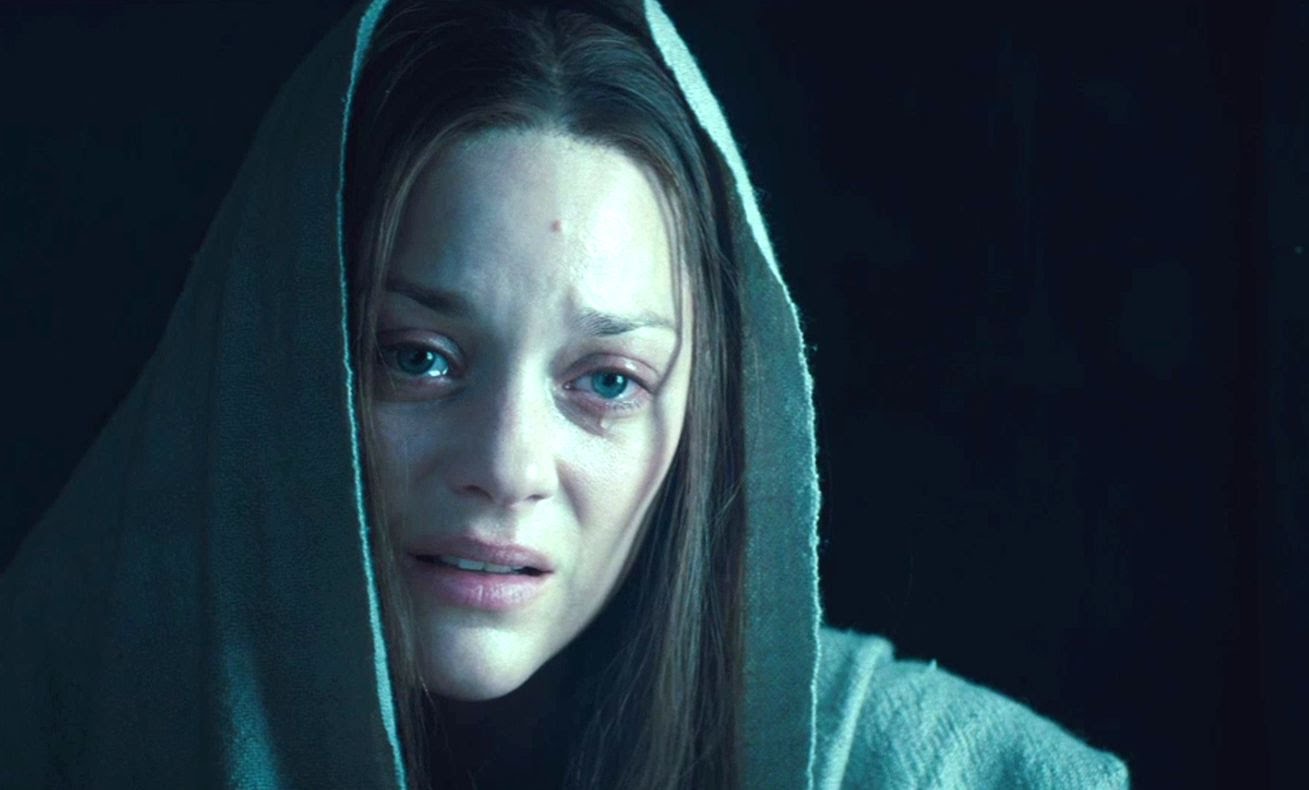
    lady-macbeth

    Today seems apropos for Shakespeare’s great speech about women’s empowerment–or lack thereof. 

    It’s easy to cast Lady Macbeth as a supreme villainess, and that’s what so many scholars and directors have done over the centuries.  But think of when Shakespeare wrote the role of Lady Macbeth: women were property, not even allowed to act on stage–a boy had to speak Lady Macbeth’s lines.  But by the time of Macbeth, Shakespeare’s writing had matured, and he began to give us women’s roles that probably shocked some of his Elizabethan theatre-goers. 

    And so we have Lady Macbeth, who first spoke on the stage of the Globe Theatre, but still speaks to us today:  She came to life in a universe where all power sat in the laps of men.  Hers was a profound desire for empowerment, and the only way she could express it was a yearning to unsex herself–that is, make her masculine.  Of course that is not how we’d prefer to think of it or express it today–but in truth, isn’t that what our world still forces women do?     

    Lady Macbeth

    …Come, you spirits

    That tend on mortal thoughts, unsex me here,

    And fill me from the crown to the toe top-full

    Of direst cruelty. Make thick my blood.

    Stop up the access and passage to remorse,

    That no compunctious visitings of nature

    Shake my fell purpose, nor keep peace between

    The effect and it! Come to my woman’s breasts,

    And take my milk for gall, you murd’ring ministers,

    Wherever in your sightless substances

    You wait on nature’s mischief. Come, thick night,

    And pall thee in the dunnest smoke of hell,

    That my keen knife see not the wound it makes,

    Nor heaven peep through the blanket of the dark

    To cry “Hold, hold!”

    –from Macbeth, Act I Scene v

    The image is of Marion Cotillard as Lady Macbeth from the 2015 film version. 
  • Happy Halloween from William Shakespeare!

    halloween-2016

    Halloween as we know it today didn’t exist in Shakespeare’s time.  Our dark and costumed celebration evolved from many sources, including the Celtic ‘Samhain’ and the ongoing cultural and religious clashes between the pagan practices of the British Isles and the invasion of Christianity.  And so plenty of end-of-harvest rituals with pagan origins were practiced in Elizabethan times, especially in Ireland, Scotland and Wales. 

    Certainly Shakespeare was aware of these, for his plays contain many examples of pagan and Christian myths, all mashed up. Judging by the way Shakespeare could chill and terrify his audiences, could one be blamed if they thought Shakespeare invented this holiday?  Of course he didn’t, but The Bard knew how to mix myth, superstition, paganism, Christianity, monsters, ghosts and curses.  Here are four of some my favorite creepy speeches from Shakespeare, my way of wishing everyone a very Bardic Halloween.  Enjoy! 

    Caliban, from The Tempest, Act 2, Scene 2:

    All the infections that the sun sucks up

    From bogs, fens, flats, on Prosper fall and make him

    By inchmeal a disease! His spirits hear me

    And yet I needs must curse. But they’ll nor pinch,

    Fright me with urchin-shows, pitch me i’ th’ mire,

    Nor lead me like a firebrand in the dark

    Out of my way, unless he bid ’em. But

    For every trifle are they set upon me,

    Sometime like apes that mow and chatter at me,

    And after bite me, then like hedgehogs which

    Lie tumbling in my barefoot way and mount

    Their pricks at my footfall. Sometime am I

    All wound with adders who with cloven tongues

    Do hiss me into madness.


    Iago, from Othello, Act 2 Scene 3:

    How am I then a villain

    To counsel Cassio to this parallel course,

    Directly to his good? Divinity of hell!

    When devils will the blackest sins put on

    They do suggest at first with heavenly shows

    As I do now. For whiles this honest fool

    Plies Desdemona to repair his fortune

    And she for him pleads strongly to the Moor,

    I’ll pour this pestilence into his ear:


    The Ghost, from Hamlet, Act 1 Scene 5:

    I am thy father’s spirit,

    Doom’d for a certain term to walk the night,

    And for the day confin’d to fast in fires,

    Till the foul crimes done in my days of nature

    Are burnt and purg’d away. But that I am forbid

    To tell the secrets of my prison house,

    I could a tale unfold whose lightest word

    Would harrow up thy soul, freeze thy young blood,

    Make thy two eyes, like stars, start from their spheres…


    Lady Macbeth, from Macbeth, Act 1 Scene 5:

    Come, you spirits

    That tend on mortal thoughts, unsex me here,

    And fill me from the crown to the toe top-full

    Of direst cruelty. Make thick my blood.

    Stop up the access and passage to remorse,

    That no compunctious visitings of nature

    Shake my fell purpose, nor keep peace between

    The effect and it! Come to my woman’s breasts,

    And take my milk for gall, you murd’ring ministers,

    Wherever in your sightless substances

    You wait on nature’s mischief. Come, thick night,

    And pall thee in the dunnest smoke of hell,

    That my keen knife see not the wound it makes,

    Nor heaven peep through the blanket of the dark

    To cry “Hold, hold!”


  • Year’s End Shakespearean Quote – 30 December 2015

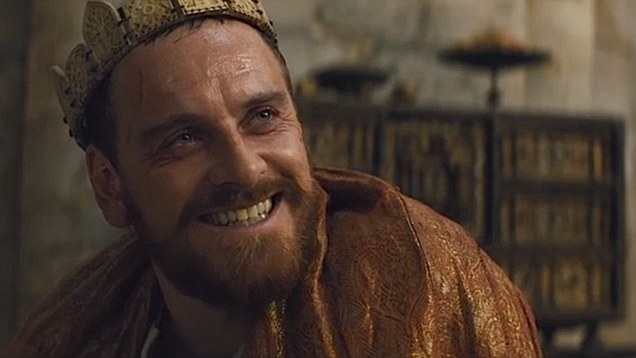
    macbeth fassbender

    As we near Year’s End, time is on our minds. Shakespeare was obsessed with time, and in his great tragedy, which came late in his career, Macbeth obsesses on it too:

    Macbeth:

    If it were done, when ’tis done, then ’twere well

    It were done quickly. If th’ assassination

    Could trammel up the consequence, and catch

    With his surcease, success: that but this blow

    Might be the be-all and the end-all—here,

    But here, upon this bank and shoal of time,

    We’d jump the life to come.

    Macbeth, Act I, Scene vii

    Macbeth’s ruminations involve his and Lady Macbeth’s plans to assassinate the King of Scotland. But aren’t there always unintended consequences?

    Thus we have that lovely line ‘upon this bank and shoal of time’, where Macbeth wonders about this life and the next life. He’s on the verge of venturing into a kind of beyond. A shoal is a shallow, and a bank is a sand bank; to cross those shallows will take you into the ocean’s depths–from this life to the next life. Shakespeare begins his nautical imagery earlier in the speech with ‘trammel’ and ‘catch.’ A trammel in Elizabethan times was a fishing net. What’s really neat, though, is that trammel was also a word used to describe the binding up of a corpse!  

    Finally, with ‘be-all’ and ‘end-all’, Macbeth frets that his assassination of the King (this being the first ever recorded use of the word ‘assassination’) might not be the final act–but rather a catalyst to set off a string of unintended consequences.

    Such a lovely little soliloquy, so simple on its face, but deep with imagery and foreshadowing. And if you read the entire play–or watch one of the several movie versions–you’ll see that Macbeth is thick with references to time.   Shakespeare abhorred time, and how it slowly destroys everything we humans love. In the end, though, Shakespeare won: his plays and poetry have outlasted time, venturing well beyond the bank and shoal of anything any Elizabethan could’ve imagined.

    The image is of Michael Fassbender as Macbeth in the latest film version of Shakespeare’s masterpiece.  


  • Hump Day Shakespearean Quote – 03 June 2015

    Macbeth dagger

    One of the great soliloquies of Western Art comes from the imagination of Macbeth, contemplating regicide. This speech is a miracle of eloquent verse, vivid imagery, psychological progression and foreshadowing. If Shakespeare had written no other plays, he’d still be remembered today for this bloody masterpiece:

    Is this a dagger which I see before me,

    The handle toward my hand? Come, let me clutch thee.

    I have thee not, and yet I see thee still.

    Art thou not, fatal vision, sensible

    To feeling as to sight? Or art thou but

    A dagger of the mind, a false creation,

    Proceeding from the heat-oppressèd brain?

    I see thee yet, in form as palpable

    As this which now I draw.

    Thou marshall’st me the way that I was going,

    And such an instrument I was to use.

    Mine eyes are made the fools o’ th’ other senses,

    Or else worth all the rest. I see thee still,

    And on thy blade and dudgeon gouts of blood,

    Which was not so before. There’s no such thing.

    It is the bloody business which informs

    Thus to mine eyes. Now o’er the one half-world

    Nature seems dead, and wicked dreams abuse

    The curtained sleep. Witchcraft celebrates

    Pale Hecate’s offerings, and withered murder,

    Alarumed by his sentinel, the wolf,

    Whose howl’s his watch, thus with his stealthy pace,

    With Tarquin’s ravishing strides, towards his design

    Moves like a ghost. Thou sure and firm-set earth,

    Hear not my steps, which way they walk, for fear

    Thy very stones prate of my whereabout,

    And take the present horror from the time,

    Which now suits with it. Whiles I threat, he lives.

    Words to the heat of deeds too cold breath gives. 

    Macbeth, Act II Scene i 

    Is the dagger real? It is a hallucination? Is Macbeth mad? What a delicious mix of ambition, fear, temptation and eloquence. Honestly–to hell with what it means: just read it aloud and revel in its lyrical brilliance. Then read the play or watch a movie of it, and there, in context, the many meanings of this ruinous foreshadow will open up for you. 

    Macbeth knows he plots murder, but hedges when he sees the apparition of a bloody dagger. It causes him pause, until he can–despite the warning of the apparition–steel himself to proceed with his planned murder. For in the end Macbeth cannot discern the meaning of what he sees, and thus its warning is lost on him.   

    The image is of Patrick Stewart in his great turn as the cursed Macbeth in the 2010 film.

  • Hump Day Shakespearean Quote – 13 May 2015

    Macbeth

    One of the remarkable things about Shakespeare was how sublimely eloquent he could make his villains. And some of his villains weren’t very lovable. Take Macbeth for instance: plotter, mass-murderer, arguably a coward, and certainly overshadowed by the powerful presence of his wife, Lady Macbeth. And yet, when his wife dies, he gives one the greatest soliloquys ever put to pen: 

    She should have died hereafter;
    There would have been a time for such a word.
    — To-morrow, and to-morrow, and to-morrow,
    Creeps in this petty pace from day to day,
    To the last syllable of recorded time;
    And all our yesterdays have lighted fools
    The way to dusty death. Out, out, brief candle!
    Life’s but a walking shadow, a poor player
    That struts and frets his hour upon the stage
    And then is heard no more. It is a tale
    Told by an idiot, full of sound and fury
    Signifying nothing. 

    Macbeth, Act V, Scene v 

    Macbeth has just found out Lady Macbeth is dead. And so comes this famous and astonishing speech, so eloquent, that many of its parts have been borrowed, copied and repeated to this very day.   

    The speech is a striking contemplation about the futility of life. Lady Macbeth? She would’ve died anyway. Such tragedies have marched on for ever. Our time on the stage and our struggles are meaningless! Everything is brief. And all our struggles and passions? They signify nothing. 

    Breathtaking nihilism.   

    The images comes from Orson Welles’ 1948 crazed and twisted film version of the Scottish play. It’s worth a view.

  • Hump Day Shakespearean Quote – 11 March 2015

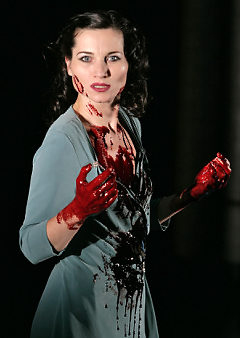
    kate-fleetwood-02

    In Shakespeare, one of the most delicious curses ever uttered comes from the lips of a woman, not a man. Lady Macbeth readies to welcome King Duncan to Macbeth’s castle and to his death. She summons all the powers of heaven and hell to ‘unsex her’–that is, turn her into a man in order to make her cruel, and order to compensate for the lack of masculine strength and courage in her husband. 

    LADY MACBETH: 

    The raven himself is hoarse

    That croaks the fatal entrance of Duncan

    Under my battlements. Come, you spirits

    That tend on mortal thoughts, unsex me here,

    And fill me from the crown to the toe top-full

    Of direst cruelty! make thick my blood;

    Stop up the access and passage to remorse,

    That no compunctious visitings of nature

    Shake my fell purpose, nor keep peace between

    The effect and it! Come to my woman’s breasts,

    And take my milk for gall, you murdering ministers,

    Wherever in your sightless substances

    You wait on nature’s mischief! Come, thick night,

    And pall thee in the dunnest smoke of hell,

    That my keen knife see not the wound it makes,

    Nor heaven peep through the blanket of the dark,

    To cry ‘Hold, hold!’ 

    Macbeth, Act I Scene v 

    In Shakespeare’s time, women were considered property, and not even allowed to act on stage. So when Macbeth premiered, this powerful and dangerous speech would be spoken by a boy actor. Considering the Elizabethan attitude toward women as weaker vessels, this is an extraordinary speech: beyond the searing poetic eloquence of its language, there are levels upon levels of subtext: what did Shakespeare think of women, and what did his audience think when they heard Lady Macbeth hurl such words, demanding the darkest spirits of the underworld to ‘unsex’ her–and dry up her mother’s milk into poison? 

    The image is of Kate Fleetwood, my favorite film Lady Macbeth, from the fantastic 2010 movie.