Hump Day Shakespearean Quotes–Tomorrow is Shakespeare’s Birthday!

Will for About

If I were King, we’d celebrate the 23rd of April as a National Holiday, the birthdate of the greatest writer of Western Literature. And even though he wrote his plays and poetry four centuries ago in the earliest form of modern English–‘Elizabethan English’–his ideas and phrases and characters and themes still resonate with us today. They have, in fact, settled deep into our daily lives. To celebrate his birthday this year, allow me to share just a few of the many dozens of popular phrases Shakespeare coined, with an example here or there of their uses in our modern day world. Enjoy!

All our yesterdays

‘All our yesterdays’ from Macbeth

Though not used in every day speech as a tossed off quip, it’s often used in art, including pop art. One of the most favorite episodes of the Original Star Trek’s third season was called ‘All Our Yesterdays,’ a time-travel yarn. And Shakespeare was obsessed with time.

‘Bated breath’ from The Merchant of Venice

Such a common phrase, coined by Shylock.

BraveNewWorld_FirstEdition

‘Brave new world’ from The Tempest

Made famous again by Aldous Huxley in the 20th century with his landmark science fiction classic about dystopian society. Both Huxley and the Bard used this phrase ironically.  

‘Break the ice’ from The Taming of the Shrew

You’ll be doing this with cocktails soon enough this evening; who knew that this oft-used quip came from the Bard?

‘Brevity is the soul of wit’ from Hamlet

Ironically, this comes from Hamlet, Shakespeare’s longest play.

‘Cold comfort’ from The Taming of the Shrew and King John

Shakespeare so loved this, he used it twice.

‘Crack of doom’ from Macbeth

No, Tolkien didn’t create this.   The three weird sisters in Macbeth did, when predicting Macbeth’s….doom.

‘Dead as a doornail’ from 2 Henry VI

I use this phrase every night after work, just before my first cocktail.

04-kevin-spacy

‘Cry havoc and let slip the dogs of war’ from Julius Caesar

Most recently used by Kevin Spacey in House of Cards.

‘Eaten me out of house and home’ from 2 Henry IV

What my hosts say to me every time I visit.

‘Foregone conclusion’ from Othello

Othello speaks this, but it’s the evil Iago who prompts it. A powerful phrase, be careful when you use it–it’s so often untrue.

M8DADOF EC056

‘The game is afoot’ from I Henry IV

Conan Doyle borrowed this for Sherlock Holmes.

‘Good riddance’ from Troilus and Cressida

One of our favorite modern phrases, don’t you think?

‘It was Greek to me’ from Julius Caesar

Many people feel this about Shakespeare when they first try to read him. Give him a chance!

‘In a pickle’ from The Tempest

Such a silly aphorism, from one of the most sublime plays ever written.

‘In my heart of hearts’ from Hamlet

Spoken by lovers till this very day, first used in one of the most grim tragedies ever written.

‘Killing frost’ from Henry VIII

We have one of these every year, yet no one used the phrase till The Bard.

‘Knock knock! Who’s there?’ from Macbeth

Yes, Macbeth is one of the bloodiest tragedies ever written, but here you go.   Something every child learns. In the play, this is one of the few instances of humor, though even the humor here is pretty dark.
Something-Wicked

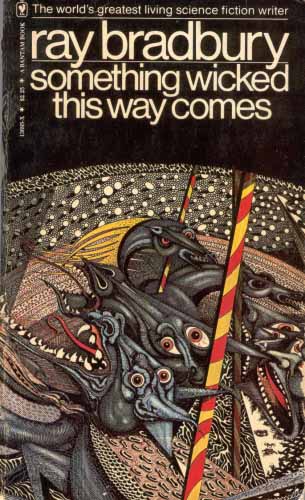
‘Something wicked this way comes’ from Macbeth

Ray Bradbury titled his classic novel of dark fantasy after this evocative phrase.
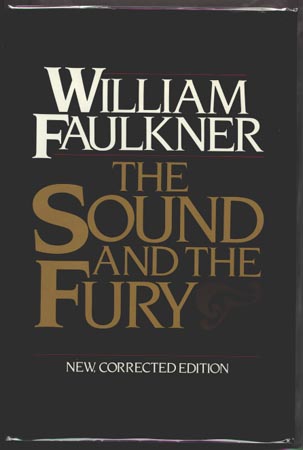
sound and fury

‘Sound and fury’ from Macbeth

Faulkner used this for his famous classic, The Sound and the Fury.

‘Too much of a good thing’ from As You Like It

Yes, even in the squalor of Elizabethan life, it was possible to have too much of a good thing.

‘Wear my heart upon my sleeve’ from Othello

However, the villain of Othello famously did not wear his heart on his sleeve, but kept his evil designs guarded till the very end.

charles-dickens

‘What the dickens?’ from The Merry Wives of Windsor

No, this did not come from Charles Dickens.
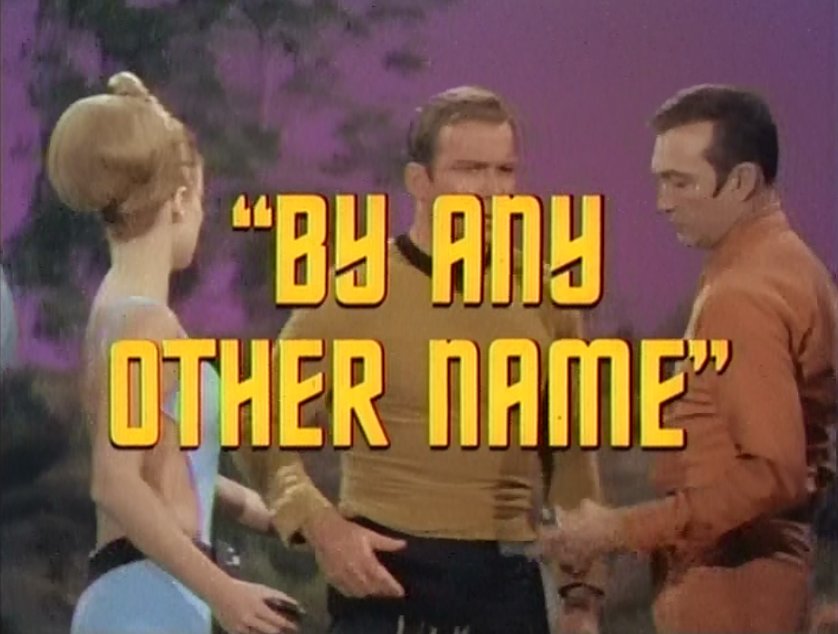
by any other name

‘What’s in a name? A rose by any other name would smell as sweet’ from Romeo and Juliet

Yes, even Romeo and Juliet could inspire the writers of the original Star Trek.

Hump Day (a day late) Shakespearean Quote – 16 April 2015

Steven-Lee-Johnson-as-Puck-in-Midsummer-Nights-Dream-Chicago-Shakespeare

Spring is upon us here in Wisconsin, so how about an airy, summer-like delight from the magical Puck, aka Robin Goodfellow? This delightful verse–especially in the hands of a skilled actor–can ‘spring’ to hilarious delight: 

PUCK

My mistress with a monster is in love.

Near to her close and consecrated bower,

While she was in her dull and sleeping hour,

A crew of patches, rude mechanicals,

That work for bread upon Athenian stalls,

Were met together to rehearse a play

Intended for great Theseus’ nuptial-day.

The shallowest thick-skin of that barren sort,

Who Pyramus presented, in their sport

Forsook his scene and enter’d in a brake

When I did him at this advantage take,

An ass’s nole I fixed on his head:

Anon his Thisbe must be answered,

And forth my mimic comes. When they him spy,

As wild geese that the creeping fowler eye,

Or russet-pated choughs, many in sort,

Rising and cawing at the gun’s report,

Sever themselves and madly sweep the sky,

So, at his sight, away his fellows fly;

And, at our stamp, here o’er and o’er one falls;

He murder cries and help from Athens calls.

Their sense thus weak, lost with their fears thus strong,

Made senseless things begin to do them wrong;

For briers and thorns at their apparel snatch;

Some sleeves, some hats, from yielders all things catch.

I led them on in this distracted fear,

And left sweet Pyramus translated there:

When in that moment, so it came to pass,

Titania waked and straightway loved an ass. 

A Midsummer Night’s Dream, Act III, Scene ii 

Repeated rhymed couplets, especially to a modern ear, can sound cloying. But in the hands of Shakespeare and a skilled orator, this form lends itself perfectly to the scene at hand, where the magical Puck relates to Oberon how his wife Titania, through the powers of a magic potion, has fallen in love with a ‘rude mechanical’ most recently transformed into an ass. 

Go ahead, read the last four lines out loud. 

To this very day, A Midsummer Night’s Dream remains one of Shakespeare’s most popular plays, a masterpiece of comic delight and sublime language.   

The image is of Steven Lee Johnson as Puck in last year’s Chicago Shakespeare Theater’s production of A Midsummer Night’s Dream.

Sunday Sonnet – 12 April 2015

gunshots

Medical care in Elizabethan times was a regular horror show. Your treatment–if you were unlucky enough to survive long enough to receive care–might come from a physician, a surgeon or an apothecary, depending on the ailment. I call number 147 Shakespeare’s ‘Medical Sonnet.’ The Poet longs to break away from the Dark Lady, but his lust resists all powers of reason. Lust is his fever, and reason is the physician; one has left in lieu of the other. 

147

My love is as a fever, longing still
For that which longer nurseth the disease,
Feeding on that which doth preserve the ill,
The uncertain sickly appetite to please.
My reason, the physician to my love,
Angry that his prescriptions are not kept,
Hath left me, and I desperate now approve
Desire is death, which physic did except.
Past cure I am, now reason is past care,
And frantic-mad with evermore unrest;
My thoughts and my discourse as madmen’s are,
At random from the truth vainly express’d;
For I have sworn thee fair and thought thee bright,
Who art as black as hell, as dark as night. 

The Poet has ignored reason, and so good sense–his physician–has left him: ‘Angry that his prescriptions are not kept, Hath left me.’ The Poet longs for death, but this disease won’t quite kill him: “Desire is death, which physic did except. Finally, the Poet is past the point of caring: “Past cure I am, now reason is past care.’ 

As if this wonderfully intricate metaphor weren’t enough, Sonnet 147 ends with one of the most delicious couplets ever: 

For I have sworn thee fair and thought thee bright,
Who art as black as hell, as dark as night. 

Finally, the opening: ‘My love is like a fever.’ Rock ‘n’ rollers to this very day have used this metaphor–so worn out we can no longer stand it. Shakespeare invented it.   

The image comes from the cover of a French book on the treatment of battle wounds, printed in Shakespeare’s time.

Hump Day Shakespearean Quote – 8 April 2015

Lady Anne

I’ve touched on this quote before, but it’s so powerful–one of my favorites–that I’d like to quote in its entirety Lady Anne’s speech in its wrathful glory:

LADY ANNE

Foul devil, for God’s sake, hence, and trouble us not;

For thou hast made the happy earth thy hell,

Fill’d it with cursing cries and deep exclaims.

If thou delight to view thy heinous deeds,

Behold this pattern of thy butcheries.

                                                              She points to the corpse

O, gentlemen, see, see! dead Henry’s wounds

Open their congeal’d mouths and bleed afresh!

Blush, Blush, thou lump of foul deformity;

For ’tis thy presence that exhales this blood

From cold and empty veins, where no blood dwells;

Thy deed, inhuman and unnatural,

Provokes this deluge most unnatural.

O God, which this blood madest, revenge his death!

O earth, which this blood drink’st revenge his death!

Either heaven with lightning strike the murderer dead,

Or earth, gape open wide and eat him quick,

As thou dost swallow up this good king’s blood

Which his hell-govern’d arm hath butchered! 

Richard III, Act I Scene ii 

This delicious string of curses and insults that Lady Anne hurls at Richard, over the corpse of her dead uncle, King Henry, are a wonder of theatre and characterization. Richard announces right from the opening of the play his evil intentions. The audience has no doubt he’s the villain–the play has no hero. As if there weren’t enough, in Scene ii, the widowed Lady Anne (her husband Prince Edward and her uncle the King are dead) sets out for the audience in her speech Richard’s true character.

Yet–and this has troubled critics for centuries–in the ensuing scene Richard’s loquacious genius persuades Anne to marry him! Such a shocking turnabout has always been a challenge for actresses playing Anne. It’s certainly possible: the greatest performers are able to evoke Anne’s horror, anger, shock, naivety and scrappy survival instincts all at once. 

The image is of Kristin Scott Thomas as Lady Anne in the magnificent film adaptation of Richard III from 1995. Ian McKellen looms in the background as Richard. The man with the hole in his head is King Henry.

Sunday Sonnet – 5 April 2015

Startford

When does Easter fall every year? The simplest explanation is that it’s always on the Sunday after the first Full Moon after the Spring Equinox, though this hasn’t always been the case. The point is that the Early Church Fathers wanted to approximate the timing of Easter to match the of year they imagined the first one occurred on. Anyhow, tying the lives of people to the cycles of Nature–that’s what today’s sonnet is all about: 

5

Those hours, that with gentle work did frame

The lovely gaze where every eye doth dwell,

Will play the tyrants to the very same

And that unfair which fairly doth excel;

For never-resting time leads summer on

To hideous winter, and confounds him there;

Sap checked with frost, and lusty leaves quite gone,

Beauty o’er-snowed and bareness every where:

Then were not summer’s distillation left,

A liquid prisoner pent in walls of glass,

Beauty’s effect with beauty were bereft,

Nor it, nor no remembrance what it was:

   But flowers distilled, though they with winter meet,

   Leese but their show; their substance still lives sweet. 

I believe this sonnet is best enjoyed for its wonderful extended metaphor, and not for its lame argument. Its argument is that Poet’s beautiful Young Man should procreate in order to preserve the ‘summer’s distillation’ of his physical beauty so that in the face of hideous winter, something is left. But what’s really lovely is how Shakespeare ties in the progression of human life through the seasons and how they all relate to one another. Especially flowers, that wilt once winter comes, but remain memorable because of the perfume there were used to create: 

   But flowers distilled, though they with winter meet,

   Leese but their show; their substance still lives sweet. 

What I most like in this sonnet are the lines: ‘For never-resting time leads summer on / To hideous winter, and confounds him there.’ A wise warning to us all to cherish and embrace the ones you love, especially on a day like today. 

The image is from my visit a few years ago to Stratford-upon-Avon on a very spring-like rainy day. This is leading up to entrance of Holy Trinity Church, where William Shakespeare is buried.

The Fool in Shakespeare – Happy April Fool’s! 01 April 2015

Falstaff

Today, in celebration of April Fool’s, some of my favorite quotes from the Fools, clowns, buffoons, rascals, imps and asses that have populated Shakespeare’s stage:

“You taught me language; and my profit on’t Is, I know how to curse.”

–Caliban, The Tempest, Act I Scene ii 

“Let her hang me: he that is well hanged in this world needs to fear no colors.”

–Feste, Twelfth Night, Act I Scene v 

“O kiss me through the hole of this vile wall!”

–Nick Bottom, A Midsummer Night’s Dream, Act V Scene i 

“Dost thou know the difference, my boy, between a bitter fool and sweet fool?”

–Fool, King Lear, Act I Scene iv 

“’Sblood, you starveling, you elf-skin, you dried neat’s tongue, you bull’s pizzle, you stock-fish! Oh for breath ot utter what is like thee! You tailer’s yard, you sheath, you bowcase; you vile standing-tuck,–”

–Falstaff, Henry IV Part 1, Act II Scene iv 

“The more pity that fools may not speak wisely that wise men do foolishly.”

–Touchstone, As You Like It, Act I Scene ii 

“The pox of such antic, lisping, affecting fantasticoes; these new tuners of accents! ‘By Jesu, a very good blade! A very tall man! A very good whore!”

–Mercutio, Romeo and Juliet, Act II Scene iv

“When we are born, we cry that we are come To this great stage of fools.”

–Lear, King Lear, Act 4 Scene vi 

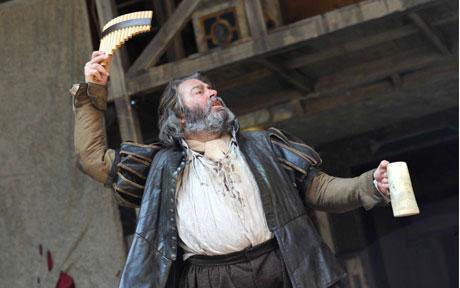
The image of Roger Allam in the role of Falstaff at the Globe Theatre in London.

Sunday Sonnet – 29 March 2015

Aemilia-Lanyer

With freezing rain pelting the countryside, today seems a good time for masochistic verse. Shakespeare’s Dark Lady Sonnet 141 enumerates all the faults of his lady love–her looks, her personality and even his own sin of nonetheless loving her: 

141

In faith, I do not love thee with mine eyes,
For they in thee a thousand errors note;
But ’tis my heart that loves what they despise,
Who in despite of view is pleased to dote;
Nor are mine ears with thy tongue’s tune delighted,
Nor tender feeling, to base touches prone,
Nor taste, nor smell, desire to be invited
To any sensual feast with thee alone:
But my five wits nor my five senses can
Dissuade one foolish heart from serving thee,
Who leaves unsway’d the likeness of a man,
Thy proud hearts slave and vassal wretch to be:
Only my plague thus far I count my gain,
That she that makes me sin awards me pain. 

Sonnets of Shakespeare’s time where largely written following the ‘Petrarchan Ideal’ of love–that is, that the object of your lovely sonnet should be a be chaste, beautiful aristocratic woman whom the Poet can never hope to posses. Shakespeare says the hell with that. 

Quite the opposite, the Dark Lady is not pleasant in appearance–‘I do not love thee with mine eyes, For they in thee a thousand errors note’; her voice is hardly pleasing–‘Nor are mine ears with thy tongue’s tune delighted’; and physical contact, even sexual, is not hot–‘Nor tender feeling, to base touches prone.’ 

However, despite all this or even the Poet’s own good sense, The Dark Lady still owns the Poet’s heart: ‘But my five wits nor my five senses can Dissuade one foolish heart from serving thee.’

Don’t choose this poem to read at Nuptials or to give to your beloved. 

The image is of Aemilia Lanier, an Elizabethan poet who supposedly had an affair with William Shakespeare. Some people believe she might’ve been the Dark Lady of the Sonnets. There’s scant evidence of this, and there’s even doubt this painting is her. Lanier was a woman who dared to publish a book of verse in Shakespeare’s time, so there aren’t many records left. She was a woman, after all, and except for obsessive and progressive minds like Mr. Shakespeare, Elizabethans didn’t much trouble themselves writing about real women, unless they could fit them into something like the ridiculous notion of the Petrarchan Ideal. Or if she was Queen.

Hump Day Shakespearean Quote – 25 March 2015

prospero,medium

Today, I’d like to share a supremely beautiful speech from Shakespeare’s The Tempest. It almost seems as if Will Shakespeare himself is speaking through Prospero, ruminating on the power of his magic (Prospero the magician; Shakespeare the playwright) and thereby forgetting the mundane concerns of ordinary life: 

PROSPERO

…Our revels now are ended. These our actors,
As I foretold you, were all spirits and
Are melted into air, into thin air:
And, like the baseless fabric of this vision,
The cloud-capp’d towers, the gorgeous palaces,
The solemn temples, the great globe itself,
Ye all which it inherit, shall dissolve
And, like this insubstantial pageant faded,
Leave not a rack behind. We are such stuff
As dreams are made on, and our little life
Is rounded with a sleep. Sir, I am vex’d;
Bear with my weakness; my, brain is troubled:
Be not disturb’d with my infirmity:
If you be pleased, retire into my cell
And there repose: a turn or two I’ll walk,
To still my beating mind. 

The Tempest, Act 4, Scene i 

The Tempest, we’re pretty certain, is the last play Shakespeare wrote entirely himself. After this play, he went into semi-retirement, only to do a few collaborations with his protégé, John Fletcher. And so in many ways this play seems to be a farewell to the magic of playwrights and theatre. 

The insubstantial pageant fades, the great globe (a references to The Globe Theatre) shall dissolve. 

Of course, it’s these very words–this very play and the whole rest of Shakespeare’s canon–that outlived all of Mr. Shakespeare’s daily concerns, and will outlive all of ours. That’s the magic of Art. 

The image is of Patrick Stewart as Prospero from the Royal Shakespeare Company’s 2006 production of The Tempest.

Sunday Sonnet – 22 March 2015

RomeoJuliet

According to the movement of planets–that is, the Vernal Equinox–it’s supposed to be Spring. But in my particular part of the country, snow is coming this evening. So for today I’ve chosen a sonnet that bemoans the many common-day misfortunes that can befall any of us–and what the cure for that misfortune is.

29

When, in disgrace with fortune and men’s eyes,
I all alone beweep my outcast state
And trouble deaf heaven with my bootless cries
And look upon myself and curse my fate,
Wishing me like to one more rich in hope,
Featured like him, like him with friends possess’d,
Desiring this man’s art and that man’s scope,
With what I most enjoy contented least;
Yet in these thoughts myself almost despising,
Haply I think on thee, and then my state,
Like to the lark at break of day arising
From sullen earth, sings hymns at heaven’s gate;
For thy sweet love remember’d such wealth brings
That then I scorn to change my state with kings.

The Poet curses his bad fate, looking at others more fortunate than him, people with friends, art, possessions: “with friends possess’d, Desiring this man’s art and that man’s scope.” He even believes any prayers to God are falling on deaf ears: “And trouble deaf heaven with my bootless cries.” It almost seems the Poet is treading very close to apostasy here. But even in the Elizabethan era of a state-sanctioned religion and compulsory church attendance, I’m sure many, many people felt their constant prayers did no good.   Another example of Shakespeare’s ability to speak to the Everyman in each of us, and doing it without quite crossing the line.

In the end, Sonnet 29 holds a lesson for us, applicable even four centuries later: the love of your life can make you feel so wealthy, you wouldn’t trade him or her for being a king. This nice couplet turns it all around:

For thy sweet love remember’d such wealth brings
That then I scorn to change my state with kings.

So today, if things don’t go right–or if snow is coming to bury your sprouting irises and tulips, turn to that special person who loves you more than anything: that is the greatest treasure on Earth.

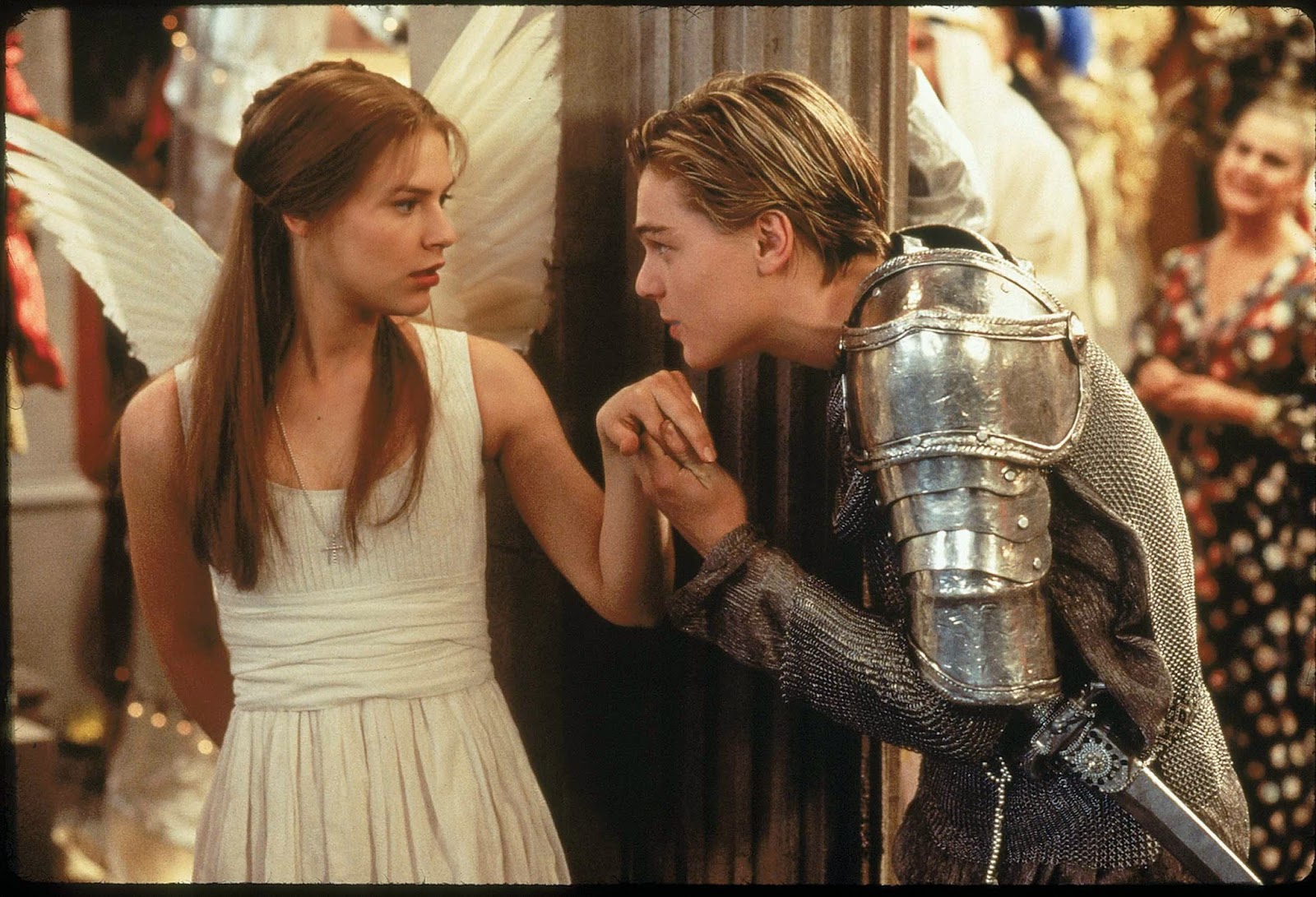
The image comes from the 1996 movie Romeo + Juliet, with Claire Danes and Leo DiCaprio, a good example of true love in the midst of growing troubles.

Hump Day Shakespearean Quote – 18 March 2015

stanley-tucci-puck

With this, the last Wednesday of winter, it’s time to celebrate. Spring is almost here and after that, Summer.   From one of The Bard’s most popular plays, performed more often today than just about any other, here’s the lovely and lyrical closing lines of A Midsummer Night’s Dream:

If we shadows have offended, 
Think but this, and all is mended,
That you have but slumbered here
While these visions did appear.
And this weak and idle theme,
No more yielding but a dream,
Gentles, do not reprehend:
If you pardon, we will mend:
And, as I am an honest Puck,
If we have unearned luck
Now to ‘scape the serpent’s tongue,
We will make amends ere long;
Else the Puck a liar call;
So, good night unto you all.
Give me your hands, if we be friends,
And Robin shall restore amends.  

A Midsummer Night’s Dream, Act 5, Scene i 

The ethereal spirit Puck delivers this postlude, which at first blush seems so much fluff.   But I think Shakespeare is saying something important here about the reality of theatre and the nature of Art. He has Puck urging the audience to pretend this was all but a dream–or is he? Shakespeare and Puck are playing with us: Puck, throughout the course of the play, has proven himself a trickster, yet he claims to be ‘honest Puck’; he admits the play’s themes are ‘weak and idle’ yet here we are, 400 years later, still parsing them out; the actors are shadows and the play ‘no more yielding than a dream’, yet they still have the power to offend–sending Puck out to address the audience directly to plead for amends. 

Such a strangely thoughtful ending, more than just a beautiful reel of couplets, it’s an evocative rumination on reality and dream, on memory and imagination.   And all of this at the tail end of a delightful fantasy-comedy.   

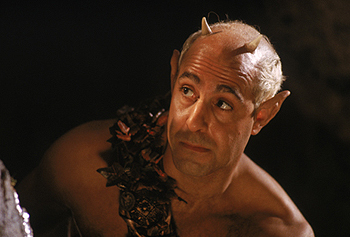
The image is of Stanley Tucci’s delightfully ridiculous Puck from the 1999 movie.