Month: October 2015

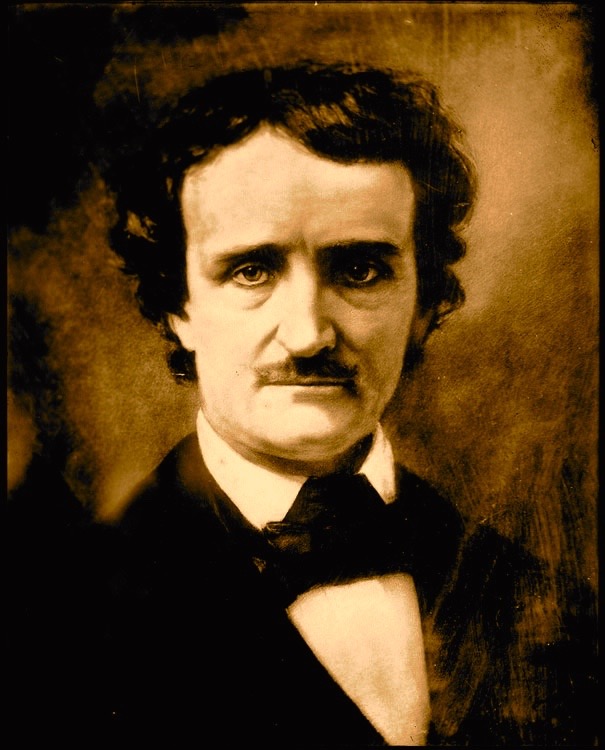
  • A Halloween of Mournful Remembrance from Edgar A. Poe – 2015

    Poe Halloween - 1

    ‘The Raven.’ Poe’s masterpiece has become a mainstay of popular American literature.   Written in 1845, only four years before Poe’s death, it drew its inspiration from many of the tragedies of Poe’s short life: lost love, rumination, failed scholarship and a predisposition toward the gothic and supernatural. It survives today as one of the most popular poems in America. I can still remember my father, decades ago, quoting this poem; my father was not a literary man.

    Some interesting facts about ‘The Raven’:

    • The idea of a talking raven was probably borrowed from Dickens.
    • The rhythm and meter was probably borrowed from Elizabeth Barrett Browning.
    • It made Poe famous and popular, but it sure didn’t make him wealthy.
    • It influenced successive artists and entities such as Nabokov, Bernard Malamud, Ravel, Ray Bradbury, the Allan Parsons Project, the National Football League and the Simpson’s ‘Tree House of Horror.’

    Here are some links to celebrities reading ‘The Raven’:

    James Earl Jones:

    https://www.youtube.com/watch?v=sXU3RfB7308

    Christopher Walken:

    https://www.youtube.com/watch?v=R7G_fZYv8Mg

    Vincent Price:

    https://www.youtube.com/watch?v=eJVKraAukJ0

    Christopher Lee:

    https://www.youtube.com/watch?v=BefliMlEzZ8

    Basil Rathbone:

    https://www.youtube.com/watch?v=BuL1xhUp0Gk

    And finally, here’s the original.   Happy Halloween!

    ‘The Raven’ by Edgar A. Poe

    Once upon a midnight dreary, while I pondered, weak and weary,

    Over many a quaint and curious volume of forgotten lore—

    While I nodded, nearly napping, suddenly there came a tapping,

    As of some one gently rapping, rapping at my chamber door.

    “’Tis some visitor,” I muttered, “tapping at my chamber door—

    Only this and nothing more.”

    Ah, distinctly I remember it was in the bleak December;

    And each separate dying ember wrought its ghost upon the floor.

    Eagerly I wished the morrow;—vainly I had sought to borrow

    From my books surcease of sorrow—sorrow for the lost Lenore—

    For the rare and radiant maiden whom the angels name Lenore—

    Nameless here for evermore.

    And the silken, sad, uncertain rustling of each purple curtain

    Thrilled me—filled me with fantastic terrors never felt before;

    So that now, to still the beating of my heart, I stood repeating

    “’Tis some visitor entreating entrance at my chamber door—

    Some late visitor entreating entrance at my chamber door;—

    This it is and nothing more.”

    Presently my soul grew stronger; hesitating then no longer,

    “Sir,” said I, “or Madam, truly your forgiveness I implore;

    But the fact is I was napping, and so gently you came rapping,

    And so faintly you came tapping, tapping at my chamber door,

    That I scarce was sure I heard you”—here I opened wide the door;—

    Darkness there and nothing more.

    Deep into that darkness peering, long I stood there wondering, fearing,

    Doubting, dreaming dreams no mortal ever dared to dream before;

    But the silence was unbroken, and the stillness gave no token,

    And the only word there spoken was the whispered word, “Lenore?”

    This I whispered, and an echo murmured back the word, “Lenore!”—

    Merely this and nothing more.

    Back into the chamber turning, all my soul within me burning,

    Soon again I heard a tapping somewhat louder than before.

    “Surely,” said I, “surely that is something at my window lattice;

    Let me see, then, what thereat is, and this mystery explore—

    Let my heart be still a moment and this mystery explore;—

    ’Tis the wind and nothing more!”

    Open here I flung the shutter, when, with many a flirt and flutter,

    In there stepped a stately Raven of the saintly days of yore;

    Not the least obeisance made he; not a minute stopped or stayed he;

    But, with mien of lord or lady, perched above my chamber door—

    Perched upon a bust of Pallas just above my chamber door—

    Perched, and sat, and nothing more.

    Then this ebony bird beguiling my sad fancy into smiling,

    By the grave and stern decorum of the countenance it wore,

    “Though thy crest be shorn and shaven, thou,” I said, “art sure no craven,

    Ghastly grim and ancient Raven wandering from the Nightly shore—

    Tell me what thy lordly name is on the Night’s Plutonian shore!”

    Quoth the Raven “Nevermore.”

    Much I marvelled this ungainly fowl to hear discourse so plainly,

    Though its answer little meaning—little relevancy bore;

    For we cannot help agreeing that no living human being

    Ever yet was blessed with seeing bird above his chamber door—

    Bird or beast upon the sculptured bust above his chamber door,

    With such name as “Nevermore.”

    But the Raven, sitting lonely on the placid bust, spoke only

    That one word, as if his soul in that one word he did outpour.

    Nothing farther then he uttered—not a feather then he fluttered—

    Till I scarcely more than muttered “Other friends have flown before—

    On the morrow he will leave me, as my Hopes have flown before.”

    Then the bird said “Nevermore.”

    Startled at the stillness broken by reply so aptly spoken,

    “Doubtless,” said I, “what it utters is its only stock and store

    Caught from some unhappy master whom unmerciful Disaster

    Followed fast and followed faster till his songs one burden bore—

    Till the dirges of his Hope that melancholy burden bore

    Of ‘Never—nevermore’.”

    But the Raven still beguiling all my fancy into smiling,

    Straight I wheeled a cushioned seat in front of bird, and bust and door;

    Then, upon the velvet sinking, I betook myself to linking

    Fancy unto fancy, thinking what this ominous bird of yore—

    What this grim, ungainly, ghastly, gaunt, and ominous bird of yore

    Meant in croaking “Nevermore.”

    This I sat engaged in guessing, but no syllable expressing

    To the fowl whose fiery eyes now burned into my bosom’s core;

    This and more I sat divining, with my head at ease reclining

    On the cushion’s velvet lining that the lamp-light gloated o’er,

    But whose velvet-violet lining with the lamp-light gloating o’er,

    She shall press, ah, nevermore!

    Then, methought, the air grew denser, perfumed from an unseen censer

    Swung by Seraphim whose foot-falls tinkled on the tufted floor.

    “Wretch,” I cried, “thy God hath lent thee—by these angels he hath sent thee

    Respite—respite and nepenthe from thy memories of Lenore;

    Quaff, oh quaff this kind nepenthe and forget this lost Lenore!”

    Quoth the Raven “Nevermore.”

    “Prophet!” said I, “thing of evil!—prophet still, if bird or devil!—

    Whether Tempter sent, or whether tempest tossed thee here ashore,

    Desolate yet all undaunted, on this desert land enchanted—

    On this home by Horror haunted—tell me truly, I implore—

    Is there—is there balm in Gilead?—tell me—tell me, I implore!”

    Quoth the Raven “Nevermore.”

    “Prophet!” said I, “thing of evil!—prophet still, if bird or devil!

    By that Heaven that bends above us—by that God we both adore—

    Tell this soul with sorrow laden if, within the distant Aidenn,

    It shall clasp a sainted maiden whom the angels name Lenore—

    Clasp a rare and radiant maiden whom the angels name Lenore.”

    Quoth the Raven “Nevermore.”

    “Be that word our sign of parting, bird or fiend!” I shrieked, upstarting—

    “Get thee back into the tempest and the Night’s Plutonian shore!

    Leave no black plume as a token of that lie thy soul hath spoken!

    Leave my loneliness unbroken!—quit the bust above my door!

    Take thy beak from out my heart, and take thy form from off my door!”

    Quoth the Raven “Nevermore.”

    And the Raven, never flitting, still is sitting, still is sitting

    On the pallid bust of Pallas just above my chamber door;

    And his eyes have all the seeming of a demon’s that is dreaming,

    And the lamp-light o’er him streaming throws his shadow on the floor;

    And my soul from out that shadow that lies floating on the floor

    Shall be lifted—nevermore!

  • Wednesday’s Inspirational Quote – 28 October 2015

    Poe for novel excerpt

    “Am I able to describe her? Do I possess the words for it? Even now, she is reposed in angelic slumber, behind me. If I turn, rise and carry my candle, I might gaze on her dozing visage, in all its sublimity: her luscious lips, pursed, poised; her ivory cheeks; those dark lashes, as soft and subtle as feathers on white down; above, her alabaster brow in rest, faintly crinkled with those great, great worries of her home realm, awhirl in her girlish brain. Atop such troubles, her tresses are gold, spun into silk. Yet for all that I espy in this inky light, it is her shuttered eyes that have caught my Mind’s Eye, eyes black, as black as a Raven’s. She has become the Raven I dreaded–the Raven I knew would visit me–only to find her not a harbinger of death, but a herald of heaven, a heaven I had not the heart to imagine.”

    –from The Tell-Tale Art by Rich Novotney

    Today, please forgive a moment of self-promotion. Who wrote the above? Does it sound at all like Edgar A. Poe? Hopefully it does just a smidge. This morning I was working on edits for my novel on Edgar A. Poe (at the behest of an excellent agent whom I hope will like what I’m doing), and came across this passage. It’s from one of the ersatz Poe journal entries I’ve created for the book. Here Poe waxes poetic about the love of his life, an amazing woman born three hundred years in the future.  

  • Sunday Sonnet – 25 October 2015

    Sonnet 56

    If someone wants (or is forced by a teacher) to study Shakespeare’s challenging Sonnets, perhaps Number 56 is a good place to start. It’s sturdy and straightforward, and talks about something most of us have experienced: a separation from a true love.  

    56

    Sweet love, renew thy force; be it not said
    Thy edge should blunter be than appetite,
    Which but to-day by feeding is allay’d,
    To-morrow sharpen’d in his former might:
    So, love, be thou; although to-day thou fill
    Thy hungry eyes even till they wink with fullness,
    To-morrow see again, and do not kill
    The spirit of love with a perpetual dullness.
    Let this sad interim like the ocean be
    Which parts the shore, where two contracted new
    Come daily to the banks, that, when they see
    Return of love, more blest may be the view;
    Else call it winter, which being full of care
    Makes summer’s welcome thrice more wish’d, more rare.

    The mention of appetite in the second line is probably talking about lust, and we know lust is like appetite: feed it to satiate it, only to feel it again on the morrow. The love the Poet feels for his Young Man (yes, Number 56 is in the middle of the Young Man sonnets) lingers on through the ‘sad interim’ of their separation, and the big image for this poem is two lovers on two shores with an ocean separating them.

    Let this sad interim like the ocean be
    Which parts the shore, where two contracted new
    Come daily to the banks,

    However, if each lover looks hard enough across the ocean, when they do reunite, their coming together will be all the sweeter. Shakespeare then adds another metaphor for the final couplet, comparing the suffering of a long arduous Winter that better prepares us to appreciate Spring. Shakespeare always uses as many metaphors, images and similes as he wants to, whereas we mortals are cautioned to never pile them on. It’s too bad; Elizabethan English was thick with poetic language and Shakespeare was its greatest practitioner.  

    The image (the visual one, not any from the sonnet) comes from an Elizabethan map of the world, circa 1587, by the cartographer Gerard Mercator.   His view of the oceans and the globe was not as clear sighted as Shakespeare’s view of love.

  • Friday’s Poe Quote – 23 October 2015

    james-caan-republican-john-wayne

    One of the last poems Poe ever wrote, published the year he died, 1849, is a lyrical rumination on humanity’s futile search for happiness. The knight in the poem fails to find happiness; and in his own life, Poe failed too.

    ‘Eldorado’

    Gaily bedight,

    A gallant knight,

    In sunshine and in shadow,

    Had journeyed long,

    Singing a song,

    In search of Eldorado.

    But he grew old—

    This knight so bold—

    And o’er his heart a shadow

    Fell as he found

    No spot of ground

    That looked like Eldorado.

    And, as his strength

    Failed him at length,

    He met a pilgrim shadow—

    “Shadow,” said he,

    “Where can it be—

    This land of Eldorado?”

    “Over the Mountains

    Of the Moon,

    Down the Valley of the Shadow,

    Ride, boldly ride,”

    The shade replied—

    “If you seek for Eldorado!”

    So lovely how ‘shadow’ occurs in every sestet (a stanza with six lines), and how its meaning changes. The simplicity of this poem, its elegance and beauty bely its grim message.  

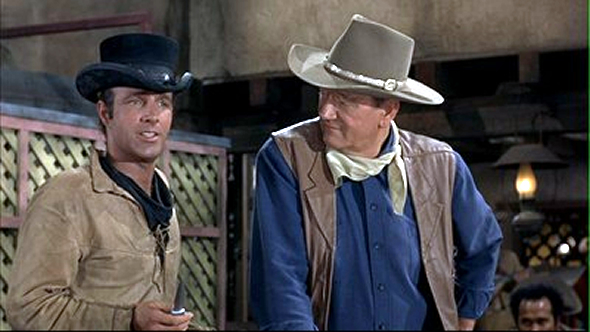
    This poem has enjoyed enduring popularity: Classical composers have put it to music as well as pop (including one of my favorite pop artists of the 60’s, Donovan). Movies have found its lyrics irresistible, and you can find snippets of this verse being quoted by the likes of James Caan and Kiefer Sutherland.  

    Read it aloud, it’s October, the perfect month for Poe; he died this month 166 years ago.

    The image is from the 1966 film El Dorado, where John Wayne shoots people, and James Caan quotes Edgar A. Poe.

  • Sunday Sonnet – 18 October 2015

    king-james-I

    Like so many of Shakespeare’s sonnets written to his beloved Young Man, number 107 asserts the poem will outlast both Poet and Young Man. But this verse is different. Beyond the beauty of its language, this Sonnets seems to give us clues as to when it might’ve been written. For despite the celestial and timeless nature of its language, we’re able to connect it with history.

    107

    Not mine own fears, nor the prophetic soul
    Of the wide world dreaming on things to come,
    Can yet the lease of my true love control,
    Supposed as forfeit to a confined doom.
    The mortal moon hath her eclipse endured
    And the sad augurs mock their own presage;
    Incertainties now crown themselves assured
    And peace proclaims olives of endless age.
    Now with the drops of this most balmy time
    My love looks fresh, and death to me subscribes,
    Since, spite of him, I’ll live in this poor rhyme,
    While he insults o’er dull and speechless tribes:
    And thou in this shalt find thy monument,
    When tyrants’ crests and tombs of brass are spent.

    Some lines in this sonnet likely reference great events in Shakespeare’s time:

    The mortal moon hath her eclipse endured:

    • Lunar eclipses in 1595 and 1605
    • Elizabeth I survives a serious illness in 1599
    • Elizabeth I dies in 1603

    Incertainties now crown themselves assured

    And peace proclaims olives of endless age:

    • After Elizabeth’s 45 year reign, a new monarch, James I, ascends the English throne in 1603
    • That new King signs a peace treaty with Spain in 1604 (whom Elizabeth had warred with for decades)

    Shakespeare was notoriously cagey when referencing contemporary events; it’s how he escaped censorship in Elizabethan England, which was for all intents and purposes a police state. Here he seems to intentionally show his hand a bit, eloquently incorporating great events of the day into his paean of Romantic love for the Young Man, another thing he most certainly had to be circumspect about.

    Shakespeare must’ve truly believed in the power of poetry, for once again he asserts that this verse to his Young Man would outlast all ‘tyrants’ crests and tombs.’

    The image is of King James I, Elizabeth’s successor. James was generally not considered a tyrant, but this verse outlasted him too.   

  • Sunday Sonnet – 04 October 2015

    jewelry box

    Loss of material possessions is something we deal with today as much as people did in Shakespeare’s time. It turns out Shakespeare–beyond writing some of the greatest masterpieces of Western Literature–was also a very accomplished businessman who successfully accumulated and protected his worldly possessions. Yet he was wise enough to see that life’s most precious possessions are not worldly, and not so easily guarded against theft. That most precious possession here is the love of the Young Man:

    48

    How careful was I, when I took my way,
    Each trifle under truest bars to thrust,
    That to my use it might unused stay
    From hands of falsehood, in sure wards of trust!
    But thou, to whom my jewels trifles are,
    Most worthy of comfort, now my greatest grief,
    Thou, best of dearest and mine only care,
    Art left the prey of every vulgar thief.
    Thee have I not lock’d up in any chest,
    Save where thou art not, though I feel thou art,
    Within the gentle closure of my breast,
    From whence at pleasure thou mayst come and part;
    And even thence thou wilt be stol’n, I fear,
    For truth proves thievish for a prize so dear

    The Poet is careful to lock up all his possessions: ‘Each trifle under truest bars.’ But the Young Man is more precious than any of that: ‘But thou, to whom my jewels trifles are.’ And that Young Man is vulnerable to theft: ‘Art left the prey of every vulgar thief.’ This is because the chest the Poet keeps the Young Man in is the gentle closure of his heart, and from that the Young Man may come and go as he pleases:

    Within the gentle closure of my breast,
    From whence at pleasure thou mayst come and part;

    Such a prize is susceptible to theft, for even an honest man would steal the Young Man if he could: ‘For truth proves thievish.’  

    One of the many ingenious aspects of this sonnet are its parallels in language and image: ‘Truest bars’, ‘hands of falsehood’ and ‘truth proves thievish.’ ‘Lock’d up in any chest’ and ‘closure of my breast.’

    Also, the placement of this sonnet in the sequence of 154 verses foreshadows Sonnets 49, 50 and 51, where the Young Man and the Poet part ways. Shakespeare’s sequence of Sonnets are so often difficult, because so much is happening all a once: in theme, in language, in metaphor and image, and even in the placement of the sonnets as they relate to one another.

    The image is of an Elizabethan jewelry box.